

5 min read
Spoilers: Oshi no Ko manga
Back in November, I finished reading the Oshi no Ko manga. I held off on finishing it with everyone, though not by much. Given the nature of online discussions, I was aware the reception wasn’t positive: most of the criticism centered on how it didn’t make sense, how character development was overlooked, and how there was no payoff, among others. If I were to view the ending through the lens of the preceding chapters, I’d think the same, yet that’s not how storytelling works. Aqua is dead, and so is Hikaru. Mem-Cho has taken on a producer role for B-Komachi, while Kana has departed from the group. And despite all the heartbreak, Ruby finds the strength to move on.
Is ‘life goes on’ truly the message Akasaka intended to communicate, even in a work that – while stopping short of outright critique – comes closer than most to truly examining the entertainment industry? Is there room for another interpretation?
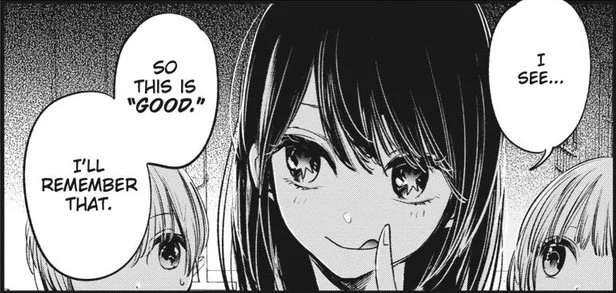
My mind was cast back to Ai Hoshino. Even in death, her presence is felt across the story, not just because the story follows her children but also because they’re workers in the same industry. What little we know of Ai’s story is both tragic and, beneath the surface, rather mundane. The 15-Year Lie, a documentary on Ai’s life, attempts to humanize the idol, but I hesitate to call Ruby’s portrayal of Ai true—a woman veiled in enigma, an anti-social liar who didn’t remember ever loving anyone. Not even her children could see past the shimmering façade to the truth within her mind.
Back to Ruby – despite Ai’s poker face, the fact that she chose to have both her and her twin brother and that she was conscious enough of her nature to make an effort not to lie to them proves she had a loving mother. Ai wasn’t rich – few entertainers are – yet earned enough for the twins to be looked after and was concerned about planning for their future. Ruby has a gift for people, and when she attended Youtou High, she quickly befriended Minami and Frill, who were in her class. Given her nature, Ai would’ve struggled to make friends.
Speaking of which, Ruby is far too honest, naively so. Enough for Minami to think she’s too pure for the industry she aspires to work on. That said, she’s not beneath lying to get what she wants, and her actions during the Mainstay arc prove this. It’s never mentioned whether Ai embraced lying to manipulate others, although purists may argue where exactly the line is drawn. I see it as a different aspect of lying, one Ruby employs frighteningly well when provoked. Even so, it’s fair to say that lies don’t come as naturally to her as her mother, even if her naïveté slowly faded away. Finally, Ruby’s goal in reviving B-Komachi was to play the Tokyo Dome, a goal for many entertainment acts. Ai would’ve played the venue on the day she was killed; it isn’t known whether the surviving members carried on after hearing the news. It’s fitting then how the final chapter shows her daughter conquering that stage while Akane monologues about how lies can be comforting for some.
Ai’s mother, jealous of the attention her partner gave Ai, abused her. Though there’s no evidence she was molested like Hikaru, her demeanor may stem partly from that. Neglected and placed in an orphanage after the parent’s arrest, Ai was never reclaimed, deepening her distrust. Lying became her coping mechanism.
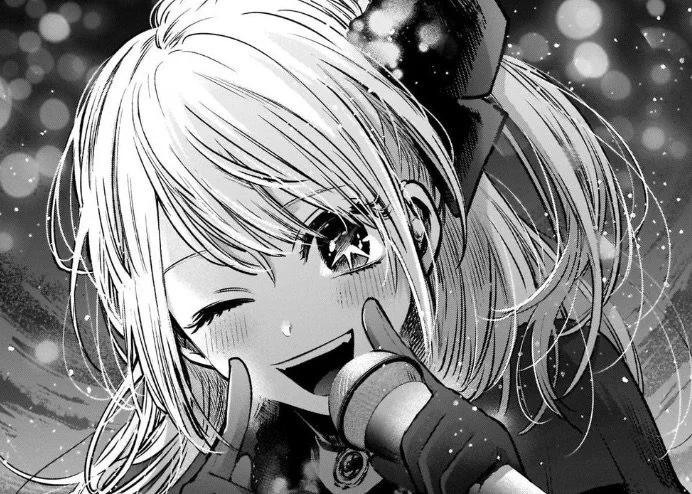
Whether Ai was a good role model for Ruby to follow or not, I can’t say. What I can say is she made sure that what she endured, her children wouldn’t have to. Before her death, Ai found someone to love from the heart in her children, with her last words being “I love you.” The signs of a good parent - one who guides their kids to be better versions of themselves.
I’ve focused on the contrasts between Ai and Ruby, which I believe made the latter a better version of Ai. However, I’d be remiss were I not to mention the role, however minor it may be, of Ruby’s past self, Sarina. As it turns out, her background and Ai’s share some similarities: both were neglected by their parents, and both left a deep mark on someone in their lives – Hikaru for Ai and Goro for Sarina. She also has a strong will to live, even as she succumbed to her terminal illness, as she wanted to do many things her condition didn’t allow for. This becomes clear after her reincarnation, as Ruby views her career in the entertainment industry through the lens of someone with limited time, treating it as something fleeting and embracing it with the urgency of someone counting the hours before it’s too late.
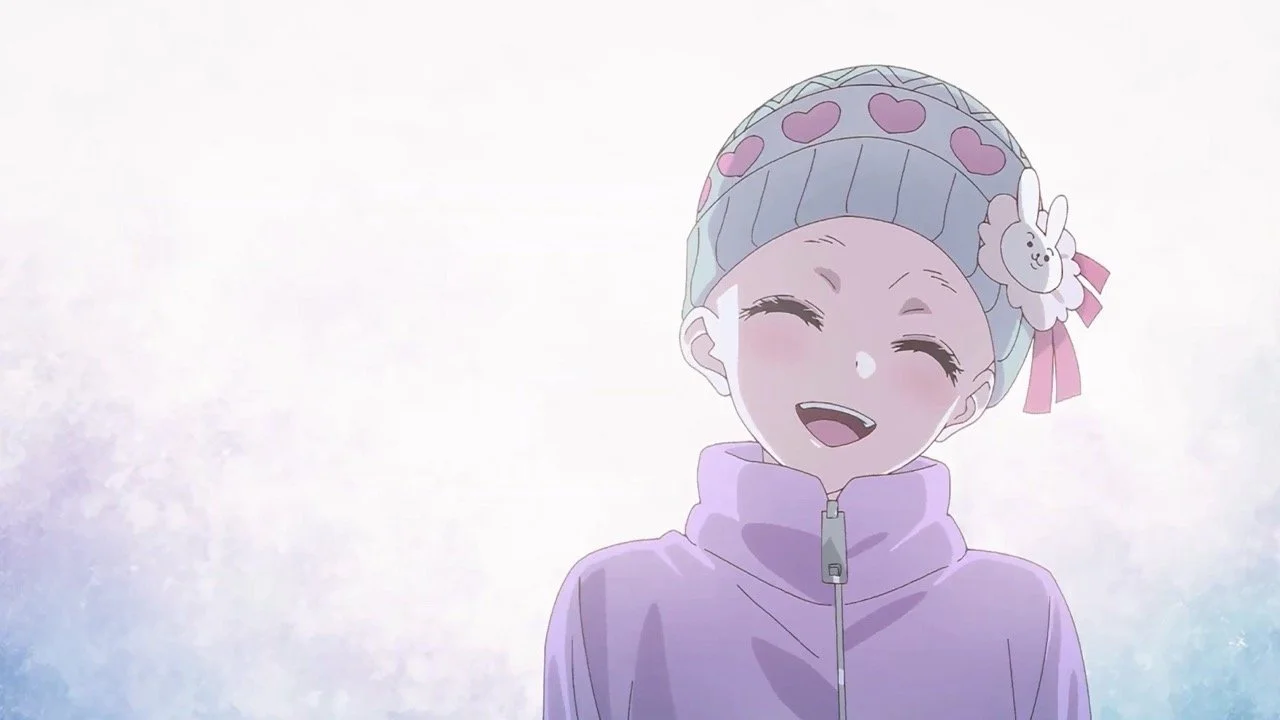
Given everything I mentioned, I’ve concluded that Oshi no Ko is Sarina’s story. Everyone else, Ai and Aqua included, is second to her. If this series were to have a sequel, I see it repeating everything that happened with a “new” character. By no means I’m advocating for one – this story ended before it overstayed its welcome. But I believe all good stories finish where they began.
This is where I recognize how apt the ending was. I don’t subscribe to the general sentiment.