
16 min read
Prior Entry | All Media Log Posts | Next Entry
Please be advised these posts aren’t spoiler-free.
Typically, I write this section first, but this time, it was the last. I didn’t know what to write for the prelude as my thoughts on one particular entry consumed me. This month’s log is short, but I made up for it on the commentary – I somehow wrote three thousand words overall. I’m anticipating March’s entry will be much broader, as I have one anime show I’m watching, another I want to start, a Japanese role-playing game to dive into, and some manga chapters and volumes to start.
I hope you enjoy my media log for February!
The Many Sides of Voice Actor Radio
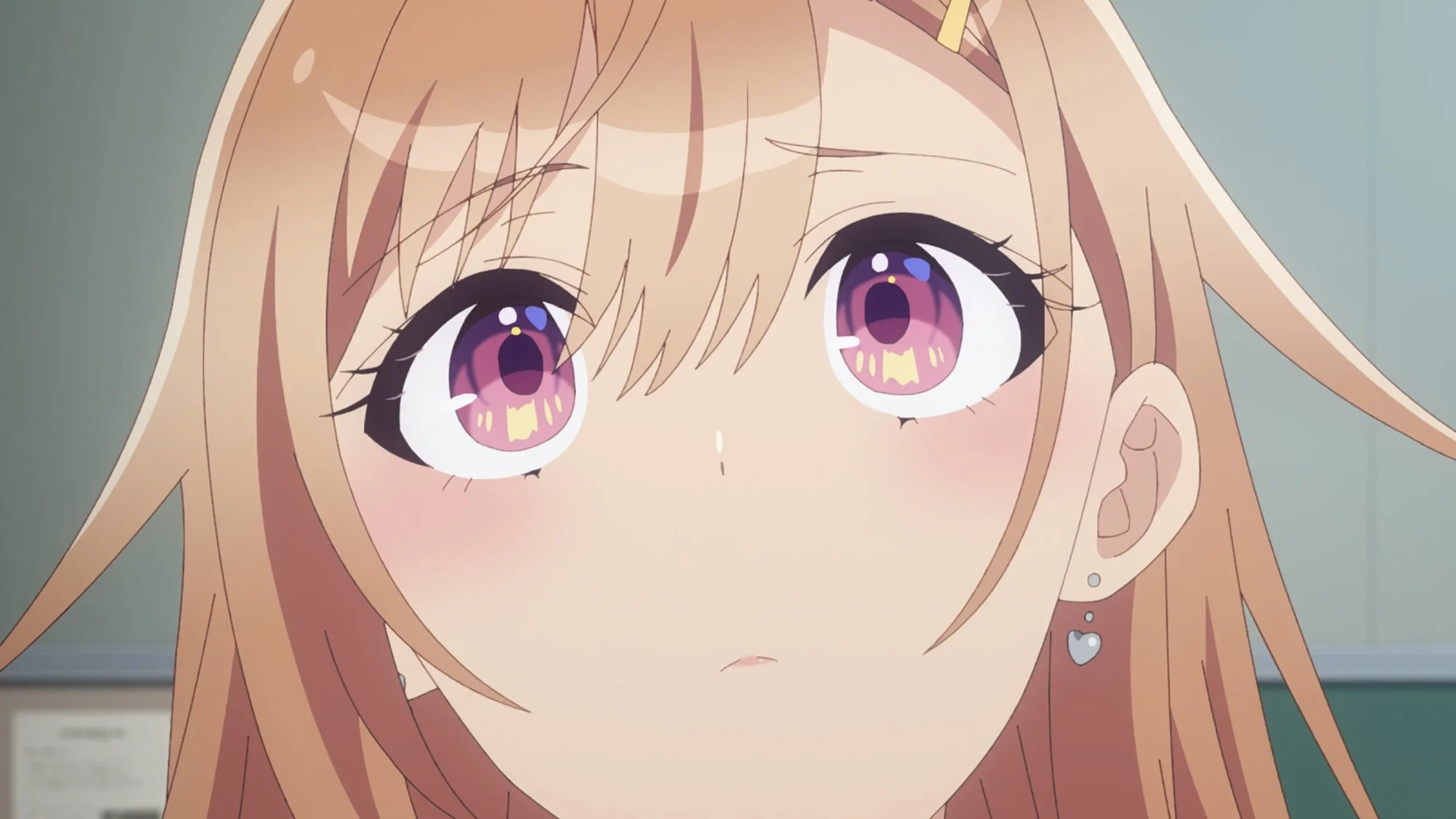
I had never heard of this show before my friend recommended it. Maybe they thought I’d be interested in the subject matter as I have a communications degree. It looked decent, so I gave it a go.
Voice Actor Radio tells the story of two girls, Yumiko Sato and Chika Watanabe. The former, under the stage name Yasumi Utatane, is struggling to find work in the field of voice acting after Plastic Girls. One day at school, a student brought in a picture of the rising star Yuhi Yugure just as Watanabe, the class loner with an unapproachable aura, walked in. A cup of coffee was accidentally dropped by her feet; Sato’s friend apologized, but Watanabe, having seen the picture, walked out of the classroom without saying a word. Sato took issue with her attitude, and Watanabe chewed her out when confronted, suggesting she would’ve done so earlier but walked away to cool down. Shortly after, Sato’s manager calls with good news: she secured a radio show with Yugure.
Sato has never worked with her before. They meet each other at the studio, and it turns out that Yuhi Yugure is none other than Chika Watanabe, the same girl Sato got chewed out by at school. The concept of the show is high school sophomores sharing the school vibe, and the fact that they know each other works very well. But the dynamic between each other in the studio and outside of it could not be more different. By working together, they come to understand each other, to the point in which they develop a friendship/rivalry. Whether it’s a healthy relationship or not, I can’t say.
While not the commentary on the voice acting industry I was expecting initially, the character interactions stood out. For instance, Watanabe’s insistence on trying things mentioned in the show - never had croquettes from a butcher shop before? Sato humors her and takes her to her favorite place to grab them from. Never had a sleepover before? Sato goes to Watanabe’s place to, well, sleep over. Perhaps my main criticism is how short some arcs felt. In just seven episodes, we go from the girls getting together to a gossip arc and then a threat from Watanabe’s mom to make her quit voice acting. Only the final arc, in which Sato landed a role as an antagonist for a show called Illusionary Mecha Soldier Phantom, felt fleshed out by giving it space to breathe. It didn’t overstay its welcome, highlighting the qualities Sato lacks as a voice actress and how she works through them, all while cementing the rivalry with Watanabe. This series would’ve benefitted from having 13 episodes to make the middle part stronger, and if I were responsible for the series composition, I would’ve given more time to Heart Tart, the idol group composed by Sato, Watanabe, and Otome Sakuranamiki, their senior.
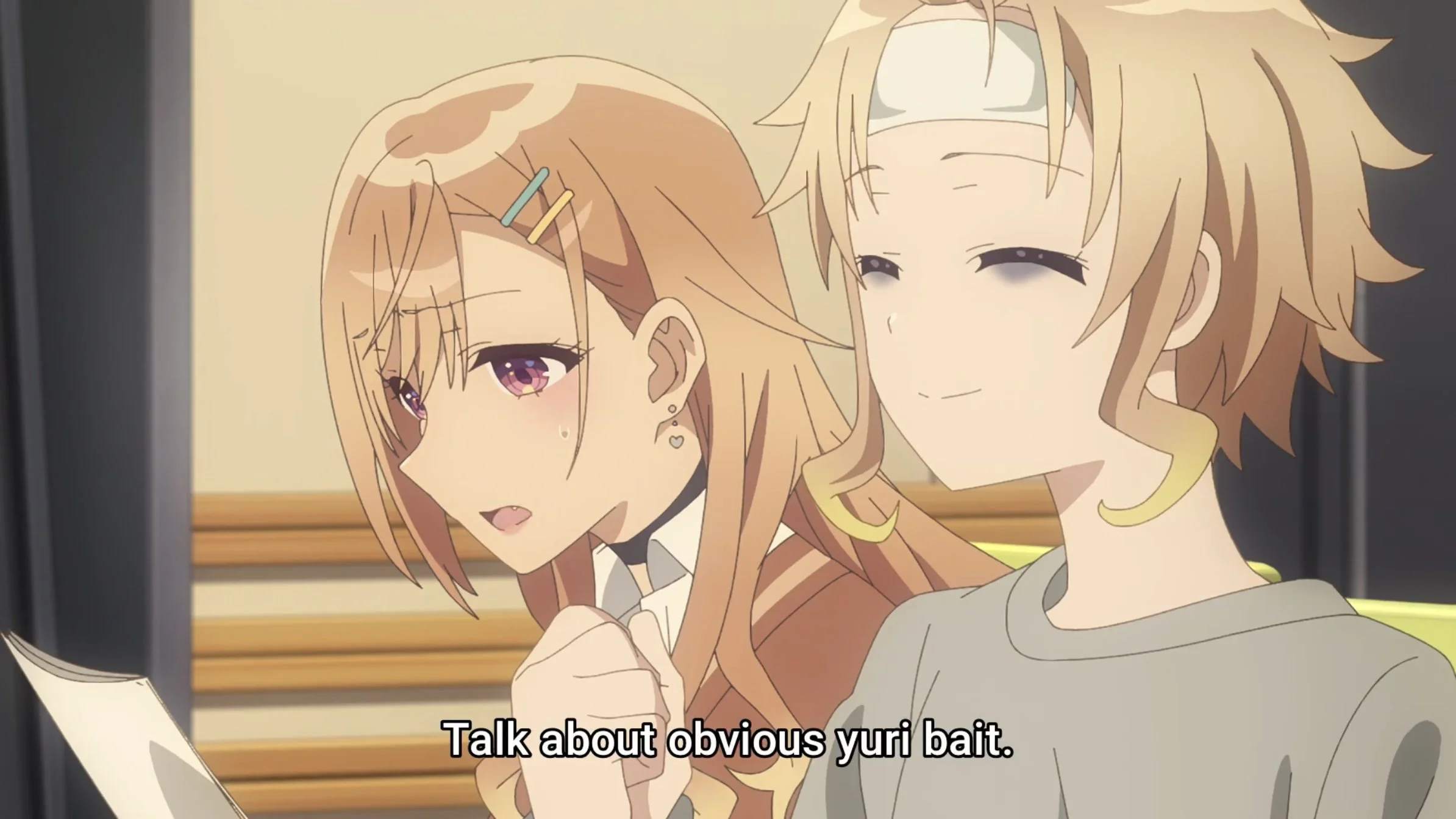
While doing research for this show, I came across something that bugs me: among the genres this work belongs to, one of them is “yuri,” which I disagree with. When a creator chooses a genre for their work, they’re also accepting the expectations that come with it. Naturally, audiences hold media accountable to the conventions of its chosen genre, and deviating too much can lead to either frustration or disappointment. In the case of yuri, it’s another name for girls’ love (GL). It can be something wholesome like Monologue Woven for You and She Loves to Cook, and She Loves to Eat, or risqué like Citrus and NTR: Netsuzou Trap – but regardless of the approach, the common thread is that one girl is romantically or sexually drawn to another. None of the interactions between Sato and Watanabe suggested anything beyond their progression from classmates to coworkers and, eventually, a mix of friendship and rivalry. Even with the scene in which Watanabe touches Sato’s naked breasts or the scene in which both disguise themselves, it isn’t sufficient to call this a yuri show. It’s yuri bait, sure, but that’s all it is.
I’m willing to compromise on shojo-ai, the non-romantic variant of yuri, but I think slice-of-life works better at depicting how their relationship evolves. Coming-of-age works as well but is redundant. The original light novel may paint a different picture that changes my interpretation, but as I’m commenting on the anime, my position is that Voice Actor Radio isn’t a yuri work.
OMORI

First mentioned in my memorable games post, I was keen on replaying this game for some time. When they were first available, I jumped at the opportunity of owning a physical copy of a title that meant a lot to me – yet it remained unopened for years. Fast forward to the present: Fangamer released a collector’s edition featuring items inspired by in-game props, with its centerpiece being a piano music box that plays a rendition of “Duet.” Naturally, I had to nab one of those. Between this purchase and egging on a friend so they play their copy, I decided I wouldn’t put it off any longer.
OMORI’s first few hours may look cheery, but don’t be fooled – it’s a surreal psychological horror game. It tells the story of a child whose name serves as the game’s title and his adventures in the fantastical realm of HEADSPACE. He’d play with his close friends Kel, Aubrey, Hero, and Basil for hours while his sister Mari watched them by the picnic area. Then, all of a sudden, Basil vanishes without a trace. The group explores all of HEADSPACE—a vast forest, a showy castle, the deep sea, and even outer space—leaving no place unchecked in their search for their cherished friend. OMORI seems to be suppressing a dark secret, but the moment even the faintest hint of a certain incident surfaces, the dream abruptly ends.
A boy named Sunny appears, and the art style shifts, shedding its ethereal splendor to embrace the grounded hues of the in-game real world. Outside of HEADSPACE, Sunny’s family is moving out of town in three days, and he’s tasked with doing leftover chores while his mom gets everything ready at the new place. A relentless knock echoes through the house – will you open the door or ignore it? Herein lies one of the main choices the player makes, which determines which ending they’ll get. Per the strategy guide, there are four of these.

OMORI truly is a labor of love by its creator, OMOCAT. One proof of their dedication is how the earliest reference to what would become OMORI dates back to 2011, which still lives on their blog – I’d encourage readers to browse through the very early posts under the #omori tag. This was followed by a now-canceled webcomic, OMORI’S STORY, before a shift towards becoming a game as OMOCAT felt their story was best suited for interactive entertainment. A Kickstarter campaign for it opened in 2014, with an estimated release date early the following year; it had no trouble meeting and exceeding its goals, yet the game wouldn’t be released during the estimated date, as troubles in development arose. I imagine the explosion in popularity of their clothing line must have contributed to the delay – after all, as fulfilling as an art career can be, we still need money to eat.
OMORI was released in December 2020 to critical acclaim and, surely, to the immense relief of OMOCAT and their team, who had overcome countless hurdles to see their vision realized. The consensus is that OMORI isn’t a game for everyone, especially those who are in a bad place. Those who can withstand its themes of angst, depression, and guilt will be rewarded with a journey the likes of which are seldom seen in video games. A phrase I’ve frequently seen to describe OMORI is “an experience you won’t forget” – I wholeheartedly agree.
I deeply appreciate how rich in symbolism OMORI’s storytelling is. One example is OMORI himself: though not immediately revealed, he embodies Sunny’s way of coping. The emptiness of White Space is also entirely symbolic, and the few belongings in OMORI’s world reveal an aspect of Sunny’s psyche: dissociation. He experienced this with Mari’s death, which he caused by accident. He also experiences it with Basil in the bad ending – after discovering he committed suicide, even a glance at his corpse when peeking into the room is enough for Sunny to mentally erase its existence. Additionally, leaving plot lines deliberately vague or weaving in earlier memories keeps players on their toes. You never know when a framed picture of a familiar figure or a random event you witnessed in the Black Hole might become relevant. In an age where media insists on illuminating every shadow, OMORI allows the darkness to speak for itself, a quiet defiance that feels like a breath of fresh air.
And yet, for how bleak OMORI is, it’s a story of hope. It won’t steer you toward the canon route, but if you choose to leave the house and spend time with your friends again, Sunny witnesses firsthand how they’ve coped with Mari’s loss over his three-year absence – for better or worse. In that sense, it’s deeply empathetic. It’s a story about the courage needed to face your fears. Only Basil knows first-hand the events of that night, and they’re both terrified of what’ll happen if the others find out. If OMORI listens to STRANGER’s advice in Black Space, Sunny may finally feel compelled to face the long-buried truth. And finally, it’s a story about how to forgive yourself. While Sunny hid in HEADSPACE, his friends suffered – they care for him just as much as they do for Mari. But you don’t have to face your trials alone. Let others help carry your burdens, trust in their love, and give yourself the chance to heal.
Mini-Session Corner
Super Mario World & Teenage Mutant Ninja Turtles IV: Turtles in Time
“Mini-Session Corner?” Couldn’t I have come up with a more creative name? This title may not last, and it might not be a recurring feature in future media logs, but I digress.
After finishing OMORI, I didn’t feel like diving into a new game, watching anime, or reading manga right away. It works for the blog: the time I would have spent on those activities has instead been dedicated to writing about my interests, including this very post. However, I couldn't stay away for long.

First, Super Mario World. It came out of nowhere; I certainly didn’t have the urge to replay it. What drove that decision was the music: the soundtrack was added to the Nintendo Music streaming service in early February and I listened to extended versions quite often while I worked. It’s surprising this wasn’t released earlier in the service’s tenure, but in the end, it doesn’t matter – every track is already on YouTube, uploaded by third parties, in both regular and extended versions for anyone who wants them. What’s different is its convenience: launch the app, tap the search button, and either sort it by platform or find it in the “Your Games” carousel. It’s curious how often I feel like replaying a game because I was listening to the soundtrack. Surely, this phenomenon must have a name, I just don’t know what that is.
I was taking a break from playing OMORI when the soundtrack was released – perfect timing to do a replay. However, I didn’t feel like playing through the whole game, just the Koopalings and Bowser. So how do I do a castle-only run if I don’t want to play through the whole game? NSO has “Special” versions for some titles, and Super Mario World is one of them. These special versions either have everything unlocked or leave you right before a pivotal point in the game, and this one is the former. It even had Star World & Special Zone fully completed! Initially, I forgot the button combination to replay the castles after they’ve been beaten and I knew there was one. Once I figured it out (the combination is L + R on top of the demolished castle), we were off to the races, reliving memories of me sneaking into my cousin’s room when he wasn’t home to play the game when I was six or seven years old.
I alluded to the difficulty spikes irking me on the memorable game entry for Donkey Kong Country, but that didn’t seem to apply to the castles? I may have spoken through the haze of childhood recollections, where distant echoes of playing it still softly linger. It’d be interesting if I still feel that way whenever I replay it properly. Overall, an hour was well spent.
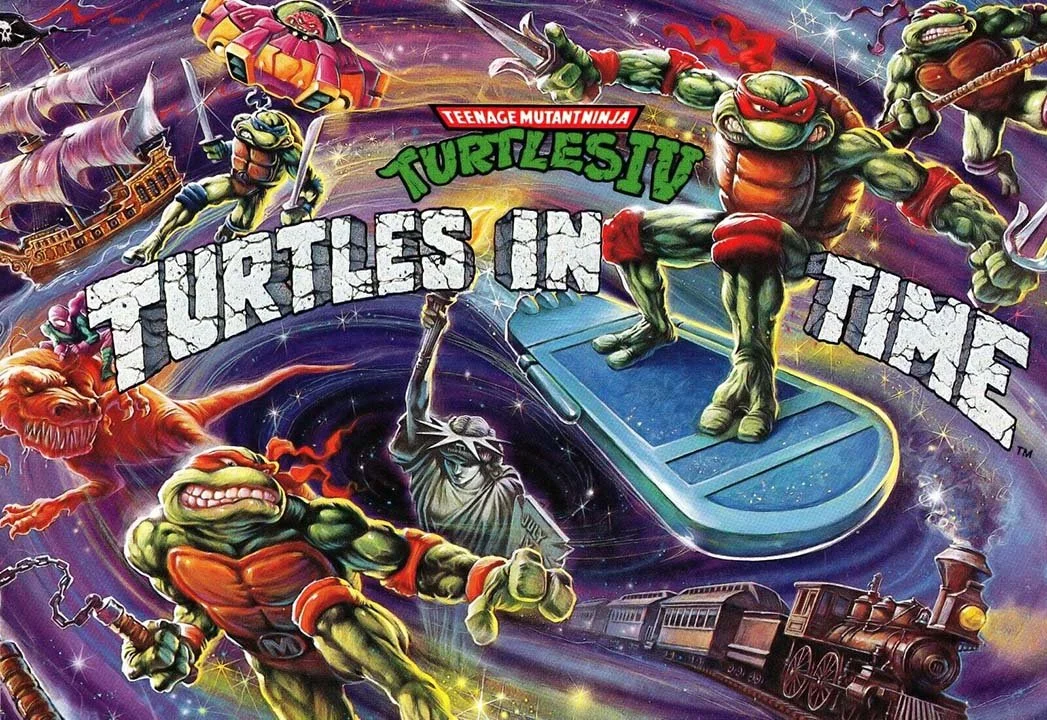
Finally, Turtles in Time. I wanted to play the Re-Shelled Ubisoft remake version, which uses the arcade version of Turtles in Time, but I couldn’t be bothered taking my 360 out of storage for one game. So I emulated it, as The Cowabunga Collection remains too expensive for me to afford.
Before I continue, I want to address something important: the fact that Re-Shelled is considered lost media is both saddening and upsetting. If you didn’t purchase it, there’s no way to play it, as it never had a physical release. There must be a way to preserve licensed media, and companies that own intellectual properties should not be allowed to unilaterally revoke distribution rights to works created under licensing agreements.
It’s worth noting that limited physical releases from companies like Limited Run Games and iam8bit do not provide a solution; in fact, they worsen the problem. In an increasingly digital world, consumers are often trading ownership for convenience, and that is a real shame.
But back to our regular program: as with most games that have difficulty levels, I played it on easy. I can’t be bothered wasting time in “getting good” when I have other things I could be doing or must do. I don’t have anything to prove, I just wanted to kill some time. This would bewilder my younger self going for high scores on the hardest difficulty setting which can only be achieved by staying alive through all ten levels. With this lack of free time, still want to be an adult, young Tyson?
Oh, how much I missed mashing buttons while progressing through the level with little variation. It reminded me of simpler times when skill trumped strategy. A skillful player can anticipate the enemy’s position – Rock Soldiers, anyone? – and tell when the enemy is about to attack. It wouldn’t be a flawless run: I saw the Game Over screen twice, but I wasn’t worried about losing my position in the overall game, a key difference between the arcade variant and very early NES games. And even if I lost my position, it didn’t matter, as Turtles in Time is a short game – took me less than an hour to get through the story from start to finish. Back in those days, whatever saving solution existed was silicon on the board itself and manufacturers saved money by making the board as simple as possible. Saving solutions required an elaborate board plus a battery, one resembling those used in wristwatches. On its own, it may not be expensive but when you’re buying thousands of them, someone in accounting may get an aneurysm. “Does our game need a save state?” is a question that needs an answer in the design stage; some games like Mega Man avoid this by using passwords instead.
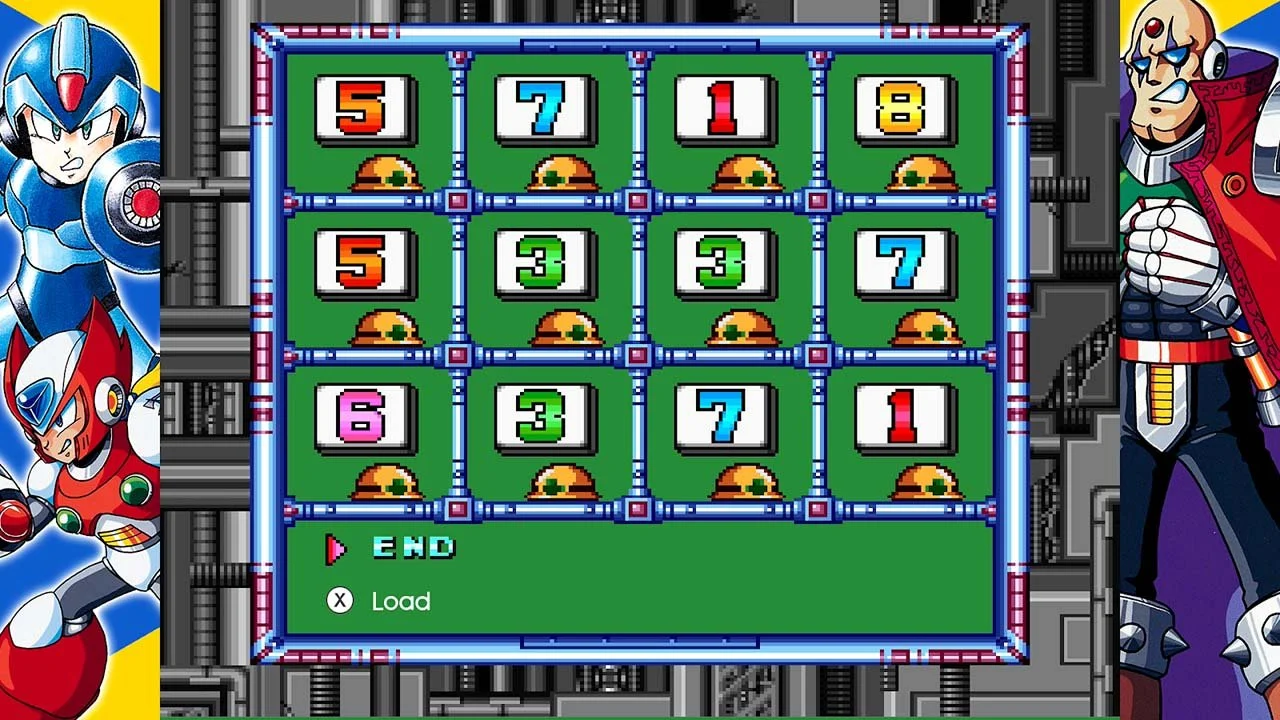
But I digress – I went on yet another tangent. I just find this fascinating!
A note on the bosses: Metalhead, Leatherhead, and Super Shredder have cool designs. I recall drawing fanart of Metalhead specifically when I was younger! I don’t believe I was hugely into robots but something about that design spoke to me. It’s a shame I don’t have any of them lying around anymore, or I would’ve done a brief show-and-tell. As for the normal variant of The Shredder, I struggled to beat him in the first Technodrome stage. I knew I had to throw stunned Foot Soldiers toward the Battletank, but I couldn’t figure out how to do so for some time. It’s here where I saw my first Game Over screen but not before figuring out the button combination. I wasn’t aiming at a flawless run but still, I was too late.
While playing through the game, I had a thought: games like these don’t exist anymore. Publishers often flood the market whenever a good idea comes across, and often they muddy the waters in the process. Pong, Space Invaders, and DOOM clones all went through this, with only the last one becoming so popular that it spun off into its own genre, yet exceptions don’t reflect the norm. Today’s beat ‘em ups live through hack-and-slash and brawlers, but it’s fair to say that they’re nowhere as popular as they were in the late 80s. Did it deserve this fate, to go out not with a bang, but with a whimper? It would seem the market responded to the aforementioned flood and, at least in the AA and AAA space, there’s no space for those types of games anymore. Perhaps the highest profile game nowadays that fits the definition of a beat ‘em up is the Like a Dragon series, formerly known as Yakuza, but it doesn’t scratch the itch games like Turtles in Time did.
That’s it from me. See you next month!