

34 min read
Last year, I was on the verge of a mental breakdown.
I’ve felt very irritable towards anything and anyone. While in that state of mind, I’m prone to lashing out, and some friends who are dear to me got the short end of the stick, unfairly so. After one too many instances, I realized I needed to step away, lest I dig myself even deeper into this hole I’m in. And I did, renouncing Discord for some time while I got my act together.
I have a childhood memory of there being serious talks of putting me on Ritalin, an ADHD medication. My mom objected, and perhaps my dad did as well. Thirty years after the fact, after I asked to be put on antidepressants and had been taking them for some time, I told my psychiatrist about this memory, wanting to confirm whether the professional’s theory from back in the day had any merit, whether I met the criteria to have an ADHD diagnosis. I felt my mind wander, unfocused — or hyper-focused, if it is something that interests me. It can be a blessing or a curse, but I was more on the latter end, not only in my day-to-day, but at work as well.
He agreed. I got the official diagnosis and was placed on medication to treat it, perhaps something I should’ve been on long ago.
Some time into the treatment, I felt a clarity of mind I’ve never had before, certainly not by forcing myself into a specific state. It was at this point that I reflected on all of this technology supposedly designed to “connect” us. It began to feel like being locked up in a prison, a thought I didn’t enjoy whatsoever. As it relates to Discord, I didn’t like it having such a strong grip on my attention. The sentiment extends to social media in general, but as I’d discover, microblogging sites such as Bluesky are harder for me to give up. Friends who wanted to keep tabs on me could reach me through their direct messaging function until I felt ready to “come back.” If it wasn’t for the medicine and all that serious pondering, I would’ve never realized how being this accessible, how anyone can snatch my attention away from what I must or want to do, isn’t good for me.
And it isn’t good for you either, dear reader.
I’ve been pondering making a post on the current state of social media ever since. While there was already something nagging at me, I didn’t have the words to describe what I was feeling. The state of online communities has been bleak for some years: we’re more polarized, conversations are more toxic, and everyone’s on edge. We let tech moguls take what’s wonderful about the internet and homogenize it, commoditize it & monopolize it, all while keeping us “engaged” by making us upset — the Fox News business model.
Join me down memory lane as I reminisce about my history on the internet. Hopefully, by the end of it, I have made my point.
It All Started with a Phone Tone
Coqui.net was a dial-up service provided by Telefonica de Puerto Rico (PRTC). These ads ran on local television in the late 90s, before the government of Governor Rossello Sr. sold the public utility. Today, it runs under Claro Puerto Rico.
As someone who grew up sheltered, all I yearned for were communities that shared the same interests as me. Back then, much like today, I was into video games and anime. There wasn’t internet access at the many houses I lived in throughout my childhood. I don’t know if Mom thought the $15/month dial-up subscription was expensive, or if she didn’t see the point. I wouldn’t let that stop me; whenever I borrowed a computer with internet access or “borrowed” dial-up credentials to use with mine, I was glued for hours, much to the detriment of Mom’s power utility bill. My real-life friend circle wouldn’t have people with shared interests until around 2005, so these communities became my refuge. Looking back, Mom’s attempts to control my screen time, back when the internet was less advanced, were done with my benefit in mind. Ironically, I now lament how much social media controls us all. Not even she was spared: she’s glued to Facebook whenever she has idle time…
To conclude this short back-to-the-present thought, have I tempered my social media usage? I’d say no. Most of the platforms I got out of were because of principle, not out of a genuine effort to leave this technological prison behind. Though it’s not all a worthless effort — I learned to aggressively manage my notifications. If those are the things that cause me to get distracted, then those must go, permitting me to tend to things at my own pace, in my own terms.
Hello, World
Humans are social creatures ever since we were nomads — we needed each other for friendship, companionship, and, above all, survival. How is this relevant to the digital age? Well, millennia have passed since, and we still need each other, even with this greater push towards independence. Don’t worry, I don’t intend to get into sociology in detail to make my point.
Online communities date as far back as Usenet, maybe earlier if we consider any precursors. It was way past its prime by the time I first got online, and all I know about it is second-hand. But this story of my presence on social media begins with Myspace, the first site I made an account on. That is, if we’re not considering chat rooms and message boards to be “social media” as it’s commonly understood today. I’d like to claim that I knew of Friendster, but I’ll admit I’m not entirely sure.
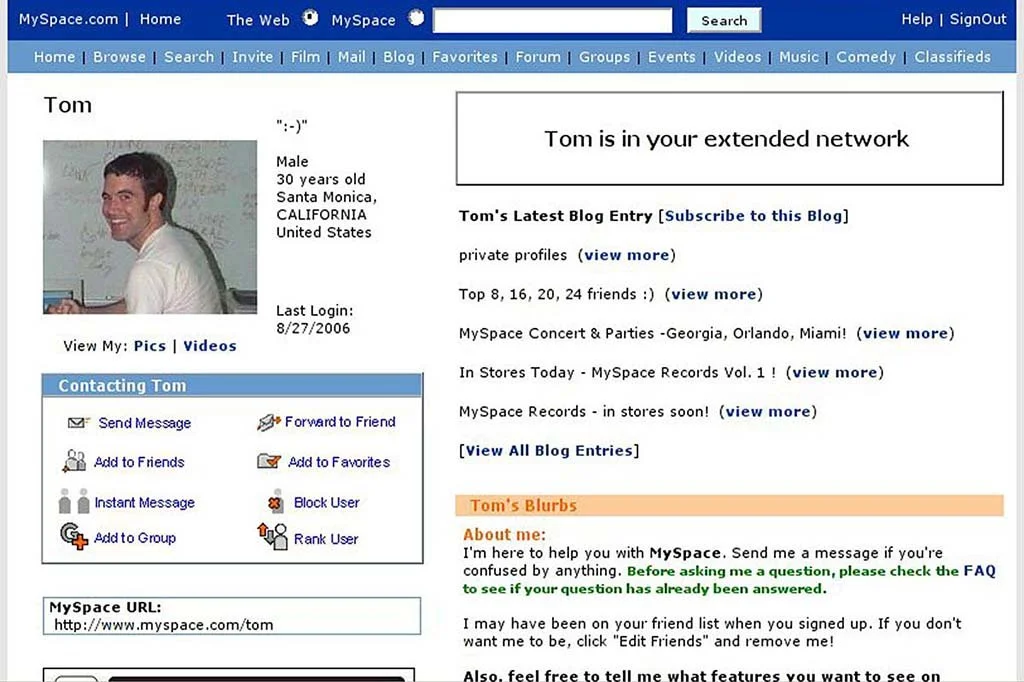
Myspace Tom really was everyone’s friend…
A thing many teenagers face is peer pressure, and I was not above it. I made an account on Myspace because my friends were there; you want to belong, and you do what the others do. The platform itself was fun: the level of customization it permitted was unlike anything at that scale — we’re talking about a site that, at its most popular, saw 115 million monthly visitors globally. I got my hands dirty with basic HTML, though my skills wouldn’t get to the point where I’d write custom CSS for my profile’s theme. Many profiles had very loud themes and Blingee GIFs all over, but I preferred dark, minimalist ones. Instead of relying on ready-made stuff, I could create graphics that appealed to my sensitivities using what I’ve learned from my Photoshop dabbling. Ah, that feather logo is starting to feel nostalgic…
While the design aspect of Myspace deeply interested me, the social aspect less so. Again, I grew up sheltered, and the social dynamics largely eluded me. To many, I look indifferent to anything or anyone — I still do, to an extent. There was real anxiety of ruining a relationship in real life over a spot in your top friends list, even over rankings. Sounds ridiculous in hindsight, but ruined relationships over social media didn’t decrease; they went upwards — hell, it happened to me.
Details of the falling out are hazy, but I recall this person posting on either their blog or their bulletins about our falling out and engaging in character assassination: how I was a horrible person, and no one from their circle should speak to me. It was amusing, to say the least. It was there that I first witnessed someone being “terminally online,” a term often used in jest, yet it unironically applies to them. We never made up; if they wanted me out of their life, I wouldn’t let the door hit me on my way out.
I went further into my cocoon. I’ve maybe interacted with ten people outside my circle at most, including notable people. However, I tried to be cautious with this latter group, as it could quickly lead to a parasocial relationship. A good thing about the days when the internet wasn’t in your pocket, or everywhere for that matter, is how social media sites stayed on the PC. Once you shut it down, that was it — goodbye, see you tomorrow, or whenever.
Face…mash?
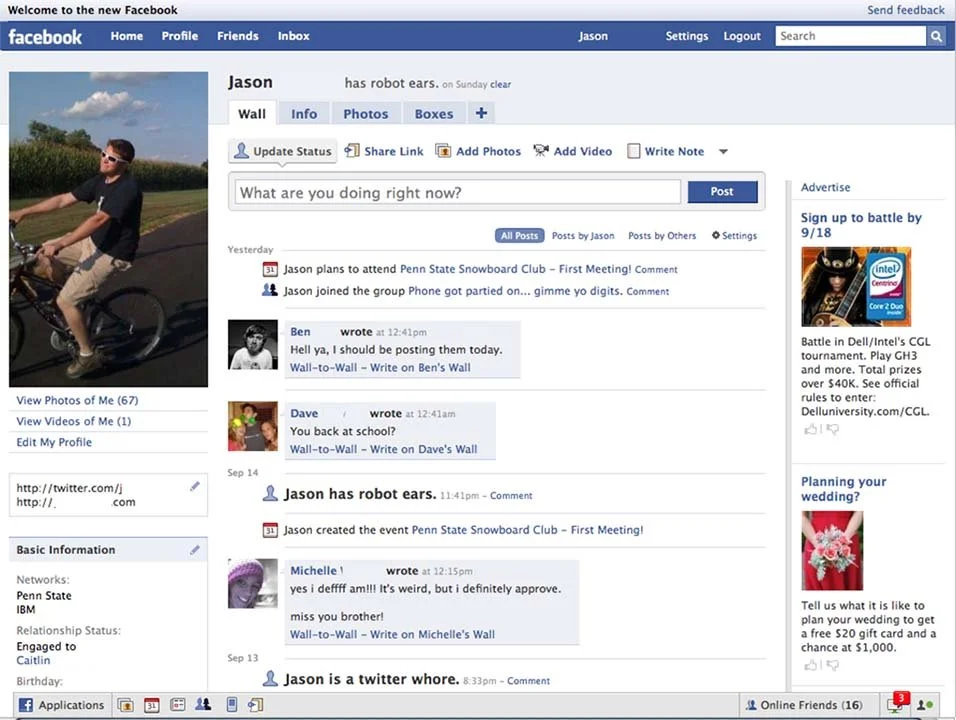
The profile version before Facebook opened up to the public.
The fastest way for a social media platform to lose its appeal is when parents and older family members start joining. It was true then, but it’s more… nuanced today. When Myspace went through this phase, Facebook began gaining popularity among computer-savvy millennials, myself included. Signups were limited to people with an educational e-mail, which made the young platform appealing as it was locked to the rest of the world — but that wouldn’t last long. The largest cohort of millennials was of college age by the late aughts, and a large portion of them aren’t strangers to social media. It was a demographic that was hungry for something new; the meteoric rise of Facebook meant many left their Myspace profiles behind in favor of the social network’s offering.
A feature that would become key not just for Facebook, but for platforms that came after, was putting Myspace’s bulletins central stage, in what came to be known as the News Feed. It killed user-customizable profiles in favor of design uniformity, something I still lament to this day. And yet, it works for what came next: the social network’s rise coincides with the increased interest in consumer smartphones after the iPhone release. Zuckerberg wanted his site to be mobile-friendly, and his bet paid off. Myspace couldn’t catch up — they were the turtle in this race, and the hare is two miles ahead. They saw some success with artists looking to put their music online, and eventually moved in that direction. Yet amidst all the confusion caused by the rapid pace of technology, it’d try different things, but none that would save it from irrelevancy. What Myspace did to Friendster, Facebook was doing to them. The site still exists today, but it’s not the same site I used during its heyday — a shell of its former self.
Chirping Bird
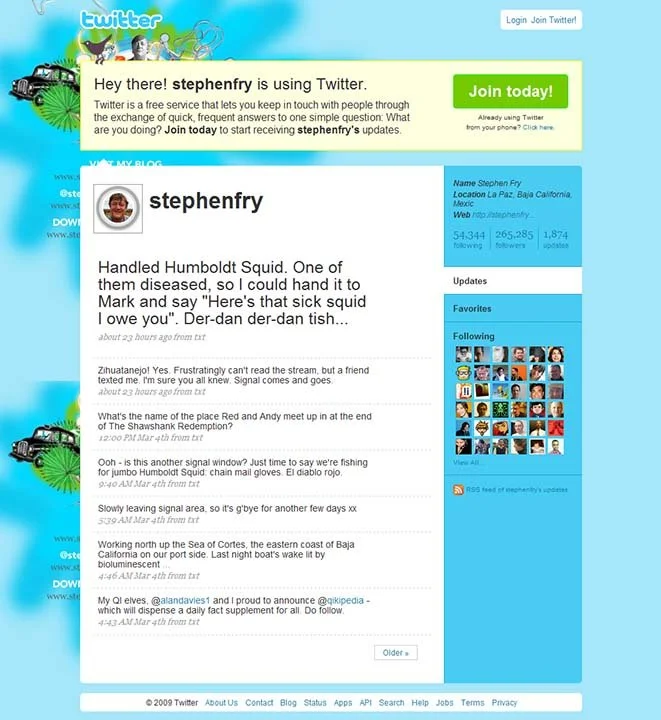
Luckily, Jack got a graphic designer on board for the 2009 revision. Older Twitter pages look…rough.
In 2008, during one of my computer science classes, the professor gave a lecture on Twitter. Part of the syllabus was dedicated to getting students familiar with these new digital platforms; as such, he assigned us to open accounts there. It was a whole different ball game from Facebook: it was mobile-friendly ever since its inception — in addition to the website, users could post, or “tweet,” by texting to an address unique to their account on the platform. The downside was that you’re limited to 140 characters. The specific count is arbitrary, but consider how text messages in those days were limited to 160 characters before the message got split. Presumably, the devs accounted for some wiggle room to not break up the message — or the system.
Blogs were all the rage, with platforms like WordPress and Wix being favorites with people unfamiliar with web development. It’s here where Twitter saw one use case: sharing links to larger write-ups. You can even call early Twitter an RSS feed with a social component — it effectively replaced it for this type of use.
But I didn’t see the point. I didn’t have a blog; there was no use case for me past classwork. I had some conversations, followed some active accounts, and even caught the eye of some notable people, but I was nowhere near active on the platform. In 2015, I deleted that account in favor of another I opened some years earlier, and through which I got hooked on Twitter. It’s funny how the things I go to bat for, I often had an unfavorable view of at first. I’d call it a trend, but I’ll push back on that characterization, as my media intake isn’t based solely on spite.
War Has Changed
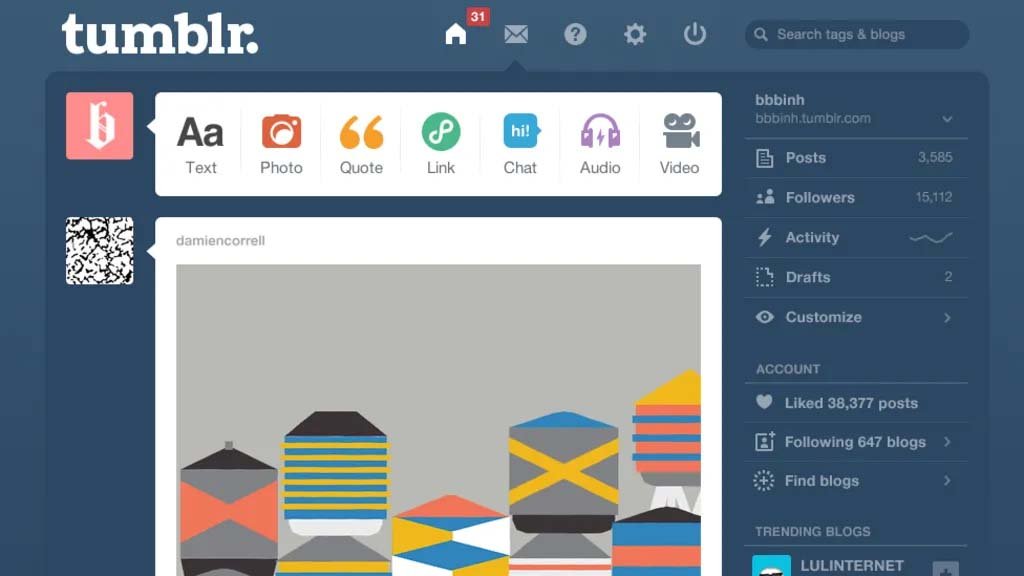
I’ve never blogged before… please, be gentle…
After being quite acid of the concept of blogging, I’d eventually open one on Tumblr. It’s a curious case, how it made blogging accessible by stripping blogs down to their most essential features, making it less intimidating. It also helps that, unlike WordPress, its interpretation of what a blog is was looser, more akin to how LiveJournal sees journaling. Perhaps inspired by Twitter’s “retweet” feature, Tumblr had “reblogs” — same concept, but with blog posts. There were accounts whose sole output was reblogs, and all the different online fandoms at the time quickly took to the platform. Throughout participation in the community, I took an interest in Call of Duty-themed blogs and even joined one of them as staff.
Looking back, one of the factors that led to my increased usage of Twitter was the sizable COD community there. I was among fellow players, YouTubers, and, of course, developers and Activision staff. It wasn’t all fun and games: I needed material for the blog, so I followed as many notable people as I could. One such follow was CharlieINTEL, a blog founded by Peter, Victor Vallejo, and Keshav Bhat. Primarily a COD news aggregator, it’d eventually expand its media reach to cover multiple games. Fellow Twitter addict Keshav ran the platform’s socials most of the time and ensured anyone familiar with COD knew about CI. It remained a three-man operation with the occasional collaborator until the Dexerto purchase in 2018 — Peter and Victor stepped down, while Keshav moved on to the new owner. I’m amazed how outlets I used to follow for COD news over a decade ago are still at it, still going strong.
A Confession
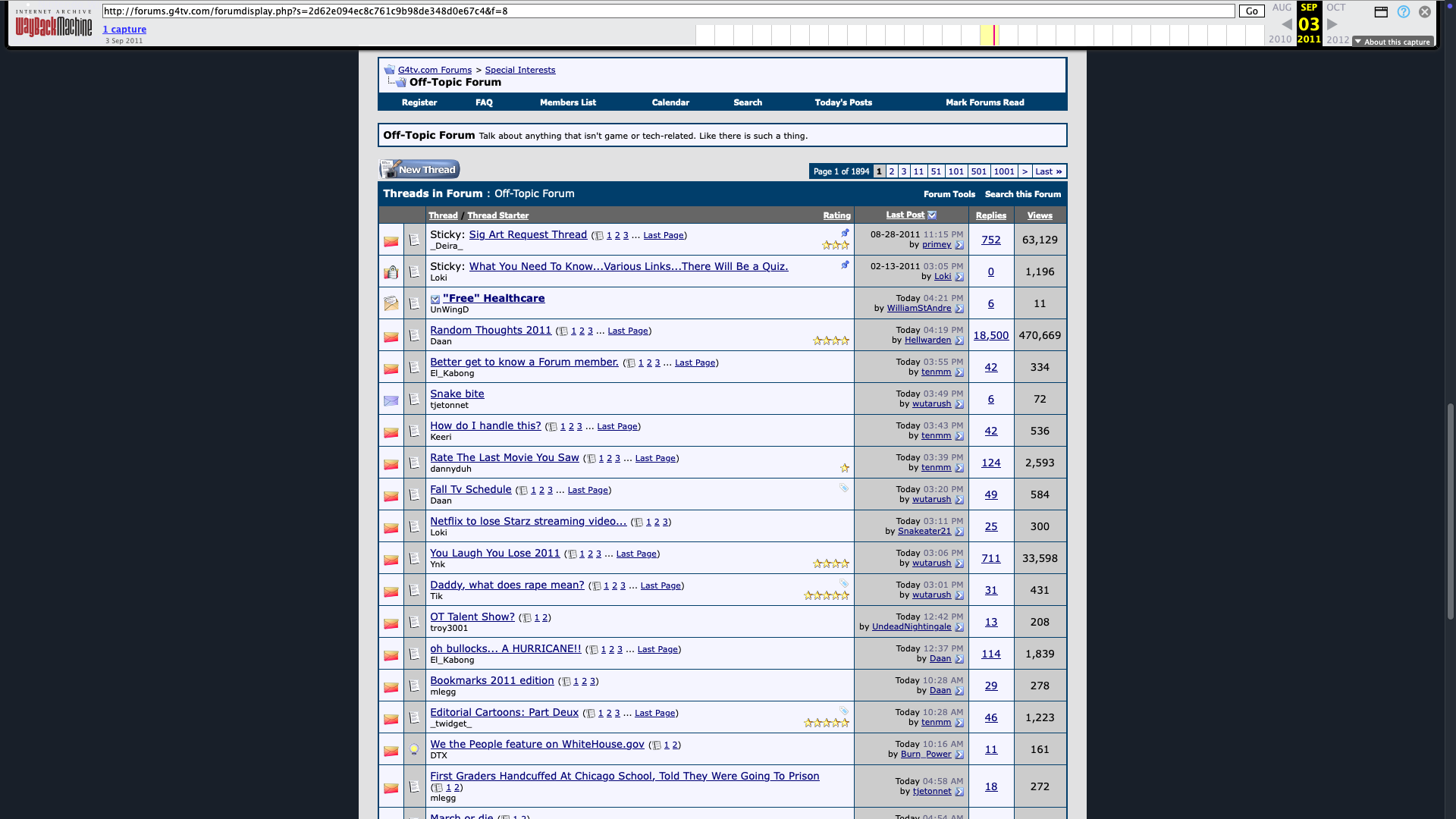
(Click image for bigger version)
I didn’t expect the Wayback Machine to have a screenshot of OT. I got sentimental when I saw it. So many familiar names: Keeri, Daan (D_Dan), Loki (RIP), troy3001, twidget, primey… I wonder what they’re up to.
I admit I’m not a saint; I enjoy a little bit of trolling. My early Twitter years were full of those, especially interacting with COD detractors. I think the reason behind my demeanor was that the communities I spent time in were full of edgy vibes.
Under the handle “Kanaye,” I used to frequent the G4 Forums’ off-topic board, or OT as we (lovingly) called it. It was a special place with an equally special group of people — you could tell there was something there when even the moderators who were supposed to keep us in check joined in on the naughty fun. There was an unspoken agreement between all: we were all adults, and we could handle a little heat, as long as it didn’t get nasty. Everyone got made fun of, and we were all equal in that regard. For most observers, it was an intimidating place, and if you had thin skin, we’d eat you alive. Survive, and you’d become one of us. Our bond, a trial by fire, worked like that.
A memory I have of those days: I was reluctant to disclose where I lived, and a fellow forumite who went as “D_Dan” took notice. Out of nowhere, I was assigned a random place where I lived: Cambodia. The joke caught on, becoming a jab at the messed-up things third-world countries did to get online, and I was the embodiment of it. I never took offense to it; instead, it helped me come out of my shell. I even played along, saying once how “I have to get up a coconut tree to get wifi.” It was offensive humor — edgy humor — but it was our humor.
It was a transition period: some time after one of the mods’ unfortunate passing, I stopped visiting OT. I passed from being a forumite to becoming another yapping person on social media.
Consequences
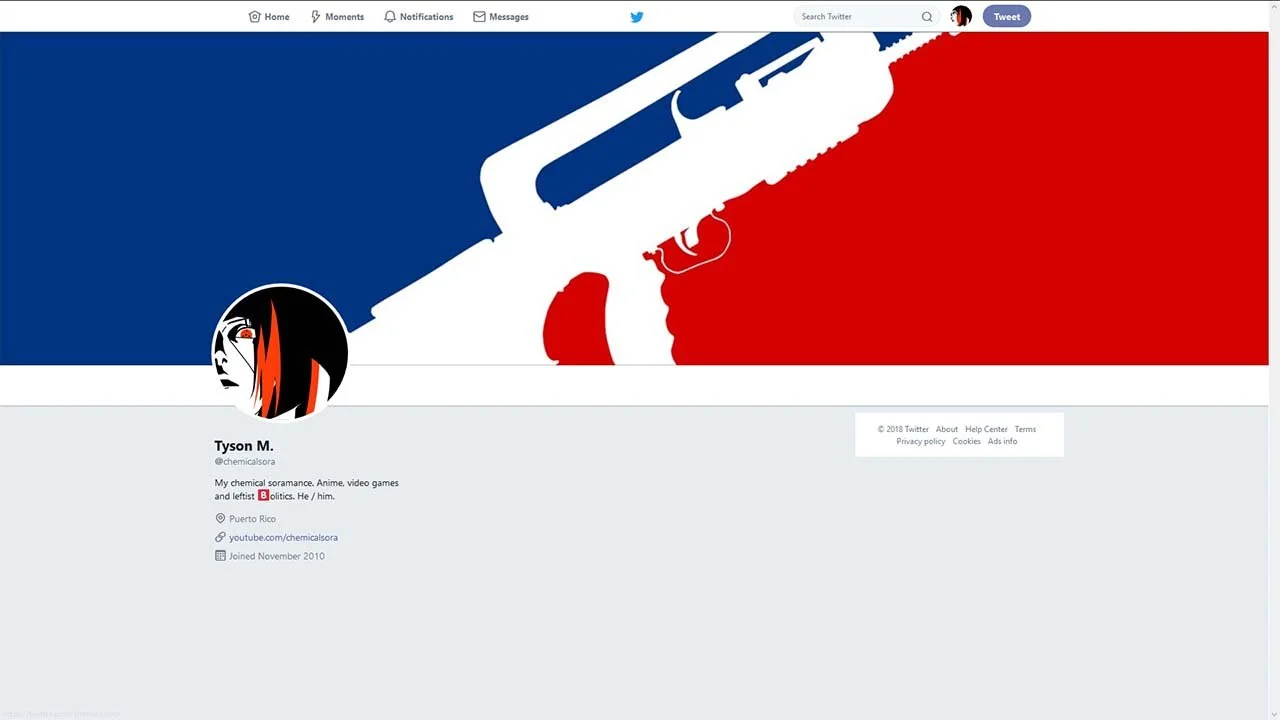
My Twitter profile in 2018. It doesn’t have the timeline on purpose - I needed this particular view for a vlog I was producing.
Even today, I like some bite in the online communities I’m in. And yes, that statement is made being aware that some jokes made back then would deeply offend me today. The common one aimed at LGBTQ+ people was that queer people are made fun of solely because they’re queer. We’ve made significant progress since, but perhaps at too great an expense. Online communities today feel too sanitized, and you’re often walking on eggshells. Personally, hearing a Discord server described as “the best place on the internet” immediately raises red flags.
An old adage states that, when something is posted online, it’s there forever — though I’m no longer sure about that. I was particularly lively during E3 presentations, often coming to Microsoft’s defense… not only did it age like milk, but little did I know those posts would be used against me. The online discourse at the time got angrier, and people even looked for dirt in old posts, worringly so. There’s a, in my opinion, mistaken belief that people can’t grow beyond their unsavory past, and how widespread the sentiment is frustrates me. When some started replying and quoting my old posts to “dunk” on me, I knew I had to do something. The first mass tweet wipe happened around this time, and I only remember it as I lost all of the original Persona 5 live commentary I did under the cringiest hashtag I’ve come up with.
I’ve said and done things I’m not proud of — we all have, and I’m not going to pretend otherwise to protect someone’s fragile ego. Moving past that speaks to one’s mental fortitude and maturity; it’s a kind of strength. I learned how I needed to watch what I said the hard way, although there’ll be instances in which I didn’t follow my own advice. Still, old posts shouldn’t be indicative of how someone I’ve never spoken to should treat me.
The (Alt) Right Rises
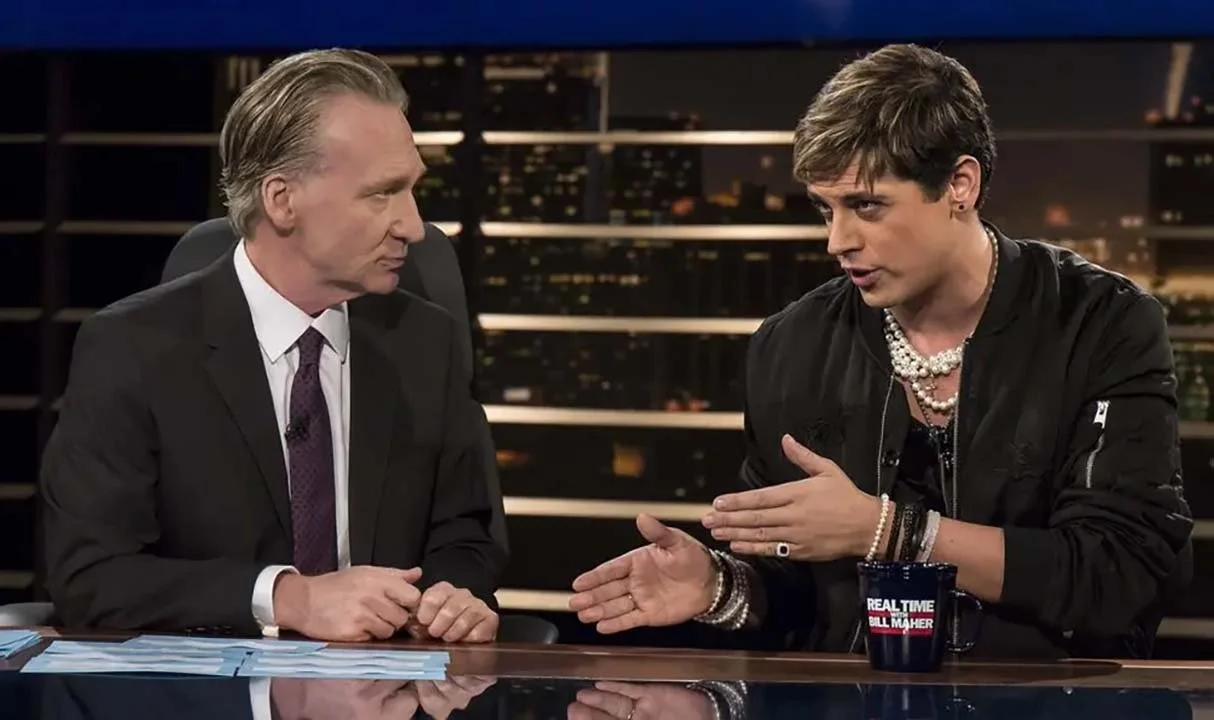
Milo Yiannopoulos (right), considered one of the pivotal right-wing influencers in the pre-Trump era. If you were a gamer online during the time of Gamergate, you would’ve heard from him. And I guess Bill Maher’s there, too.
I believe there’s a correlation between the poisoning of online spaces and the rise of the alt-right over the past decade. These elements, accumulated over the years, were exacerbated by the first Trump presidency. It was the era of “owning the libs,” “drinking liberal tears,” and similarly bad-faithed statements, which were all the rage. I did my best to stay out of it — look, I came here to tweet about games and anime. But I couldn’t; I was an unwilling bystander to the change about to come.
The Republican Party in the United States, which by and large represents the conservative movement, underwent an evolution during the past decade, and that’s not even considering Trump. The seeds of reactionary politics were always there, though the GOP of the time didn’t know how to best plant them, even with men like Rush Limbaugh and Bill O’Reilly writing the playbook. The election of Barack Obama was enough to upset some members within the GOP to start what became known as the Tea Party movement. They’ll say their purpose was ensuring fiscal conservatism, a sympathetic argument to those who saw the signature legislation of the Obama administration, the Affordable Care Act, as a huge waste of money and a government overreach. However, I’d argue one of their major successes was pushing the GOP farther to the right. And those seeds I spoke about? Those started getting harvested, and the public was scarily receptive to it. The age of the culture war was about to begin.
Fast forward some years, and politicians began openly embracing conspiracy theories. And so were their followers. Birtherism, Gamergate, Pizzagate. It’s in human nature to share findings with others. Facebook was very much a mass medium at this point. Those more prone to share theories that are demonstrably false when given about five seconds of thought were, by and large, the older generations, who didn’t take to social media as millennials did and now, the early cohort of generation alpha who are coming of age.
How someone can easily be fooled, I saw this firsthand — my father wanted to borrow my computer skills and my debit card to contribute to some televangelism effort. I refused, even with him reimbursing me. I wasn’t going to entrust an entity I don’t trust with my financial information. I also wasn’t going to help him throw his own money away, either. I’ve been online for around 15 years, and I’ve seen stuff. That was equivalent to me receiving a communication from a suspicious “Nigerian Prince” who wanted to “put me in his will.”
But humankind is frustratingly stubborn. Already poisoned by mainstream conspiracies and right-wing talking points, conservative followers adopted a myopic worldview of how everything in life is a “you versus me.” The alt-right and its battalion of charlatans, through tenacity, effort, and lots of patience, have made it so that their point of view is the point of view of many in society. What’s worse, I get the appeal: life sucks, and nothing’s going well — who’s at fault for that? Instead of thinking about how the rich and powerful have them in the position they’re at right now, men like Stephen Miller and Steve Bannon placed the target on, say, immigrants. The US, no longer a melting pot, but a heritage by and for white people.
I’m not naïve enough to think well-meaning conservatives who went down the drain can come back. The average American media diet consists of drip-fed rage via Fox News’s primetime slot; the darkness in people’s hearts bubbled up into a putrescent mire. And sadly, it’s a trend I don’t see changing anytime soon; a black president was an anomaly for a deeply, deeply racist US. No, you’re not better than the equally racist Founders. There is no “we’re better than this” — otherwise, how does over half the population get convinced to embrace hugely unpopular views?
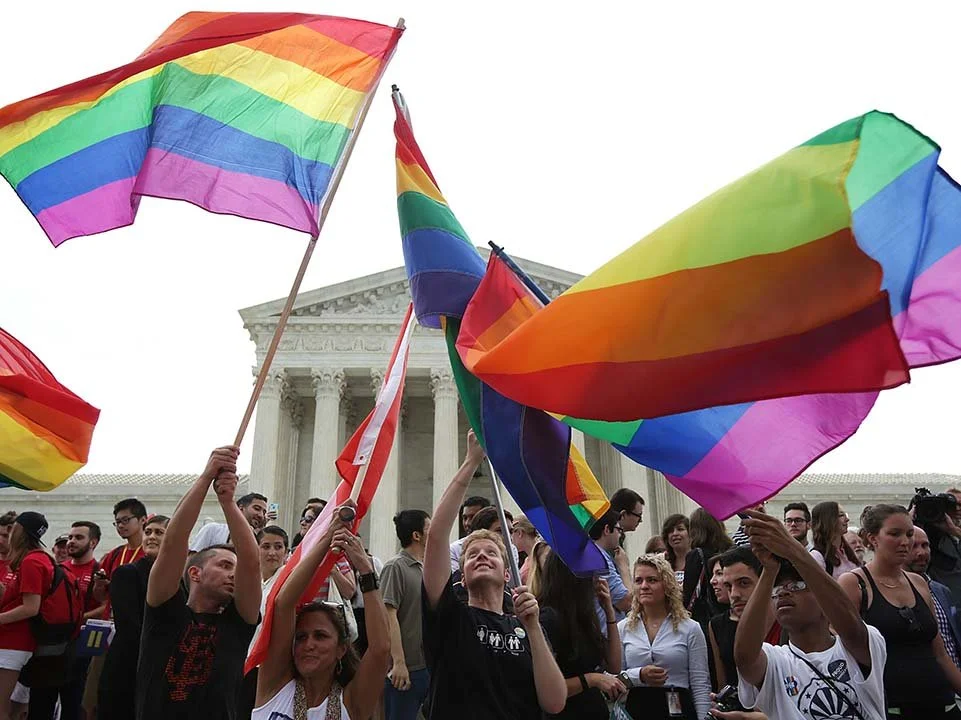
Supporters of same-sex marriage outside the Supreme Court on June 26, 2015, when Obergefell was decided.
Photo by Alex Wong for Getty Images
Of particular concern to me, as I was coming to terms with my sexuality, was the attack on LGBTQ+ rights. Still seething over the Obergefell ruling, the alt-right was delivered a massive blow when they couldn’t demonize gay people the way they did before. And believe me, they tried, but it never caught on — even as they appealed to emotion and to this antiquated idea of what matrimony and family are. We were labelled pedophiles, we were labelled degenerates, and even the classic slippery slope “If the gays can marry, what’s next?” It all fell flat. We cisgender people were largely safe, but our trans brothers, sisters, and agender people weren’t.
They went after them with the same zeal as before. It was the era of “bathroom bills” and the narrative being carefully constructed to demonize us once again. Frighteningly, the public was buying it this time. For us, that meant increasing our activism, regardless of how tired we felt under the constant assault. When the ruling class wants you dead, figuratively and literally, there’s no such thing as being apolitical under those circumstances.
Fox News’ ever-changing grievances saw my timeline often as people I followed — and later, those I didn’t — wanted to get their quick dunks in. Both the right and the left are calling each other out on so-called hypocrisy: remember “so much for the tolerant left?” It quickly degraded to gotcha arguments, which were utterly exhausting to read, let alone engage in. But the most concerning development during this time was the emboldening of the alt-right outside the social network, with perhaps the first sign being Charlottesville in 2017.
I couldn’t take this anymore.
I withdrew from whatever the daily discourse was, finding refuge in fan art and original illustrations. Even today, it remains such, albeit on a different platform. It makes me happy to see people sharing their craft for others to enjoy — something this current push towards generative artificial intelligence threatens, if left unchecked. Not that the people in power are particularly concerned with further devaluation of the creative field, nor do the masses appear to care as well.
For Sale
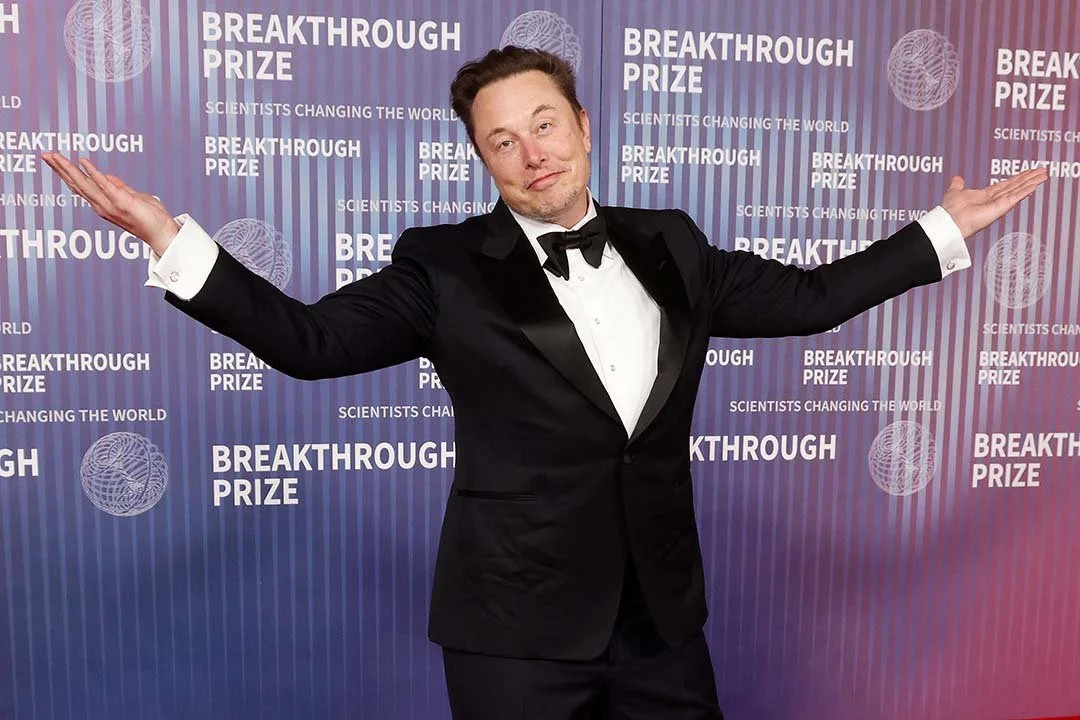
Gosh, why does this man have such a punchable face…?
Photo by Taylor Hill for Getty Images
There was a time when the internet was confined to a PC — now it’s everywhere, and integral to people’s lives and work, either by choice or forced into it. Even I forget this, and I lived through these contrasting eras!
The people on social media who didn’t live and breathe the online culture war felt defeated. Online spaces were decaying quickly, and so was society, yet people are just posting through it, hardly giving a thought. Many would say Trump is just a symptom of a larger societal ill; while correct, it comes across as nihilistic. Pointing it out doesn’t solve anything: how do we prevent the next Trump from emerging? Even with him voted out, the damage was already done — our “civilized” internet was taken over by reactionaries, with no solution in sight. There was no easy fix, even as we sleep more soundly under a Biden administration. Just when I thought it couldn’t get worse, here comes Elon Musk.
A man with more money than sense; less Tony Stark, more Norman Osborn. Runs five companies as its chief executive, making him the darling of the business world — and for a time, his leadership of Tesla was seen with good eyes by everyone — but that didn’t make him happy, or at least that’s my read. He always struck me as someone who tried too hard to be liked; if money could buy him a friend — a genuine friend — he’d gladly pay the price. I almost feel sorry for him, but the majority of the negative sentiment towards him, he earned it.
Musk’s addiction to Twitter got to a point where he seriously considered buying it, dating back to 2017. It got nowhere then, but let’s fast forward to 2022: in April, he made an unsolicited offer for $43 billion, or $54.20 per share, to take Twitter private. Perhaps he wasn’t expecting the board to consider his offer, but they did — it’s not Joe Nobody putting in an offer, it’s Elon Musk, the richest man on the planet. Being one of his companies carried an allure to it. However, the most likely reason was that the board believed the offer represented an implicit threat of a hostile takeover. Musk was already a stock owner, and he had the means to become the majority shareholder if the board refused, easily. The board had to ensure the company’s value is protected.
Twitter’s counteroffer included a “poison pill” clause, which made Musk’s non-binding offer binding. It allowed shareholders to purchase additional stock, barred Musk — a man with opinions about Twitter — from publicly disparaging the company, and, if the deal didn’t close for whatever reason, Musk would be liable for a billion-dollar breakup fee.
The sale wasn’t only about switching owners, but also about optics. It was very much in Musk’s interests to make the board look bad, with undertones of him trying to weasel out of the deal. One of the conditions he put forth was to “get rid of the bots,” with no clear metric to aim for. It wasn’t as bad as today, but there was a sizable amount of bots then, most of them promising “nudes in bio.” With the community complaining about the issue, Musk painted himself as a man of the people, the one to hold Twitter to account.
The peanut gallery loved all of this, but public opinion and business don’t mix. The board caught on to Musk’s play, reminding him of how anything less than the initial offer would be turned down, triggering the breakup fee. Musk was in no position to dictate terms — he had no choice but to capitulate.
Dead Bird
(throws up)
“LMAO Elon bought Twitter when it cost nothing to use!”
Laugh while you all can.
Musk fired thousands of people and dismantled divisions, even those that ensured the platform’s compliance with legal obligations in both the US and elsewhere. The blue checkmark, a means to identify legitimate accounts of public figures and outlets, was given to anyone paying for Twitter Blue, effectively devaluing it. And it’d no longer be called Twitter, but “X.” Musk’s long-held ambition of making an “everything” app similar to China’s WeChat lives on, and it begins with owning the (digital) town square.
Meanwhile, on X’s timeline, the lashing out continues. When the rebrand happened, I saw people justify themselves deadnaming the platform by equating it to his deadnaming of his daughter.
Deadnaming refers to the action of calling a transgender or nonbinary person by their birth name, rather than the one they chose themselves. Musk is the estranged father of a trans daughter, whom he refuses to address by her chosen name and pronouns. It’s an action largely believed to be a bad-faith move at best and transphobic at worst. In Musk’s case, his saying she was “killed by the woke mind virus,” I’m pretty confident it’s the latter.
But back to the justification: was that supposed to be a dunk to be proud of? What are these users looking to achieve? I get calling the platform “Twitter” out of habit, as that was its name for fifteen years. But this leap of logic needlessly escalates matters and devalues terms that carry a heavy weight. I get the impression that, for some, this is the hill they want to die on, all while people in power are harming trans people. I find it all so… infantile, using the same gotcha arguments of 2017 Twitter, giving both it and the platform the validity it once had.
Just as the right has its reactionaries, the left developed them during Trump's first term — and they’re just as bad. We’re already trying to fight back against the other side, who has a huge lead, and they’re the favorite. Getting onto the mud pit and fighting the pig in its turf does little for the movement, and not only do they make a fool out of themselves, but the movement as well. I need more people to understand how their actions are part of a larger thing.
It frustrates me how incapable we are at coming together; everyone pushes for their vision of their ideal world, undeterred, under the same belief that plagues the right — you versus me. That is, unless something truly horrific happens, like the murder of George Floyd. Say what you want about the right, they can rally their ranks: the January 6 insurrection is a clear example. Lately, I’ve seen some examples that make me think we’ve learned our lesson, and I’m thinking specifically of the pro-Palestinian campus protests, but I remain skeptical of my own.
It was clear to me that X would die a slow, painful death. I still believe that, and I’m not referring to the constant downtimes.
Masterful Gambit, Sir
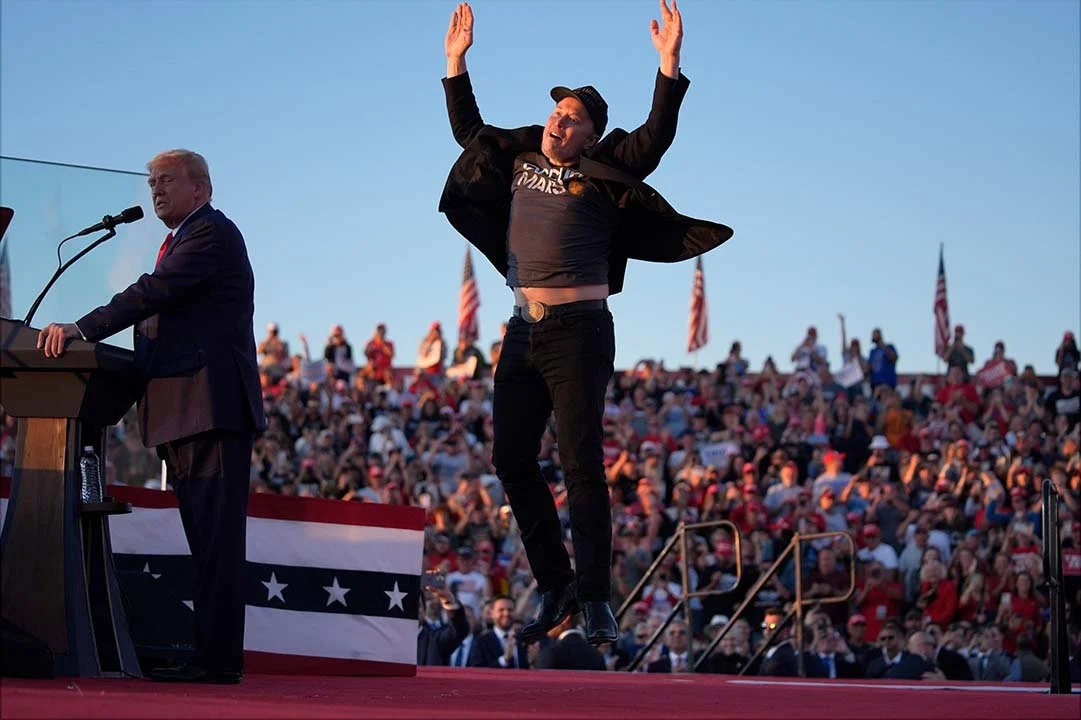
3…2…1…liftoff…Starship Elon is on the air!
Photo by Evan Vucci for AP Photo
It’s election season once again. As a general rule, election season is tiresome, yet there was urgency this time around after Trump’s 2016 win. Somehow, the 2024 season was even more tiresome than 2020, when we were in the middle of the COVID-19 global pandemic and doing everything possible to avoid Trump getting reelected. All that talk of Joe Biden being a transitional president for the newer blood of the Democratic Party, and he decided to run again. Trump, much like in 2016, steamrolled everyone to become the Republican nominee.
But the vibes were different: in 2016, people gravitated towards him because they felt he spoke the truth, plus there were legitimately funny moments during the debates. In 2024, the establishment feared the man who molded the Republican Party in his image. Trumpism never left; it was just taking a break. No one wanted the Biden/Trump rematch, yet we got it anyway. That is, until age caught up with Biden — he was forced to step down, his VP Kamala Harris picking up where he left off.
Meanwhile, on X, Musk was desperate. His subscription was not making enough money to break even, and the platform’s ad practices led to an exodus of advertisers after a report by Media Matters put the spotlight on ads displayed next to hateful content. He sued the outlet for defamation and threatened to sue advertisers who left X. But I thought Musk was all for free speech? Companies are only invoking their free speech rights by not having their products associated with the kind of post that was widespread on X. It was an empty threat, but some companies restarted their campaigns after their concerns were addressed, and Linda Yaccarino, a woman with a background in advertising and now former CEO of X, was key in this, avoiding further escalation by its owner.
In a bizarre public brainstorming session, Musk sought input from his followers on what X could do to raise more money. One suggestion that gained attention was to restrict access to the platform and offer it for a fee. Sure, buddy: you’re bleeding users, and the ones that are left aren’t paying. To add insult to injury, for the first time in what seems like forever, X had competition: cohost, Mastodon, Bluesky, and Threads — entrepreneurs saw an opportunity amidst the chaos, and the users who left had places to go to.
I observed how certain niches took to certain platforms: Mastodon became home to the technology inclined, Threads was where all the high-profile celebrities went to — mostly because of how Meta saw Threads as an extension of Instagram — and Bluesky became the home for those who miss the early Twitter years. It was a war for mindshare, and there was no clear winner. Social media became fragmented, and it’s all thanks to Elon Musk.
Long touted as a liberal darling, Musk threw his support behind Republicans, a move that might have come across as a betrayal to people who weren’t paying attention. Why now? Maybe the state of California didn’t bend over to his demands, maybe too many leftists were mean to him online — whichever the reason was, he went off the deep end. It was easy enough to ignore where he put his money before this announcement; now he’s a threat. He began fundraising and spreading the good word on how a second Trump administration would be good for the people. It was eyebrow-raising, but given how I felt about Musk, I doubted he’d achieve much. What could a deeply unserious man achieve at this scale?
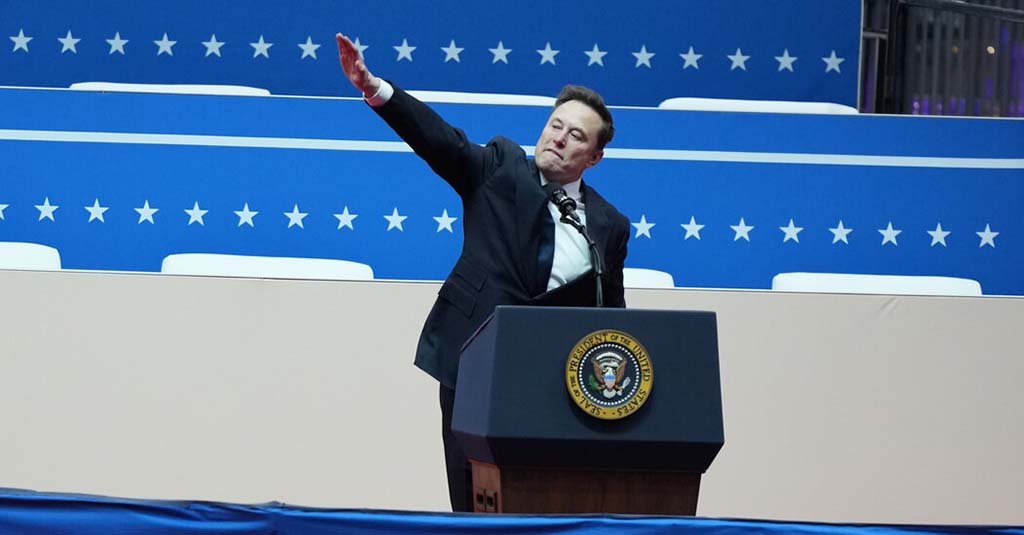
Musk really wants you to forget this happened… no, honey, you’re on video making the Nazi salute — twice.
Photo by Eric Lee for The New York Times
Then, Trump won the election.
Everything we’ve been warned about for the last two years, how Musk bought Twitter to control, or at the very least steer, the conversation in a way that was favorable for him and his kin, started to sink in. Once again, the US voter, refusing to think outside their borders, failed the world by choosing a convicted criminal instead of the vastly more qualified black woman. As Musk did his victory dance, I considered that my last straw — I no longer felt comfortable using his platform. In my eyes, X officially became an alt-right platform; there were even rumors of a merger with Truth Social, Trump’s Twitter ripoff.
This isn’t the Twitter I once knew and loved. This is something else entirely, built atop Twitter’s bones. I had to leave. And if the amount of deactivations post-election is any indication, I’m not alone in that sentiment.
It wasn’t enough for me to deactivate my account; I didn’t want any trace of my presence there whatsoever. Previously, I paid for a mass post deletion service called Tweetdelete — recall earlier in this post when I spoke about people scrubbing through my posts looking for dirt — that worked well for me, and I’d rely on it again for this effort. I stuck with what I knew, but readers are reminded that free alternatives are available. The process took weeks, as I asked for archive after archive to ensure everything was deleted. This extra effort, although unnecessary for most people, was worthwhile when the goal is “chemicalsora *never* posted here.” It took about a month and several bulk deletions before a new archive file showed hardly any posts left to delete, despite the post counter indicating a higher number. Tweetdelete advises this behavior is a reporting situation with X, but was within the margin of error for a barely zero-post account.
More — Settings and Privacy — Your Account — Deactivate your account.
My thirteen years on the platform: gone. True, it was my choice to do this, but I still felt regret and… resentment. I leave behind happy memories and the friends I’ve made, as Musk’s “free speech” crusade resulted in truly vile people, once forsaken, roaming free once again and spewing their opinions, unchallenged. X has a Nazi bar problem, and the owner is okay with that.
At present, I’ve found my new online home in Bluesky. I’m glad I’m among like-minded people for the most part. I’m glad many illustrators have come to call it “home” just as I did. By the time I joined, Bluesky’s robust moderation tools were being deployed, which felt like perfect timing as Musk’s X moved towards watering down the blocking function. Traumatized by our experience on X, all of the elders agreed: we’d curate our feeds zealously, even if it meant blocking people we are friends with, and we’d recreate the vibes of a platform we enjoy being on.
What Now?
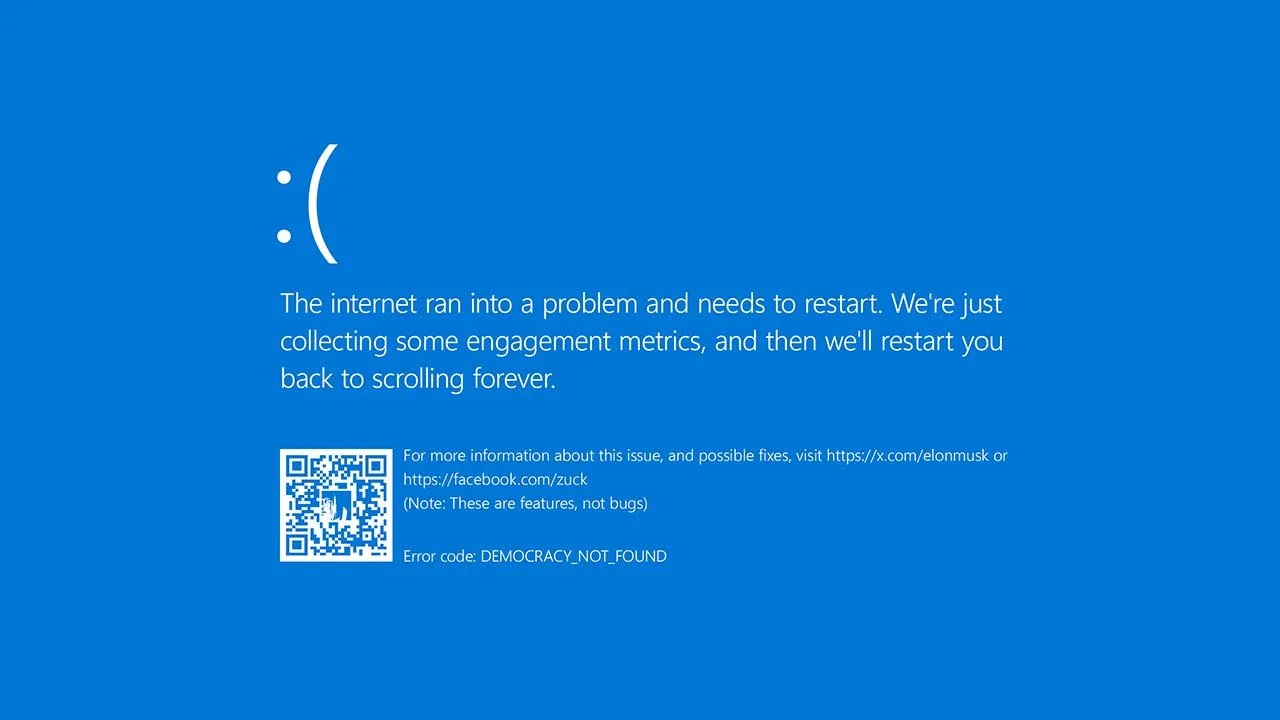
As I write this, it’s been about six months since, and it still bothers me how some still treat X as 2017 Twitter. The amount of mental gymnastics people do to avoid feeling guilty about keeping their accounts is mindboggling, and I’ll never understand why. Is it denial? Is it inertia? Or is it apathy? Three years into Musk’s takeover, I refuse to accept that X is the sole place to connect with people and topics, especially when we have more means of communication than ever.
Twitter is dead…and buried. Every second spent on X is an endorsement of Musk’s bleak vision for social media. Some may disagree with that statement, attempting to instigate change from within. Others might dismiss it by claiming that using X does not imply their endorsement of those views. This is where the mental gymnastics I mentioned come into play — I don’t know if they realize they are unconsciously trying to justify themselves or are fully aware of what they’re doing. X is a lost cause, and as long as Musk owns it, there’ll be no redemption for it whatsoever. People are welcome to come up with whatever argument in favor of the usage of the platform: a pig with lipstick is still a pig.
Musk is no longer a passive commentator; he’s the owner of the platform. Given his public behavior before the sale — recall the Thai cave rescue incident from 2018 — we were wrong in championing him. To use a wrestling term, he turned heel in the eyes of many, and I’d say he was one from way before. In the end, it doesn’t matter if you believe the man is utterly reprehensible if you continue doom-scrolling through his platform. Is catching up with your friends and the people who write about what you care about worth more than your morals? I’m starting to think “I don’t care” equals “yes.”
It’s not all doom and gloom, though; there are signs that people are looking to reclaim what was taken. Ever since algorithms started to dictate what the user would see, not what they wanted to see, more and more people took to direct communication: messages on Instagram, group chats on X, private servers on Discord, you get the idea. It’s this generation’s “call my friend, speak with them for over two hours,” something I did a lot while younger. After all, what better way to find out what your friends are up to than asking them?
The feeling of community is also coming back. I remember being taken aback by illustrators I follow not only boosting their peers but also offering words of encouragement. That reminder — that they’re fans of other people — was necessary after being trapped in X’s numbers game. All views and no replies, and you’re ultimately making content for the algorithm instead of the people. And there has been some success in that front, in which artists choose genuine engagement over likes and reposts.
On the other hand, I’ve seen artist friends lament how, whatever positive feedback their work may garner within private circles, it never makes its way back to the original creator. Somewhere along the way, we forgot about the people who do this, treating art as “content.” I think we’ve been disincentivized from interacting with each other for many reasons, most of them driven by the platforms being hostile to their users, and it’s genuinely difficult to unlearn this behavior…
I don’t know where we’ll go from here. There’s nothing I can draw a parallel from — the internet as we know it today is thirty years old. With the rapid pace of technology overwhelming humankind, will we become more insular? Or more connected? Is the underlying technology the sole reason, or are there other factors at play? Will the original purpose of the internet live on in an era of hyper-commercialization? Or will netizens demonstrate resilience among adversity?
I’m just along for the ride…we all are.