

53 min read
Prior Entry | All Media Log Posts | Next Entry
Please be advised these posts aren’t spoiler-free.
An update on the PC repair story from the last log: yay, it’s now fixed! But what happened?
Previously, I left the story at the point where I needed to search for PC repair shops. For my research, I used Google Maps — a search for ‘pc repair shop’ within 10 miles of my house gave me some options. Most of these put their phone repair services front and center, and it makes sense: very few people are going to these places asking for computer repairs. It’s perhaps assumed that, if you have a custom-built PC, you know your way around hardware. It couldn’t be farther from the truth: hell, building mine gave me many headaches as I kept bothering people who were more well-versed than I am. Though not the real-life ‘friends’ who mocked me in the group chat.
Some suggestions point to areas that I know for a fact are not commercial ones — budding entrepreneurs who appear to work out of their houses. I was already thinking the worst, and this fact does not help matters. I didn’t want to lose my tower, and I’ve little recourse to get it back if it’s on their property, even if I involve the police. Like these, there were three options, and they’re all out of the running.
Looking strictly for stores, there was one that was about a half-hour drive. I look for any establishment-specific social media, seeking an answer to the question: ‘Do you service PC towers?’ This option made no mention of computer services at all; I concluded that this place handles only phone repairs, and I didn’t even bother calling to confirm. The second place, a place run by insurance carrier Asurion, looks promising. Their website advertised PC repair services, although I saw many pictures of laptops — maybe they’re limited to that? The place is about a ten-minute drive from my house: it’s already looking attractive, as it’s a place I can drop by after my work shift ends. I called, seeking confirmation on whether their PC repair services were limited to laptops only, and the gentleman confirmed they weren’t.
Okay, so I have a candidate. In the same mall where that shop is, there’s a Best Buy. One day, when I was in the area either having dinner or shopping for groceries, I dropped by the Geek Squad desk to inquire about their services. The response I got was that PC repairs were limited to in-warranty items only. Essentially, if you bought the item at Best Buy and it is under warranty, Geek Squad will service the item. Neither criterion applied in my case.
There was one last place I hadn’t checked, and I should have before settling on the repair shop I’d use. This one is at an even shorter distance, about a seven-minute drive. Like before, I checked their social media for details: they mostly focus on phones, but the person sells laptops. They use WhatsApp Business, so I tried reaching out through there first. After some time without hearing back, I call the number on the page. A man answers the phone — I asked my questions, and got my answers. He struck me as trustworthy by his voice and how professional he carries himself. I’m going with these guys.
I’d leave the tower at the shop after being paid, when I could cover the deposit fee if asked in advance. A lady manned the counter; the technician was nowhere to be seen. I was told he was seeing a client, as he works on-site at times. I thought I couldn’t leave it at the shop, but the lady assured me it was okay if I wanted to do so. I took her up on the offer, briefly explaining what was wrong with the machine, and left my contact information.
And then I waited.
One week.
Two weeks.
Three weeks.
I took time off for my birthday, and it was almost up. I was worried — we’re almost at the end of August, and not a single call with an update. I called on a Friday, intending to follow up on the servicing. The technician answers. He'd been trying to reach me for weeks, he says, but kept hitting a disconnected number. When we compared digits, the culprit emerged: the lady at the counter had misspelled my number. With all those 2s, I've been making jokes about this for two decades. Today, it wasn't funny. He asked for my credentials as there were diagnostic tools he needed to run with the PC booted up on Windows. I was startled — he was able to boot up the machine after all. But… I thought I needed a new motherboard?!
I’m told one of the Windows updates failed to install. An update so pivotal that it took the whole operating system out, which is why I didn’t even see the bootloader. I’d think he was able to troubleshoot the hard drive on another machine before putting it back, and the diagnosis tools are to account for any blind spots outside the main issue. I now felt comfortable giving the credentials to my Microsoft account so he could get into my Windows user account.
He reset the password to make it easier for him to log on. I was going to reset it anyway, as the password is considered compromised when given to someone you don’t fully trust, even if given on a need-to basis. Now, onto the scary question: “How much do I owe you?”
“$85.”
I let out the biggest sigh of relief. That amount was completely doable for me. It was a Tuesday when I was able to drop by the shop, and my time off was over. After numerous phone conversations, I finally met the technician in the flesh. Prompted by his question about where I use the PC — he’d seen overheating cases before — I mentioned something that had been nagging at me for months: the thermal paste on my processor. “It didn’t fail any stress test I ran, which accounts for temperatures,” he assures. I suppose this is one can I’ll continue to kick down the road — unless I start seeing 60 degrees on average under little to no workload.
As I get in my car, PC in hand, I’m humbled by the thought of why many people, both newcomers and enthusiasts alike, avoid updates like the plague. It’s nothing insidious, but rather living by the adage “if it ain’t broke, don’t fix it.” And now with that bug biting me, I won’t be that enthusiastic about checking for updates on Patch Tuesdays — or anytime during the month, really. I’ll let them come to me, and I’ll address them then.
…which is funny, considering I’m drafting this post on my MacBook Air running Tahoe. I never made any claims about consistency in my views!
Now that I'm no longer staring down a motherboard replacement, I can return to what really matters: ghosts, child prodigies, and whether Hikaru no Go holds up in 2025.
Hikaru no Go
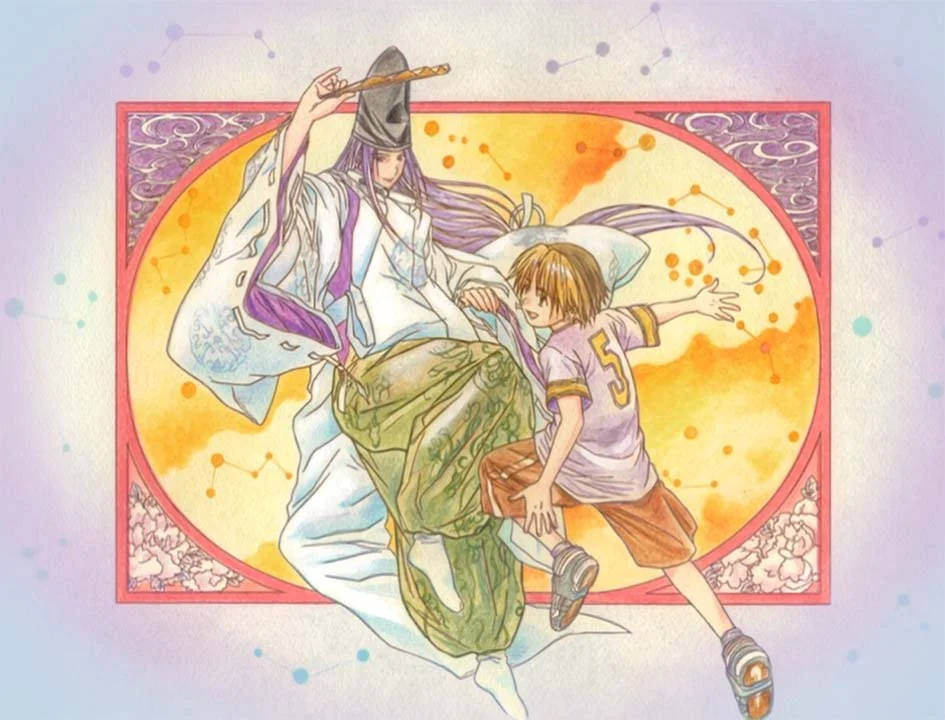
“Go? What’s that?”
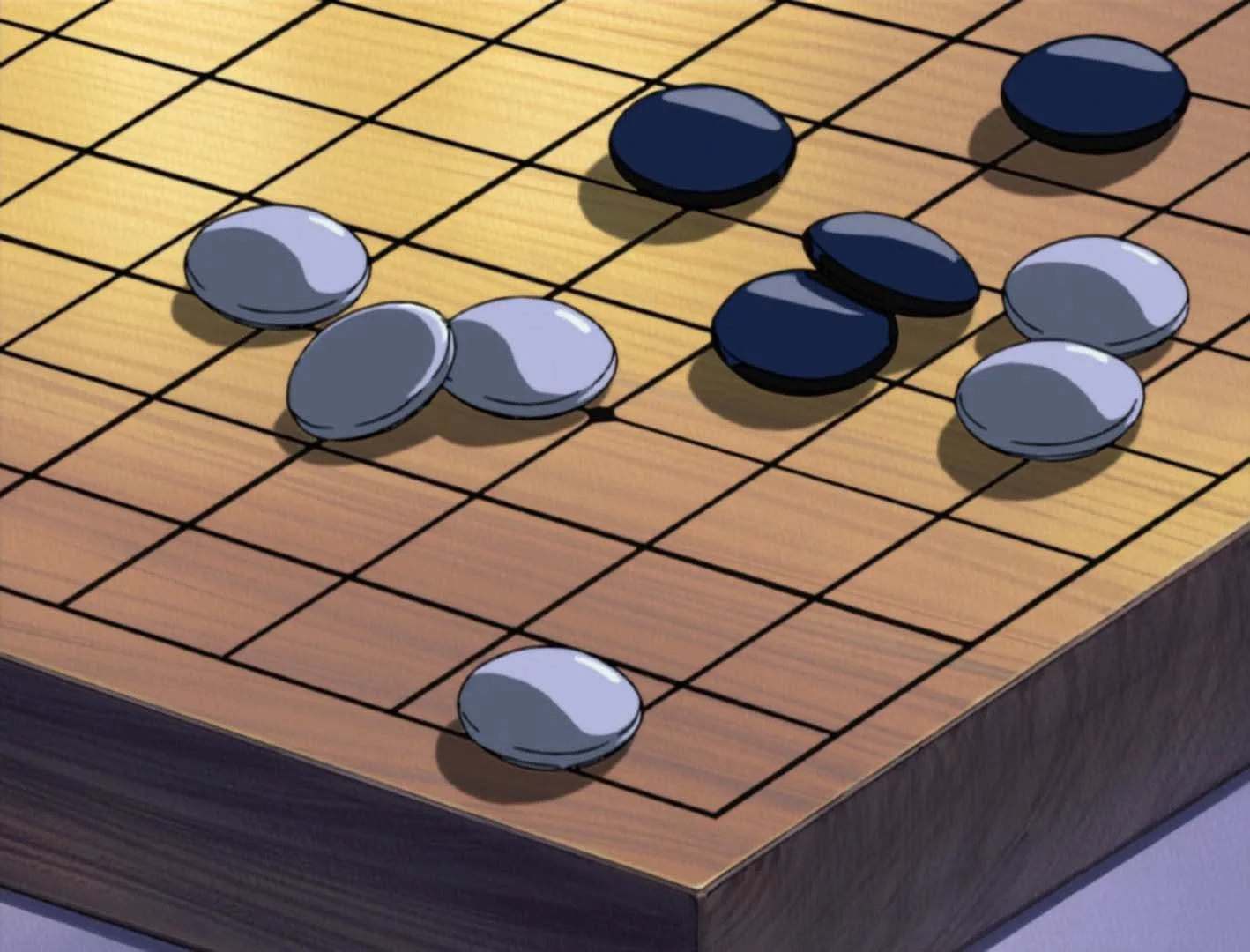
Go is an ancient board game originating in China, and is believed to be the oldest that’s still played to this day. Two opposing players aim to fence off the most territory by using black and white ‘stones,’ the name for the game pieces. It presents an interesting dichotomy: Go’s easy to pick up, more so when the player is already familiar with games around capturing territory; even when this aspect is missing, you can learn the rules in minutes.
It’s also deceptively complex: on a standard 19x19 board, black can play one of 361 possible moves in a fresh game. And it doesn’t get easier as stones are put down, as strategy becomes ever more crucial to the player’s victory. There is no luck in Go either — only good or bad strategies. Its status as a ‘mind sport’ when played professionally is well deserved; even professional players don’t have it all figured out, and they continuously evolve their game, moving up the ranks in whichever federation they belong to.
When I was a kid, my dad got me a PC clone with Windows 98 running on it. Along with the installation disc, there was a separate game demo compilation disc — maybe something the PC shop did or something distributed only in Latin America. One of the demos was Age of Empires, an RTS game made by Ensemble Studios. Described as “Civilization meets Warcraft” — neither of which I have played — the player is the leader of an ancient civilization during the Stone Age. You command your fellow citizens to gather resources, establish new civilizations, and advance their technology through different ages. Also, defend yourself from rival nations.
“How is this relevant to Go?” Let me finish, and you’ll see.
As far as PC gaming is concerned, this was my origin point. When I wasn’t playing the Nintendo 64 or PSone, I was playing that game for hours on end, much to the detriment of my mom’s utility bill. While I never got the full retail version, unfortunately, my dad’s compadre owned the second installment, and he lent it to me. I had a CD burner and was making a little bit of money selling pirated records, so I made a copy of the game, only to never play it. Back then, one rudimentary DRM application was pinging an online server to confirm the license was valid. His key was already tied to his PC, and I didn’t have internet at my house — I couldn’t even get a keygen if I wanted to! I kept playing the original demo, getting somewhat good at it, even managing to fend off attackers in the demonstrably harder mode.
Fast forward some years, and I gave Go a try. It felt like being back home; the strategies I employed in all of those hours playing Age of Empires gave me a rudimentary understanding of strategy on a Go board. I’d ultimately give it up, not even managing to be somewhat decent at the game. Go’s strategy is far more complex than civilization building, and while I was frustrated that I couldn’t devote myself to the game, I have a genuine appreciation for it. If I ever wanted to go back, there are at least three sites I can go to play.
I first found out about Hikaru no Go because of Death Note. Both share an illustrator, Takeshi Obata, whose work on the latter raised him to be one of my favorites. The best way I can describe his art style is ‘detailed and meticulous.’ In addition to that, his linework is spectacular; you can tell the man spends a lot of time on his panels. I didn’t know if the style was unique to Death Note or the concept, but if that’s the way he draws, I want more of it.
Looking through his past work, there was one published a year earlier in the West, one ‘Hikaru no Go.’ It was one of the series published in Viz Media’s monthly Shonen Jump anthology. Looking at the timeline, it would’ve been on print in 2004, around the time I was a subscriber. Did I read it there? I honestly can’t remember, but the possibility nags at me… What I do recall, though, is asking my dad to buy the first volume of the series on DVD when we were at Suncoast one evening.
Newer anime fans don’t realize how good they have it, when an inexpensive subscription gets you all the anime you want and more. In those days, $30 got you… three episodes on disc? Four, if you were lucky. A home video model not dissimilar to the one Japan operates on, even today.
Hikaru no Go is a coming-of-age manga written by Yumi Hotta, illustrated by Takeshi Obata, with technical supervision — basically, that the Go games depicted within are accurate — by Yukari Yoshihara 2-dan at the time of debut. It ran from 1998 to 2003, spanning 23 volumes, and had a TV anime produced by Studio Pierrot and a live-action series many years later. We’re touching on the TV anime in this entry, which spans a gargantuan 75 episodes, adapting most arcs depicted throughout the seventeenth book, with some side stories coming out of book 18.
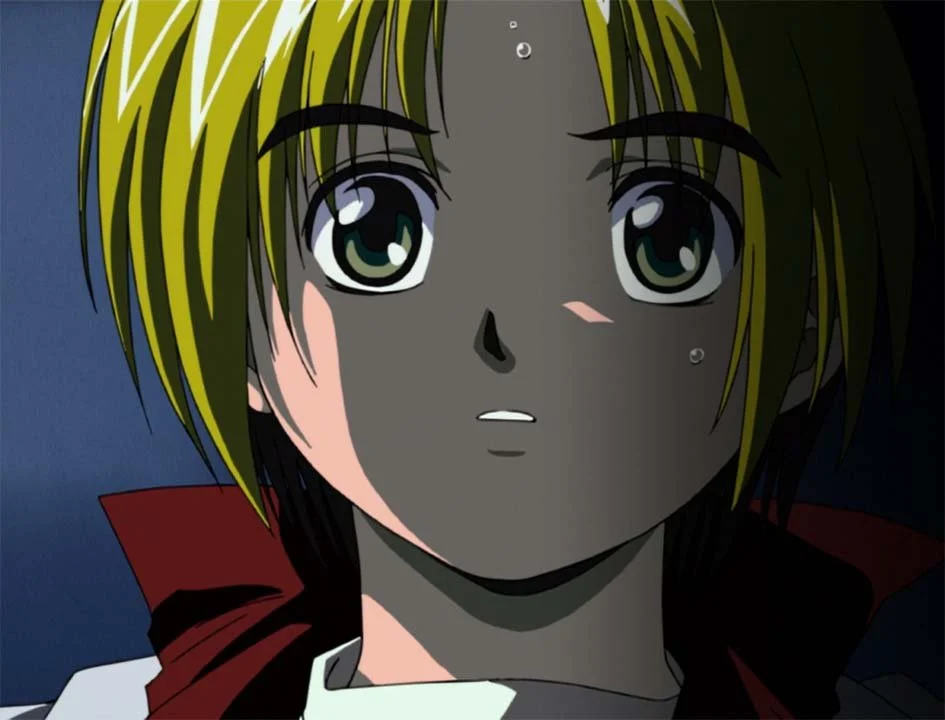
Hikaru Shindo is not a good student.
On his last social studies test, out of a hundred points, he got… eight. Thanks to this mediocre performance, he finds himself without an allowance. Rummaging through his maternal grandfather's shed with childhood friend Akari Fujisaki, he comes across a goban — a Go board — which looks quite old. Perhaps an antique shop will pay good money for it? Akari warns that he’s basically stealing, but Hikaru doesn’t feel guilty of what he’s doing — he wants money. He grabs a nearby piece of cloth and starts dusting off the old board. There’s a stain that won’t go away, no matter how much he wipes. It looks like a blood stain; Akari can’t see it.
“You can see it?” a voice asks. Thinking it was Akari, Hikaru responds annoyedly: “That’s what I’ve been trying to tell you!” “You can hear my voice? You can really hear what I’m saying?” the voice asks in disbelief to a startled Hikaru, who now realizes they’re not alone in there. He demanded whoever it was to show themselves, and Akari ran off, creeped out by Hikaru seemingly speaking to himself. A figure emerges from the Go board, draped in magenta colored clothes and a white robe. Hikaru faints from the sheer shock of having met a ghost.
Fujiwara-no-Sai, the beautiful man who took a spot within Hikaru’s conscience, was a Go instructor to the Emperor during the Heian period. A jealous colleague of his suggested to the Emperor that the instructors should play against each other to determine who is the better player, and who gets to keep their job. During the high-stakes game, Sai noticed his opponent slipped a white stone he didn’t capture among his prisoners. Just as Sai called out his opponent for cheating, he found the accusation thrown back at him. None of the spectators noticed the alleged cheating, their eyes glued onto the board — including the Emperor’s, who shut down the player’s bickering. Unable to calm himself for the remainder of the game, Sai ultimately lost. Wrongfully accused of cheating, his reputation destroyed, and with no other way to make a living, Sai drowned himself in despair.
But his soul could not find rest.

Many centuries later, Sai appeared before a young Shusaku — then called Torajiro — when he came across a board that had stains from Sai’s tears. In the fiction of the series, Shusaku’s masterful play stems from Sai’s deep knowledge of the game. Shusaku knew how to play, but Sai played better; Shusaku became the vessel through which Sai played all the Go he could ever want, securing Shusaku’s place in the history books as one of the top Go players of the era, perhaps even in the entire existence of the game.
Shusaku succumbed to the cholera epidemic of 1862. Sai, once again, saw himself trapped in a Go board stained by Shusaku’s blood. After many years of slumber, he appears before Hikaru to continue his pursuit of the Divine Move.
Alas, Hikaru Shindo is not a good apprentice.
Go is an old person’s game. Why would a kid even play it? The thought of Sai not playing Go plunged him into despair, which Hikaru acutely felt. Perhaps as thanks for Sai’s help during his latest social studies test, and to avoid any further upset stomachs due to sudden mood swings, Hikaru reluctantly picks up Go.
He'd start attending a Go beginner class taught by Michio Shirakawa, 7-dan, at his local community center. The manga places these classes after Hikaru's first match with Akira, but the anime reorders things, moving the classes before that encounter. This does give Hikaru at least some baseline familiarity with Go before facing Akira — though the anime also cuts Hikaru's first-ever match against his grandfather entirely.
Hikaru goes to a Go salon in Shibuya, fulfilling Sai’s wish to play Go. The cashier, Harumi Ichikawa, is skeptical of a newcomer saying he’s pretty good when said newcomer doesn’t even know their skill level. Before she could find him a suitable opponent, Hikaru noticed a boy in the back and asked if he could play with him. The boy approached them and agreed to play Hikaru.

Akira Toya asks what Hikaru’s skill level is, getting the same answer he’d given Ichikawa. Amused by the answer, the stoic boy offers Hikaru a five-stone handicap. He was baffled and declined the handicap. Nearby patrons heard this in disbelief: Hikaru really doesn’t know who he’s playing against. As Akira offers the black stone bowl, he’ll play it by ear until he gets an idea of how strong a player Hikaru is.
As we get into the matches, a disclosure: I’m not super familiar with Go outside of what I’ve seen in the series, so I won’t go into explaining the strategies. Sai hasn’t played Go since Shusaku’s death over a hundred years ago. Now that Hikaru is letting him play, a flurry of emotions overwhelms Sai. It doesn’t matter if he can’t pick up the stones and play himself — he’s just happy that he can play, even if by proxy. Just by how Hikaru places his stones, not to mention how he plays with a hesitancy so characteristic of beginners, Akira’s suspicions that his opponent was a beginner were confirmed. He also noted how Hikaru’s joseki — a standardized set of plays — is out of date, yet concedes that he’s making solid responses to his play.
Some moves in, Sai has a general grasp on Akira’s skill: he’s good… but how good? Sai directs Hikaru to make a move that, at that point in the game, wasn’t a good one. Akira stood there, petrified. “He played there to see how I’ll respond to it! Measuring my skill from a level far above me…”
Judging by the board, they played all the way to the end; Akira lost by two points. Hikaru was long gone when the whole salon huddled around the board, trying to get a grasp of what had just happened. Ichikawa, in disbelief, mentions how that boy stated he hadn’t played Go before, which rubbed salt in Akira’s wound. “Who is he?!”

A week goes by, and Akira’s still brooding over his loss to Hikaru. In the same corner of the Go salon, all by himself, he’s seen replaying their match over and over, trying to understand the meaning behind the moves. “It’s as if he were playing a teaching game…” (Sai would later confirm that was the intent.) For the first time, Akira turns down requests for teaching games from the salon's patrons, perhaps too consumed by being the student rather than the teacher. Ichikawa mentions she gave Hikaru a flyer for a youth tournament being held at the Nihon Ki-in — the Japanese Go Association; he looked uninterested, but what if…? Akira floors it towards Chiyoda, running into Hikaru as he was leaving.
As Hikaru commended the intensity of the young players, Akira stood still, not knowing how to react to what he was listening to — he chased after Hikaru because he wanted a rematch. This comes out of left field. “Do professional Go players make a lot of money?” Hikaru asks, confused by Akira stating he wants to go pro. As Akira lists the prize money for the different titles, Hikaru’s demeanor changed. Confident that Sai’s skill could win titles, Hikaru’s slip of the tongue made light of the journey to go pro in Go. This utterly infuriates Akira, prompting him to issue his challenge.
Hikaru Shindo is not a good sport.

Tokyo’s pouring rain, as well as all the patrons of the Go salon, bear witness to their rematch. Akira seems unfazed by all the attention, his burning gaze set on Hikaru. Sai faces a dilemma: should he pacify Akira, the one who bears his fangs at him? Or cut him down? Having seemingly identified a weakness in the Shusaku diagonal, Akira plays a move that comes across as a taunt. This is no longer a teaching game — Sai is playing to win.
Ultimately, Akira couldn’t fend off Sai’s serious play. With no path to victory, he has no choice but to resign. If the first defeat was humiliating, the second one was a devastating blow to his self-confidence. Hikaru attempts to assuage Akira’s defeat, insincerely so, but his words fall on deaf ears. This is one game Akira’ll carve on his mind — the reason why Hikaru is a terrifying opponent.
Hikaru felt bad about beating Akira the way he did, demanding an explanation from Sai: “I had no choice but to sever his head with one clean cut.” The next day, Hikaru is just outside the Go salon where he played Akira, contemplating his place in the game. He’s been nothing but a vessel for Sai to play Go, and a genuine interest in the game is starting to take root. As he was about to leave, Seiji Ogata, who went outside to have a smoke, stopped him and dragged Hikaru into the salon. Akira’s not in today, but his father — Koyo Toya, the Meijin title holder — is.
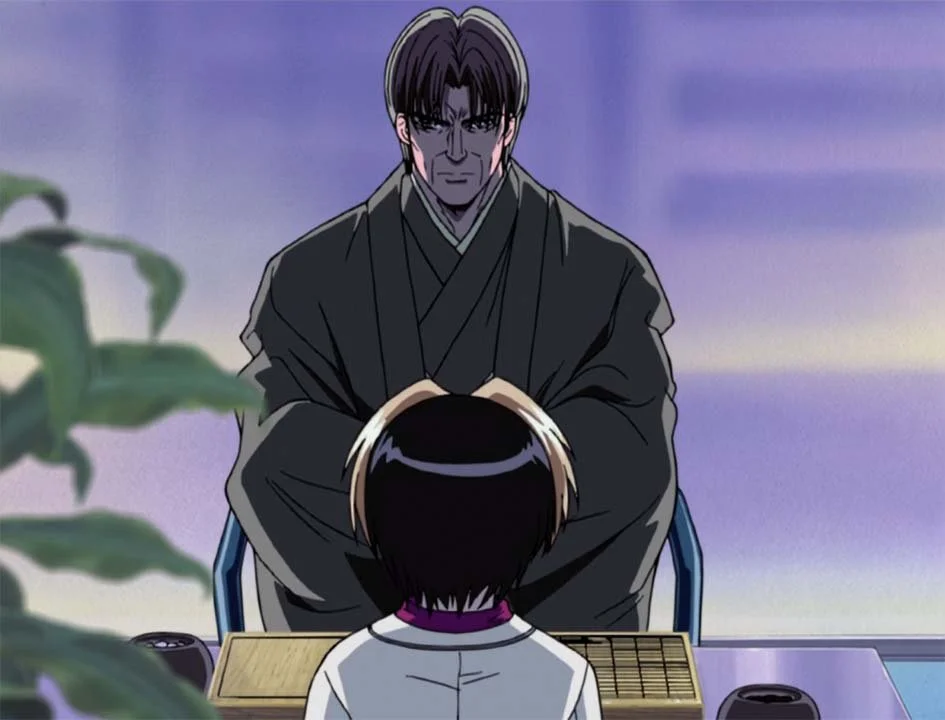
No wonder Akira is so good at his young age: his father happens to be the Meijin, and he gets to play him every day. Toya Meijin, like the rest of the patrons, is in disbelief at how a complete unknown beat Akira. He was eager to play the kid who beat his son — twice — and see what kind of player he was. Hikaru didn’t want to, but Sai insisted, wanting to play the man who, like him, aimed to achieve the Divine Move. As Toya Meijin explains the training regimen Akira follows, Hikaru finds himself mesmerized — not by the words, but by how Toya places his stones, the precision and confidence in each move. As Sai barked moves and the game progressed, Hikaru’s intensity grew to the point where he managed to place a stone just like his opponent did — only to accuse Sai of taking him over as he ran away from the salon. The game didn’t last long enough for Toya Meijin to get an idea of Hikaru’s skill. For now, it remains an enigma…
Tired of warming the bench for Sai, Hikaru was determined to learn the game for real. He’d play in school tournaments, and eventually went pro in pursuit of Akira. This is now Hikaru’s Go.

Photo: Asahi Shimbun
You likely know Takeshi Obata. Death Note, Bakuman, Platinum End — all lauded works in which the Niigata-born illustrator had a hand in alongside writer Tsugumi Ohba. What you might not know is the years of blood, sweat, and tears it took to create works like the ones mentioned. Yes, he’s talented, every bit the ‘genius artist’ we know him as today. But success wasn’t always this way.
This is the story of Obata before he became someone important.
As a kid, Obata didn’t appear interested in anything but drawing. This hyperfocus led him to hone his craft to a very high level, and people in his inner circle noticed. He might have been a well-known illustrator and never made manga, but the manga bug could’ve bitten him in those early years. In interviews, Obata mentioned he’s a fan of Shotaro Ishinomori’s ‘Cyborg 009,’ almost to the point of obsession. He recalls rereading it over and over again and was along for the ride until its eventual end in 1981, when he was 12. While Obata never worked with Ishinomori as an adult, he cites him as a key inspiration for entering the manga industry.

Front gate of Higashiyamanoshita Elementary in Niigata, where Obata attended as a child.
Photo: kamekichi, Google Earth, 2018
Still undecided whether he wanted to be a manga author, Obata tested the waters by publishing a series in his school’s newspaper; he was in the third grade. What’s known about it comes from a Bakuman author’s comment entry. “It was a strange manga where the hero transformed into a disposable pocket warmer when he was in trouble.” The newspaper would also see a second Obata story featuring an old man as a main character. Why an old man…? “I like old people,” Obata admits in another Bakuman author’s comment entry, deadpan.
Other than the fact that these works exist and were once published, that’s it — nothing on how long the series lasted, no scans of the actual work, and no archivist has bothered preserving those issues, or even those dating back to the late 70s.
By middle school, Obata came around to the idea of becoming a manga artist. He began experimenting with longer pieces, which meant more artwork and more complex stories. The newspaper comics were short, and he needed to start developing the perseverance necessary to make it out there as a creative professional. A practice he had, dating back to his elementary days, was showing his illustrations to his friends — for this new endeavor, he’d close the sketchbook away from prying eyes. It’s not as if his immediate circle would think less of it. His passion for drawing and his being so good at it at his age earn him the title ‘once-in-a-decade talent’ in retrospect. Getting published is no small feat, even if it was in the school newspaper!
Fast forward to 1985, Obata attends Niigata Higashi High School. He joins that school’s manga club — which still exists today — but was he just another member? Did he ever become president of the club? Who knows, and even as I wonder, it’s irrelevant to his larger story. That middle school sketchbook, the one Obata stopped showing to his peers? It gave ample material for submission, specifically to Shueisha, the publishers of Weekly Shonen Jump. If he was ever going to become a manga artist, he needed to start getting in front of the people who could give him that chance.
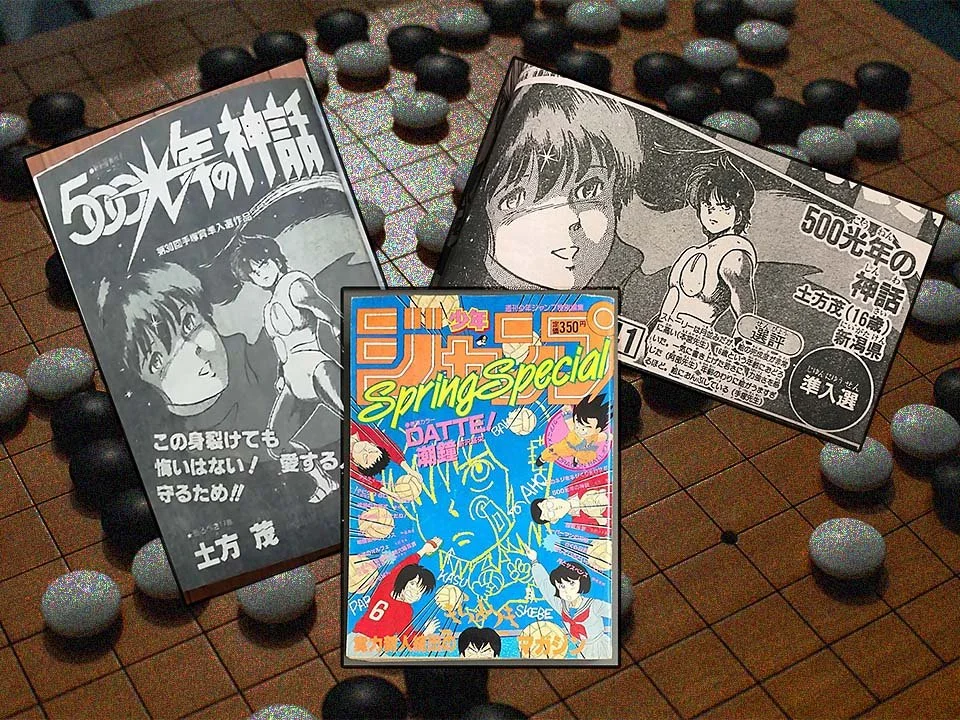
Jump's 1986 Spring Special, featuring Obata's debut The Myth of 500 Light Years under the pen name Shigeru Hijikata.
The first one is called ‘Mars.’ During the summer of 1985, Obata submitted his manuscript to the Hop☆Step Awards, a monthly contest for new artists which ran in Jump during the ‘80s, under his name — this detail becomes relevant later. It got an honorable mention. The judges had high praise, with one of them quoted as saying, ‘for his age (16), solid art and story.’ But Obata wasn’t done. He’d set his sights on the Tezuka Awards that ran in the latter half of 1985 with a sci-fi one-shot: ‘The Myth of 500 Light Years.’ A story set in space, clearly inspired by his countless Cyborg 009 reads. You could even call it an homage.
He submitted Myth under the pen name Shigeru Hijikata, not his given name. He doesn’t win; instead, he becomes the runner-up. And the judges’ comments? Hiroshi Motomiya, known for 'Otoko Ippiki Gaki Daishou’ (An Exemplary Gang Leader), says, “The story is ordinary, but the artwork's level of completion is very high.” And the man whose awards carry his name? “He’s too good at drawing (considering) his age. He’s riding on the back of his art.” Both Motomiya and Tezuka trash Myth’s story, but commend the art. When three distinct industry figures complement the same thing? Hmm.
In 1987, fresh out of high school, Obata moved to Tokyo. He doesn’t immediately start working in the manga industry; instead, he builds his network and works odd jobs to sustain himself. Then, in August, he becomes an assistant to Ryūji Tsugihara, a manga artist who drew extensively from his expertise as a car mechanic. He’s tasked with drawing the backgrounds on Tsugihara’s latest serialization, a buddy cop action series called ‘Special Traffic Police SUPER PATROL.’
Also in 1987, an Obata one-shot was published in the Autumn Special: ‘Long Shoot.’ Think Slam Dunk before the series existed. He’d submit that entry under his pen name again; presumably, he did most of the work on it before joining Tsugihara’s team. Like Myth and Mars before, this one-shot failed to get traction for a potential serialization. To make matters worse, his day job saw a shake-up: SUPER PATROL was canceled in mid-November. Obata would learn exactly how merciless the manga industry is.
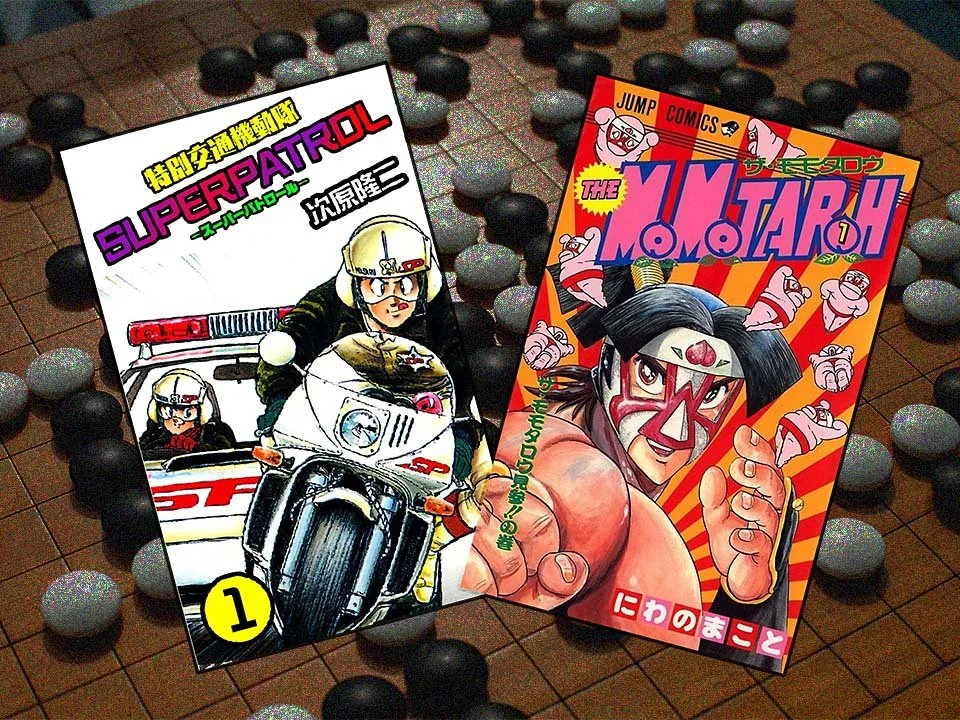
Tsugihara’s Special Traffic Police SUPER PATROL and Niwano’s THE MOMOTAROH, Obata served as assistant for both works.
Fortunately, he didn’t stay unemployed for long. Once his work in SUPER PATROL was finalized, he joined Makoto Niwano for his first serialization, ‘THE MOMOTAROH,’ a gag pro wrestling manga. Obata quickly took to Niwano: not only was he charmed by the new author, but they also shared the same goals. Even today, Obata considers Niwano his mentor. Although his journey to this point is unclear — it was definitely difficult for me to research — a faint light shines upon the timeline when we get to MOMOTAROH.
Obata, reflecting on his days at Niwano's studio, recalls believing that speed was what was expected of his work. He shares an anecdote of how he’d finish the work of absent assistants, sometimes finishing up to 15 pages by himself. Niwano noticed and praised his speed, all while maintaining the quality that came to define his work.
MOMOTAROH was a gag manga, and Niwano was a gag manga expert. Obata wasn't opposed to doing humor, but he was eager to get back to story-based manga. However, all of his prior efforts failed to get traction. Perhaps he was unlucky? Maybe the stories didn't connect with his audience?
Obata’s editor at the time, Ibaraki Masahiko — a gag manga specialist and founder of Jump's GAG King award — encouraged him to pivot from story manga to comedy, hoping the genre shift might yield better results. He’d revisit his ‘old man as main character’ idea from his elementary school days with a one-shot: ‘CYBORG Grandpa G’, published in Jump’s 1988 Summer Special. It was very well received, enough to warrant a second one-shot — this time, published on the weekly Jump. Somehow, lightning struck twice on the same spot.
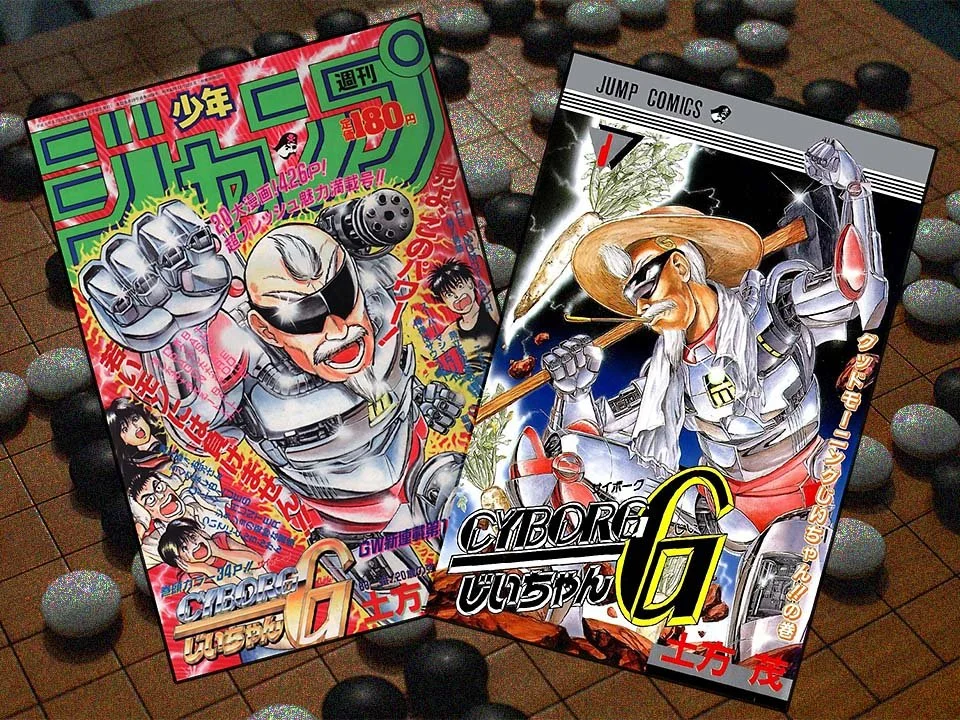
Jump’s Issue 22, 1989 — the issue where CYBORG Grandpa G’s second one-shot debuted and the first tankōbon of the series.
The general readership supported Obata’s gag manga and were asking for more. Shueisha complied, and during the summer of 1989, CYBORG G began its serialization. Obata left Niwano’s employ to do his own thing, and it was perhaps for the best, as MOMOTAROH would end its serialization in November. But how successful was CYBORG G? Let's just say that the ghosts of 1985 would haunt Obata once again.
It wouldn't finish the calendar year, ending after 31 chapters. Obata's beloved grandpa concept would not prove successful in weekly serialization, and it wouldn't be because Obata lacked comedic timing — Bakuman would later prove otherwise. Instead, there were two factors: one, cyborg stories were common in the ‘80s; the concept had been done repeatedly, from other cyborg grandpas to robot parents. And the second? Well… I'll let his next one-shot's outcome tell you why.
After recuperating from the brutal pace of weekly serialization, he submits another one-shot: ‘Detekite Oku Rei! Moritaro-kun’ (The Spirit That Comes Out! Moritaro-kun), in 1990's issue 39. After three years of gag manga, he returned to story-driven manga, only for it to be branded as another flop. Why…? Gag manga gave him his debut, maybe he needed to return to that…?
No — it was yet another harsh reminder that Jump readers cared little for Obata's stories.
Meanwhile, Obata's debut peers — what might be called the 'class of '89' — saw success much faster during Jump's Golden Age. Takehiko Inoue would successfully serialize the seminal sports manga Slam Dunk in October 1990, and two months later, Yoshihiro Togashi would do the same with Yu Yu Hakusho, a battle manga. Some years in, Takeshi Okano would illustrate the dark fantasy Hell Teacher Nūbē, which ran for six years. Obata was the only one who didn't see success in a time in which whoever struck gold struck it big. Still, he'd keep trying. After all, he's a long way from home.
“For manga artists, all you can do is draw manga. If you draw, you’ll definitely improve, and something will become visible to you. So draw a lot and do your best!”
For Obata's next work, he'd drop the pen name Shigeru Hijikata. A soft rebrand, as Obata had published work under his given name: Mars, and his elementary school newspaper one-shots. Perhaps he wanted to leave behind the identity that was lauded for its art, but trashed for its stories. Moving forward, he'd work as an illustrator for someone else’s original stories, with the occasional one-shot if time permitted.
‘Majin Boukentan Lamp Lamp’ (Arabian Demon God Adventure Tale Lamp Lamp), an Arabian-style battle fantasy manga, marked Obata’s debut as a manga illustrator, with Susumu Izutō writing the story. It began serialization in 1991's issue 52. Unless Obata was doing assistant work during the gap — the Moritaro-kun one-shot aside — it means he'd spent roughly a year between serialization work. Lamp Lamp would be short-lived, totaling 23 chapters and ending its run in Jump's 1992 issue 25.
And the consensus? Once again, Obata's art was universally praised. Some fans who appreciated the Arabian fantasy setting consider the series a hidden gem, and unlike many axed series, it managed to reach a conclusion. However, the series failed to break through. Critics took issue with one of the main characters, Lamp. Specifically, how his being the only fighter for the good guys meant battles became repetitive and monotonous. Lamp's simple personality meant enemy characters delivered constant exposition dumps during fights, and it killed the pacing. Even the protagonist's finishing moves were bogged down by over-explanation. The series also failed to fully exploit its Arabian setting, and Lamp's simplistic design didn't help.
After Lamp Lamp, Izutō’s name wouldn’t be in another manga. It’s plausible he left the industry altogether. Obata was, once again, left hanging. He was later tapped to illustrate a one-shot about Carl Lewis's story, written by noted sports writer Junji Yamagiwa, for the 1992 Barcelona Olympics. Could Obata find his groove in sports?

Jump’s Issue 32, 1992 — where the Carl Lewis one-shot by Obata was published, Lamp Lamp and Rikijin Densetsu.
Sumo was experiencing a major boom at the time, thanks to the Hanada brothers (Wakahanada and Takahanada). The sons of legendary ōzeki Kenshi Takanohana, who held the rank for a record fifty tournaments, the brothers were driven to achieve what their father could not: promotion to yokozuna. Their father, now their coach, would guide them toward that dream.
Writer Masaru Miyazaki, who penned an ice hockey manga two years prior, was brought in to write a biographical drama about the brothers. With 'Grand Sumo Detective' by Taro Gachon having recently ended, Shueisha had nothing to capitalize on the sumo craze. They needed something fast; Obata was available after the Carl Lewis one-shot. The editorial department paired the two Niigata-born creators together for 'Rikijin Densetsu: Oni wo Tsugu Mono' (Legends of Strong Men: Inheritor of the Demon).
The work wasn't strictly biographical, but rather drama informed by real people and their accomplishments. The dynamic between the brothers was set up like a classic protagonist/partner relationship — think of the Sherlock Holmes/Watson dynamic. Their rivalry with Hawaiian-born wrestler Daikai (based on Akebono) is featured prominently. It had all the elements for a compelling shonen series. Obata could finally have his long-wished serialization!
… unfortunately, reality proved too perfect to make good drama. The Hanada brothers' rise was so meteoric and obstacle-free that it failed to generate narrative tension. Takahanada rocketed from debut to ōzeki in under five years with barely any setbacks — great for him, terrible for storytelling. As observers noted, if this had been pure fiction, editors would have rejected it as unrealistic wish-fulfillment. After all, why read dramatized accounts when the real thing was unfolding live on television? The manga's survey rankings dropped steadily, ending in the 1993 issue 23 after roughly 24 chapters.
The third consecutive cancellation. Sports wasn't it, either.
Obata's next serialization came nearly two years after Rikijin Densetsu's cancellation. Again, it was a pragmatic editorial decision: pair him with Miyazaki, who now writes under the pen name Sharaku Maro. This was their second collaboration.
Miyazaki had just finished ‘Kurayami wo Buttobase!’ (Blow Away The Darkness!), a police thriller about motorcycle gangs that ended after two volumes. For this new proposal — ‘Ningyō Sōshi Ayatsuri Sakon’ (Puppet Master Sakon) — he pivoted to mystery, maintaining mature themes while aiming for better alignment with Jump's audience. The pilot, published in Jump's Spring 1995 Special, performed well enough for serialization a month later.

Jump’s 1995 Spring Special, where the Ayatsuri Sakon one-shot debuted, alongside a tankōbon of the series.
Ayatsuri Sakon follows puppeteer Sakon Tachibana — grandson of bunraku master Saemon Tachibana — and his puppet Ukon as they solve mysteries. Japanese retrospectives compare it to ‘The Kindaichi Case Files’ for its unsettling atmosphere and the eerie environments where its mysteries unfold.
Contemporary reception was polarized. The mysteries themselves drew mixed reactions — some found them accessible and engaging, while the eerie, atmospheric horror elements divided readers. It was compared to ‘Detective Conan,’ which had begun serializing the year prior, but as a “darker, more mature” take on the detective format. Many readers found the grotesque imagery unsettling, even traumatic.
For Obata, however, Sakon marked a breakthrough: his art finally received the critical mass praise he and his editors longed for. Readers noted how his beautiful yet eerie illustrations perfectly captured the horror atmosphere — perhaps too well for Jump's elementary school demographic.
The core problem wasn't quality, but fit. Jump was attempting to compete with Kindaichi and Conan in the emerging mystery boom, but Sakon's mature content and multi-chapter story structure clashed with Jump's survey system and younger readership. Retrospective critics noted it would've thrived with Young Jump's seinen demographic, but editorial compartmentalization kept it trapped in the wrong magazine. The work was ahead of its time — atmospheric mystery-horror that needed a more mature Jump audience, which wouldn't exist for another decade.
Four cancellations. But this time, it was different — even if it ultimately lost to poor surveys, Sakon performed better than Obata's prior works, and was being cheered on by both passionate readers and the editorial team. The latter believed in the work so strongly that they approved a posthumous one-shot, published four months after the series ended. After ten years in the business, Obata had finally produced something that paid dividends for his career. He just needed the right match.
Two years passed. Then, one more manuscript.
Hikaru no Go.
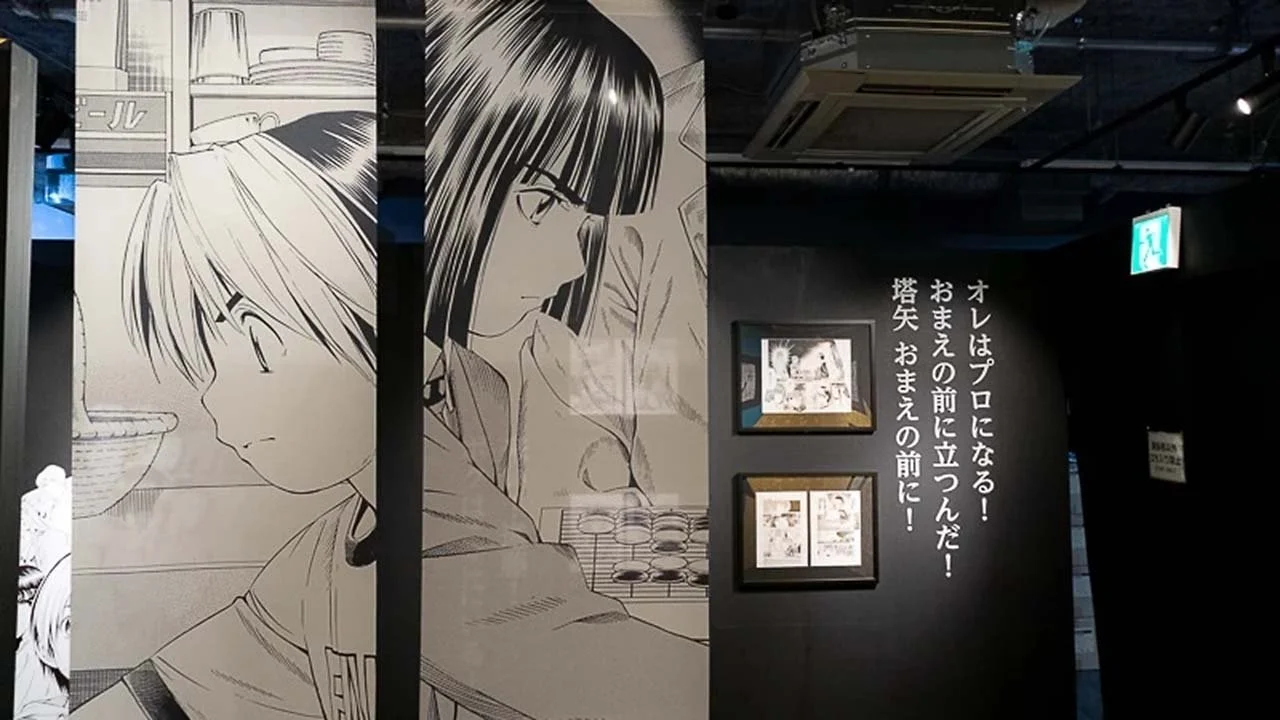
Inside the “Hikaru no Go Original Art Exhibition,” organized by Movic Co., Ltd. Currently exhibiting as of writing in Kyoto.
Photo: Animate Times
The manuscript that would finally vindicate Obata's decade of struggle didn't come from him — it came from writer Yumi Hotta.
But first, a question: which Yumi Hotta are we talking about?

Photo: European Go Federation
Yumi Hotta — the woman — was born Yumi Ota in Aichi Prefecture. Very little is known of her upbringing, even when she debuted as a manga creator at the age of 30. Her drawing skills are nonexistent — her writing skills? They’re solid. Her husband, Kiyonari Hotta, a manga artist of some renown, relished the opportunity to work with his spouse. He persuaded her into a collaboration for an entry in the now-defunct Manga Time Family magazine: an assortment of four-koma comics from various artists. She even got an honorable mention for their entry. You’d think that might’ve kept her going; however, it seems manga creation wasn’t an ongoing interest of Ms. Hotta’s, unlike her husband. There’s no evidence of any output from her in the time between Manga Time and HikaGo, a decade later.
And then there’s ‘Yumi Hotta,’ the entity. The story goes that Mr. Hotta, working as an illustrator for the Chunichi Shimbun, was frequently assigned work he might have felt uncomfortable — for whatever reason — being credited under his name. He’d take up a pen name, but instead of a random passerby, he took his spouse’s. Maybe he believed the subjects he illustrated were more acceptable when attributed to a woman? That being said, Mr. Hotta would still publish stuff under his name: most notably, a horse-racing strip series in the early ‘90s. There’s no evidence of any output from Mr. Hotta after the conclusion of the aforementioned work, or if there was, whether he took the credit or if it would be attributed to ‘Yumi Hotta.’

December 1984 issue of Manga Time Family, months before the Hottas’ debut.
The pen name evolved into a husband-wife collaboration — ‘Yumi Hotta’ was already famous, so it only made sense to continue. Ms. Hotta writes, Mr. Hotta illustrates and/or polishes Ms. Hotta’s script. She’s the face of the duo; he remains backstage. This frustrated my search for his photo: I was extremely lucky to find a picture of her, but despite my best efforts, I found nothing for him. As most of his work predates the Internet boom of the early aughts, any public appearances Mr. Hotta made are likely lost to time. Not all old articles are digitized, nor are all interviews deemed worthy of preservation.
For HikaGo, Ms. Hotta started writing what would become Hikaru no Go as she became fascinated by the game. It’d be a work that’s solely her own, but Japanese sources suggest her spouse got involved some time during it, remaining until the end. It’s still a Yumi Hotta work, but the entity ‘Yumi Hotta,’ not the woman herself — perhaps the pen name being the same as her given name was a blessing in disguise, or perhaps it's made researching the truth nearly impossible.

‘Weekend Company,’ a one-shot by Kiyonari Hotta on issue 29 (September 1988) of Big Comic Superior.
I mentioned earlier how incredibly lucky I was to find a picture I could match to Yumi Hotta, the woman. But luck alone wasn't enough — verification required painstaking cross-referencing most writers would skip. I choose to do this work — hours, sometimes days, tracking down a single fact that might end up as a footnote. Not every reader will notice or care that I spent several evenings comparing photos across French manga sites and Go federation reports just to confirm one image. But this is the standard I hold myself to, even when the effort outweighs the visible result.
That said, the way I like to work has its limits. Setting aside the fact that some pieces of information can be hard to find, especially with work that predates the Internet, what information there is out there may not be factual. ‘Of course. After all, why would someone lie on the Internet?’ you may wonder in a very matter-of-fact, sarcastic way. I’d do the same, and I’m fully aware this can be turned against me. Assessing potential motivations of individuals is tricky, as are their credentials, and you can’t take everyone at their word. And in the age of social media, the stuff you put out there can and will be used against you.
To finish this aside: given this lack of information, I’ll inevitably have to resort to conjecture with the sparse facts that exist. My ultimate goal, then, is to weave a narrative that makes the scenarios at the very least plausible — and this is likely a leftover from my video-making days. Going into what-ifs is frustrating, especially with the amount of work I do, but with the alternative being not communicating the Hottas’ story? I don’t have much of a choice. The worst that could happen is that I misrepresent the facts, not out of malice, but ignorance.

Photo: Japan Go Association
Finally, Yukari Yoshihara, née Umezawa. She’s credited as the series’ supervisor; however, it’s more accurate to call her a representative of both the Nihon Ki-In and the larger group of Go professionals who contributed their expertise to ensure HikaGo accurately depicted the game.
First exposed to Go in elementary school, Yoshihara played with her father often, bonding over this shared experience. She recounts how learning Go was like learning Othello, a game she knew how to play. After quickly surpassing her dad, she began joining amateur tournaments, some of which she made the Top 10. Unfortunately, she’d never take home the gold — a crushing feeling for someone who hates to lose, and yet, there’s something about Go that clicked for her to keep at it. Yoshihara became a pupil of the late Masao Kato, known within professional Go as ‘The Killer’ for his attacking play style, at age 14. Initially, all she sought was to better her game, not pursue Go as her career. Hearing her say it, Kato convinced her to do so.

Yoshihara with her teacher, Masao Kato, 9-dan.
Many aspiring Go professional players start their journey well before their teenage years; some reach pro status before reaching adulthood. By this standard, she sought a teacher late, but so did Kato when he was a beginner. Perhaps he felt a kinship with her as a soon-to-be colleague. However, it wasn’t enough to be tutored by one of the best, as Yoshihara would find out the hard way. She couldn’t pass the pro exam, no matter how much she tried. By her admission, she failed the test about “14 to 15 times.” Doubt began to seep in: did she really want to pick up Go because she liked it, or because she hated to lose?
Faced with the realization that she had spent her teenage years on this unsuccessful pursuit, she quit Go; college life was up ahead, and she wanted to make the most of it. It wasn’t until later that she realized how the one thing that gave her such strong emotions, good and bad, was Go. She couldn’t imagine doing anything else — she didn’t want to.
She failed the pro exam again. In 1995, an opportunity arose for her to participate in that year’s women's special recruitment exam. On the train ride there, thinking about how this bet might not pay off — just like the others — and the prospect of facing another grueling league, weighed heavily on her. This time, though, she passed.
Yoshihara became pro at 22, just as she was about to obtain her bachelor’s from Keio University. There was happiness, there was relief, but there was also sadness, as her father could not witness her achievement. Still, I’m sure he’s watching from beyond, as proud as her mother and teacher were when they heard the news.
In 1996, the NHK Cup producers went scouting for hosts at the Nihon Ki-in. Fresh out of college and undeniably camera-ready, Yoshihara was selected. If her looks opened the door, she was determined to prove there’s substance behind it. She took on the two-year hosting role, in what became her first step towards becoming Go's most effective communicator.
Capitalizing on this newfound media attention, Yoshihara was tapped to host a series of educational Go segments for the NHK titled ‘Everyone’s Go’ (みんなの囲碁). Teaching Go to a large audience — a game she admits looks scarier than what it actually is — requires a different skill set than being the host of a Go championship. Fortunately, she’s a natural: she explains concepts so well that a child could understand them. And she often did, being hired for many a children’s Go class.
In 1998, before HikaGo hit the printers, Shueisha saw an opportunity for both institutional backing and ultra-targeted marketing that only the Nihon Ki-in could provide. The federation already had a youth outreach program aimed at enticing young people to try Go — how successful those efforts had been is debatable, but the Shueisha partnership offered exposure to an audience twenty times larger than anything they could achieve alone. When the publisher of the biggest comic magazine among young boys and girls in Japan comes calling, you listen.
And so, the federation’s facilities, personnel, and players were available for Hotta, Obata, their editors, and Shueisha to depict the game as accurately as possible, an opportunity they took advantage of. The exact circumstances behind Yoshihara's selection aren't publicly documented, but the logic is clear: by 1998, she was Go's most visible media personality, making her the natural choice for the Nihon Ki-in/Shueisha partnership.
As a professional player, Yoshihara currently ranks at 6-dan; she was a 2-dan when the series began and a 5-dan when it concluded. Sources indicate that her fuseki, or opening strategy, favors exerting long-term control over the board rather than grabbing immediate territory, a style known as the teatsui style (手厚い棋風 "thick/solid style"). Players of this style build positions that may not appear threatening at first but become decisive as the game progresses.
Following her three-year reign as Women’s Kisei in 2007, Yoshihara continued her work in Go promotion and education. One such initiative is GO ONLINE, an online tutoring platform for both Go enthusiasts and aspiring professional players. She and her colleagues can be booked for sessions in which they’d give tips, tricks, and advice — the sort of game review Akira and Hikaru would do together later in the series.
Whether HikaGo was successful in combating the perception that Go is an old person’s game is not for me to say. It definitely sparked an interest in both Japan and abroad. Of particular note is China’s reaction: watching Go — a game they invented — depicted both beautifully and accurately by foreigners is something they were grateful for. The series enticed kids to attend Go classes in droves once the anime debuted — and if Japan’s classrooms were full, imagine China’s. It was also a hit in South Korea and Thailand, though specific examples of its impact there are sparse.
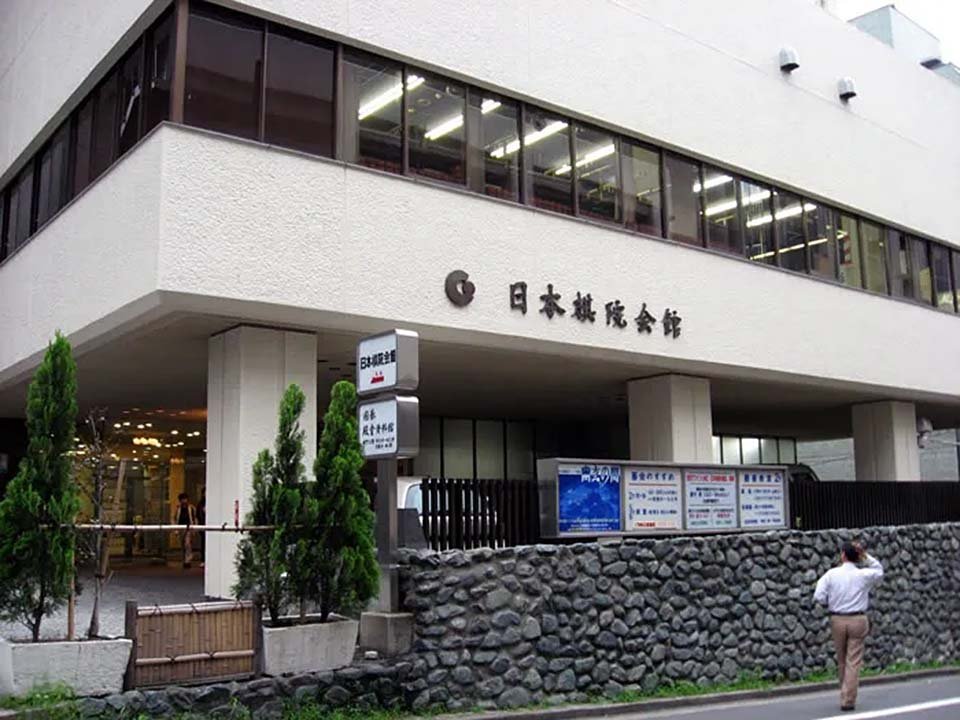
Photo: ontogenesis, LiveJournal
Amidst this unprecedented wave of youth interest, Masao Kato found himself becoming the new chairman of the Nihon Ki-In. Whether informed by the federation's youth outreach efforts, feedback from young players, or conversations with Yoshihara, Kato understood what reforms were needed to capitalize on this moment. His proposed changes — reducing time limits, modernizing the ranking system, adjusting komi, among others — may have been seen as far too ambitious among the older generations, but were necessary if the sport was to meet the HikaGo generation where they’re at. Unfortunately, Kato died in December 2004, less than a year into his tenure, leaving his reforms incomplete. Korean and Japanese Go officials would later lament, "If Kato lived five more years..."
Kato's successor proved more cautious. While grateful for HikaGo’s role in renewing interest in the game, the new leadership lacked Kato's drive. The institutional momentum he'd built dissipated, and the Nihon Ki-in settled back onto familiar patterns — not out of malice, but through the quieter force of institutional inertia. The opportunity to transform Go for a new generation slipped away, leaving the game much as it had been before Hikaru ever picked up a stone.

I’ll be honest, I haven’t thought of HikaGo in a long time. It’s been a decade since I last watched it.
What drove this rewatch is a thinkpiece I read titled: “Why Do I Pursue You?”: Hikaru no Go and Implicit-Metaphorical Queer Storytelling. I’m always interested in arguments about queerness in Japanese media. I was into BLs way before I started exploring the analytical side; it’s partly fueled by my disappointment and dissatisfaction with Western media regarding how it depicts queerness. In my experience, I’ve found that Asian media not only portrays the queer stories I want to see, but does so much better than any Western media could. But I digress.
The author, frustrated by how queer readings are often dismissed in fandom discourse, argues in favor of reading HikaGo as implicitly queer. They point to the story's use of rivalry as a framing device, a rivalry that features an intensity rarely seen in sports anime of that era, as evidence that it can and should be interpreted this way.
This framing bothered me. But hey, let’s approach this in good faith — maybe I missed something during prior rewatchs compelling enough for me to agree. Does the argument hold up? Given how central the Akira/Hikaru rivalry is to their argument, let’s zoom out and look at it as part of the bigger picture.
It’s valid how Hotta wants to write a story about Go, considering how much it meant to her as a means to spend quality time with her in-laws. Equally valid is the following question: “Why would anyone read this?” Think back to how uninterested Hikaru was in Go when he first met Sai. To him, that’s something people like his grandfather played when they were bored — he only picked up a stone at Sai’s insistence. I think this is a fair description of the audience watching this. Furthermore, there are no examples of media focused on a board game that make for a thrilling watch before HikaGo.
The closest example I found is a drama film. 1993's Searching for Bobby Fischer tells the story of prodigious chess player Josh Waitzkin in his early years. Like Go, chess is a board game that suffers from the same challenge: it's visually static and difficult to dramatize. The film needed something else to make it compelling, and found it in the human drama surrounding the game — the father-son relationship, the conflicting mentors, and the shadow of Bobby Fischer's legacy. The film ends on a poignant question: Is pursuing excellence worth what it costs Fischer, who became a reclusive, troubled figure after his triumph?

HikaGo never explicitly asks this question, although the Sai Disappearance arc could be interpreted as touching upon it. Regardless, human drama worked for Fischer, and it’ll work for HikaGo. But wait, Hikaru and Akira are grade school children! What business do they have partaking in human drama?! Drama manifests itself in multiple ways — remember that Waitzkin, too, was a grade school child when his story took place.
Go is a mind sport. Rivalries have a track record of being a good fit for drama in sports. Hell, even far more visually dynamic sports engage the rivalry trope within designated spaces: think of Slam Dunk's rivalry between Kaede Rukawa and Akira Sendoh — intense, yet largely kept to the basketball court. And there are contemporary examples that, while inconsequential to our larger analysis, are still worth mentioning if only to illustrate how rivalries in sports have advanced: Blue Lock's Yoichi Isagi & Rin Itoshi, Free!'s Haruka Nanase & Rin Matsuoka, and Haikyuu!'s Shoyo Hinata & Tobio Kageyama.
Hotta isn't reinventing the wheel. What made the rivalry between Akira and Hikaru notable is its omnipresence. Initially fueled by Akira's refusal to accept being beaten by Hikaru, this mysteriously skilled newcomer, and his need to understand what drives Hikaru's Go, it escalates when Hikaru abandons his prior life in pursuit of Akira, even as Akira determines to get so far ahead that Hikaru could never catch up. This dynamic could be read as queer, but I propose a more straightforward reading: it's the intensity required to make a story about Go work as a weekly serialized entertainment. The rivalry had to be omnipresent because the game itself couldn't carry the narrative weight on its own. For instance, I watched some of Yoshihara’s matches to get a feel of her prowess as a Go player, including the one linked in her section above. I assure you, if I weren’t invested in the subject matter, I would’ve closed the video or gone watch something else after a few minutes.
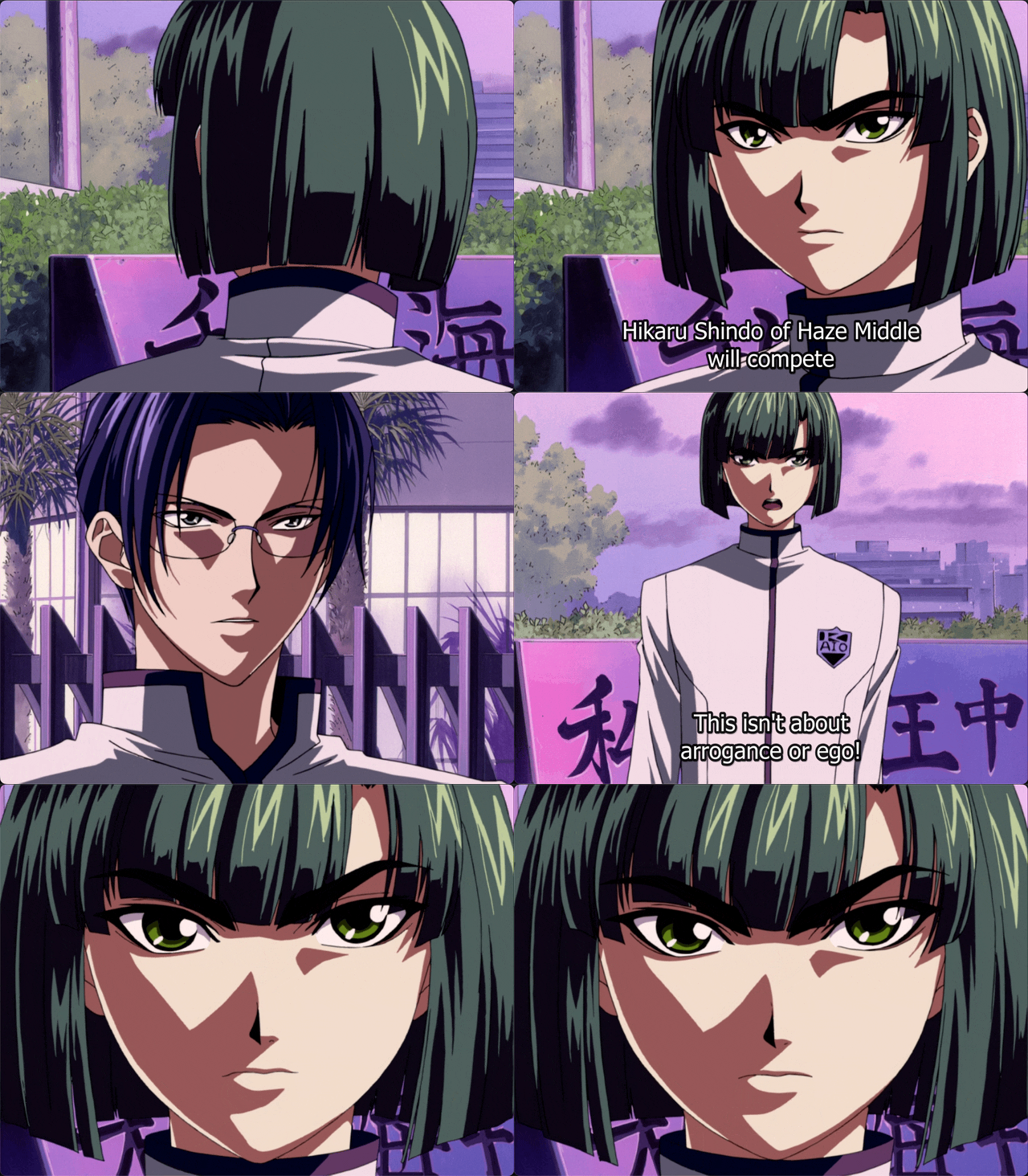
Now, why does the rivalry take this specific form, this all-consuming obsession? It’s clear from the start that Akira's entire identity revolves around Go. He has no friends his own age; his only meaningful relationships are with his father (his Go teacher) and other adult Go players. A flashback from episode 66 later confirms how this isolation predates Hikaru entirely. So Akira’s obsession with Hikaru isn’t the cause for this narrow focus; it merely shifts it, and there are many clear examples: episode 3, when he issues his rematch challenge after Hikaru’s crass comments under the pouring rain. Episode 7, the first meet-up at Haze Middle, in which Akira admits to Hikaru how he’s always on the back of his mind, thinking about how he’d respond to his moves — this isn’t just competitive interest, but a genuine preoccupation. Episode 12, Akira protests being made captain of the Kaio Go tournament team, as all he wants is to play Hikaru at seat number 3. I could go on and on, but I won’t.
Granted, this didn’t originally begin as a rivalry; rather, Akira’s obsession with Hikaru and his mysterious skill clashed with an indifferent, almost apathetic, Hikaru. Then, something started to shift: his meeting with Toya Meijin and playing a game in episode 3, Hikaru’s gradual understanding of what drove Go players, and his refusal to play Akira in episode 7, “until I’ve caught up to you.”
Then, episode 13 — the middle school Go tournament. Realizing how zealous Akira’s pursuit of Sai was, it’s evident that Hikaru’s plan of making Akira wait wouldn’t work. He’d let the Go master play the match until he took over in the middle of the game, much to Akira’s chagrin. The difference in skill was clear, with Akira speeding up his play to get out of that distressing, frustrating situation altogether sooner.
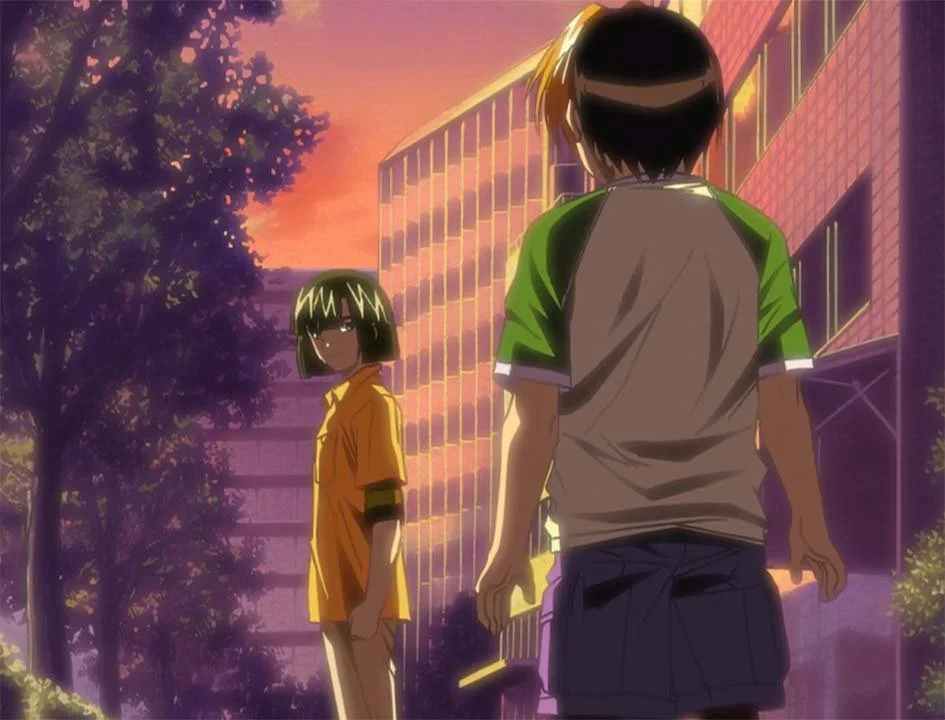
By the end of the Internet Go arc, Akira resolves never to show himself to Hikaru again, leaving him in shock. In a last-ditch effort, Hikaru is now the one issuing the challenge: “If you keep on chasing your phantom image of me, one day, I’ll surpass you!” Akira coldly responds: “Instead of one day, shall we play right now?” Hikaru didn’t follow through, and Akira leaves — giving him a taste of the medicine Akira took at the tournament. To add insult to injury, the captain of the Kaio Go club, Kishimoto, crushes Hikaru’s aspirations of catching up to Akira ‘one day.’ He not only punctuates how Akira’s Go is better than his, but assures he’ll never catch up unless he does so as if his life depended on it. Thus, Hikaru resolves to leave everything behind: his friends, the middle school Go club, his life until that point, all in the pursuit of Akira. Hikaru has never taken anything seriously in his life before. What could drive such a complete transformation?
The answer, put in internet fandom terms: 'notice me senpai.'
It may sound trite, especially with how overused the trope is, and yet, there’s truth behind it: Japanese society hugely values hierarchies. For every aspect, whether it’s learning a craft, at work, in school, or giving life advice? There’s a senior and a junior.
Before dismissing this reading, consider: Akira is Hikaru's Go senior in every measurable way — he's played longer, achieved more, reached 3-dan versus Hikaru's 1-dan. Note how Hikaru is always the one calling them 'rivals,' while Akira doesn't publicly acknowledge this until a monologue in episode 74. The admiration and respect that define rivalry flow almost entirely in one direction for most of the series. Hikaru is chasing recognition that Akira won’t grant, at least not publicly.
While Akira pursued Hikaru obsessively outside the professional world, inside it, his obsession was more restrained. He kept tabs on Hikaru's progress by proxy — maintaining the senior's watchful eye on the junior's development. It's not until the Sai Disappearance arc that Akira lets the mask slip, showing he respects Hikaru as a competitor — worrying about why Hikaru dropped Go altogether. This is the moment the hierarchy begins to equalize.
Ever since becoming pro, Hikaru spent two and a half years bettering his Go, all to earn Akira's respect. A far cry from the grade school kid who had no interest in the game when all this started. Logic might suggest that any endeavor lasting this long, driving such total transformation, must be romantic in nature. While I agree something profound is driving this commitment, I reject the assumption that intensity equals romance.
Instead, the senpai-kohai framework succinctly explains this dynamic. Why Hikaru won't play Akira until he's 'caught up,' why earning respect matters more than just competing, and why the hierarchy must be acknowledged before equality can exist. This isn't the language of romance — it's the language of Japanese mentorship and social structure.
I'm not arguing against queer readings of HikaGo — the ‘death of the author’ analysis framework states that multiple interpretations can coexist. What troubles me is the framing that this intensity *must* be read as queer, that it's “exactly what this is,” and other readings be damned. When I analyze the series from the perspective of senpai-kohai dynamics and the structural requirements of serializing a board game, I find those explanations more grounded in the text than a romantic reading. A queer reading remains valid for those it resonates with — but it's not the only lens, and claiming otherwise limits our understanding of how boys can have profound, transformative relationships that aren't romantic.
And look, I get it. As an openly gay man, I get the hunger for representation in my community: I want that, too! However, I want us to elevate actual queer people, whether it’s creators or characters, shine a light on those whom we might’ve missed, and speak of how our people were, and continue to be, marginalized. We have a responsibility to teach the newer queer generations about our mistakes so they don’t repeat them. The Sailor Uranus & Neptune fiasco from the Cloverway dub of Sailor Moon comes to mind — where an explicitly romantic relationship was erased and reframed as cousins. It was an important denouncement by queer thinkers who reassessed the series, and even if it was a product of its time, it was wrong then; it remains wrong now.
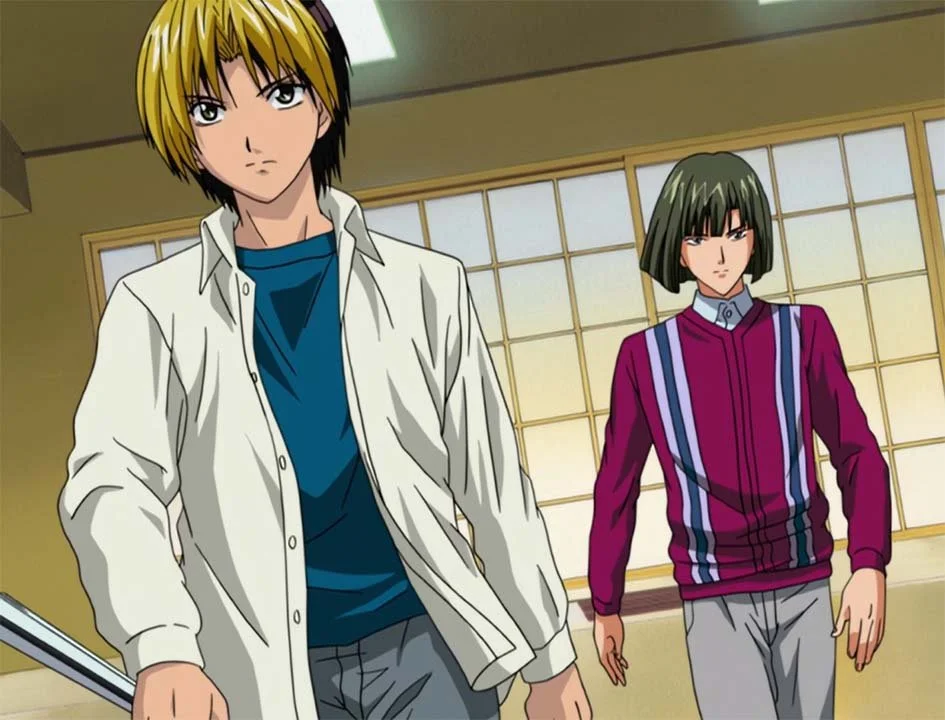
That said, our thinkpieces shouldn't degrade into wish-casting disguised as 'media analysis' — arguments dressed up in scholarly prose to make them sound more authoritative than they are. Instead of preaching to the converted, it risks confirming misconceptions that non-queer readers might have about how queer people interpret media: that we see ourselves everywhere, that we can't distinguish between different kinds of intimacy, that our analysis is driven by desire rather than textual evidence.
This is one of the many ways our people get tokenized, with some of our own thinkers participating in the process. I don't want my identity reduced to a checkbox, which drives my frustration at how 'representation matters' gets wielded. So we have a gay character in a story, great — what are you doing with it? Is vindication enough in a society that no longer embraces us with the warmth it did before the worldwide rise of the far right? I've argued how queer people need to recognize ourselves as part of a larger whole, that our individual actions reflect on the community, fairly or not. I still feel that way.
To return to where we started: interpersonal relationships are far broader than implicit attraction. One can feel very passionate and very intense about something or someone without it equaling romance. There's no one true way to read a text. If something doesn't make sense to you, form your own opinion. Look up context and evidence that helps you. And if you're the dissenting opinion? As long as it's grounded in the work itself, it doesn't matter if you're not the consensus.
Context matters.
The media log is taking a break for September. While catching up on July and August, I didn't have time to consume anything new worth covering here. As I wrap up this entry, I’ll immediately begin work on October’s.
That's it from me. See you soon!