
31 min read
Prior Entry | All Media Log Posts | Next Entry
Please be advised these posts aren’t spoiler-free.
I don’t feel obligated to write about everything I play, read, or watch – or at least I don’t think I do – but there’s one entry in this month’s log I debated including. I only added it because the log was looking rather empty midway through the month – not that it stayed that way, as I soon found out. You’ll probably know which one it is once you read it, dear reader.
On a gaming side note, after finishing my OMORI replay, I didn’t touch a video game for a whole month. It made me reflect on my relationship with the medium – how, as I get older and take on more responsibilities, I seldom have the time to play like I once did. Meanwhile, games keep getting bigger, prices keep rising, and publishers want it both ways: charging full price while stuffing their releases with predatory microtransactions. As a console-first player, I had little choice in what to play as the landscape shifted – something that became even more apparent with the death of so-called AA games by the mid-2010s, leaving studios with no option but to chase whatever was trending at the time. In fact, you can still see this play out even today.
With such a grim outlook, I started to wonder if gaming was even for me anymore, if it could ever engage me the way it once did. I have mixed feelings, and I don’t know what to make of them. But at the same time, I’m not ready to give up on a medium that has brought me so much joy. So, who will hold out in the end – the pragmatist or the skeptic?
Apologies for the somewhat depressing lede – I have a lot on my mind. Hope you’ll enjoy the March media log!
Rent-a-Girlfriend, Chapter 355 - 366
Last I checked on Rent-A-Girlfriend, human trash Kazuya Kinoshita was about to go out on a real date with Chizuru Ichinose. Not “Chizuru Mizuhara,” the rental girlfriend, but the woman she truly is.
Before this, in chapter 249 (!), all of the tenants of Royal Hills Nerima were evicted following an earthquake, revealing the building is not safe for anyone to live in. Kinoshita is down in the dumps, realizing they’d all live apart. That is, until Mini Yaemori proposes they all live together. She got the group back together at a bar, counting on Kinoshita getting so drunk that she could guilt-trip Ichinose into letting him have a room at the house she inherited from her grandmother. She agrees to take them in for a month, which works for Kinoshita as the place he’s looking at opens up right after that. After 59 chapters (!!) of living together, Kinoshita finally asks Ichinose out in chapter 315 (!!!). Having developed feelings for Kinoshita far before this point, Ichinose realized that the day would come when one of them would have to make the first move. When he asked her out within a certain timeframe, she turned him down – only to suggest a day that worked for her instead. She rationalizes the invitation as a call to further her “investigation” but in reality, she’s happy she got asked out.
This is followed by 37 chapters (!!!!) of date planning, later joined by Yaemori acting as an Ichinose stand-in to prep him for the real thing. And then, the promised day – May 17th – comes. It was a rainy morning – nay, a rainy day – and Kinoshita feared the date would be canceled. Yet, come rain or shine, the date moves on.
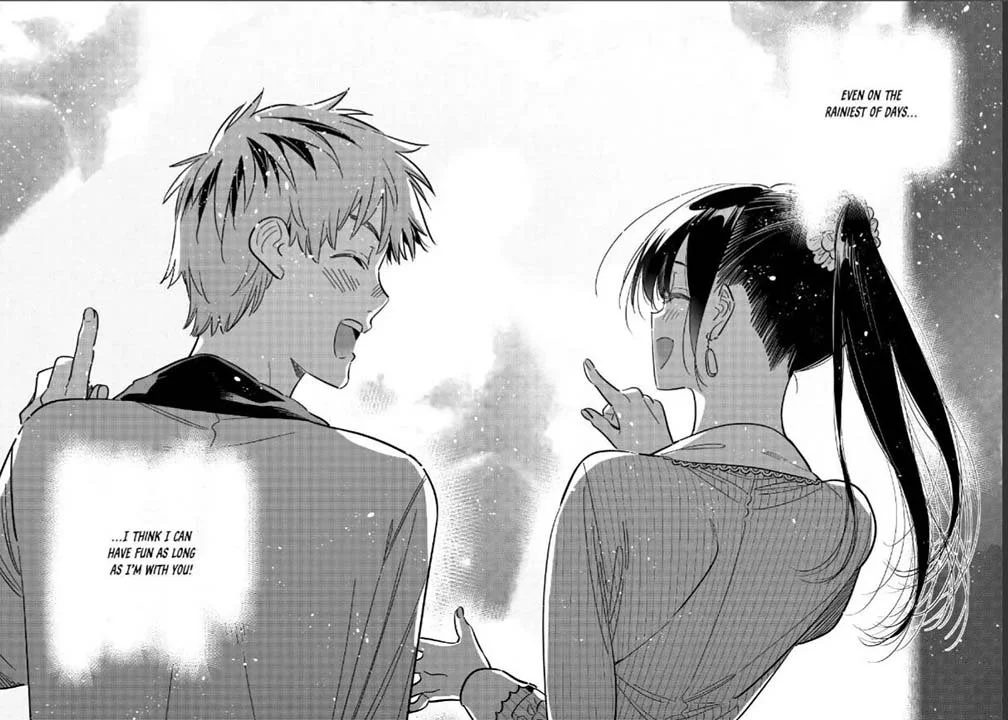
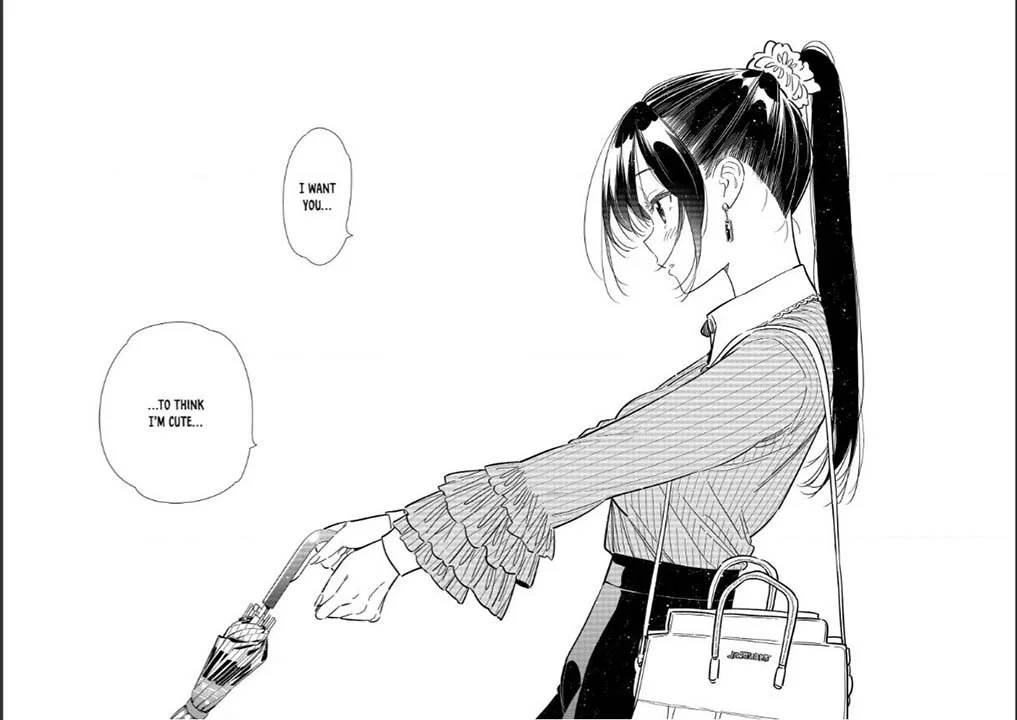
Picking up in chapter 355, Ichinose and Kinoshita just got off the train at Odaiba, their destination. He has this date planned to the minute: take her out shopping at Seaside Mall, have lunch, spend the afternoon at Joypolis, the indoor amusement park next door, then have dinner, all while covering for the day’s various whims so Ichinose doesn’t have to take out her wallet. But plans rarely go off without a hitch. The mall didn’t open until 11, and the lunch reservation was at 11:30. Ichinose mentions they should wait, which becomes an opportunity to make small talk. He asks if she’s been to Joypolis before – she has, as a rental girlfriend. She compliments his looks: given his usual attire, the fresh haircut and new clothes didn’t go unnoticed. He responds to the compliment with one of his own but it feels half-hearted. After a sarcastic quip, Ichinose laid down her cards – she wanted him to think she was cute.
They play air hockey against each other, check out a candy store, and stop by a shooting gallery. She glows whenever she’s playing something and there have been hints of it throughout the story, most recently a board game totally not called Bounce-Off to avoid paying royalties, but this is the most direct reference to her enjoying games. Lunch comes around, and Kinoshita’s a nervous wreck. He expected to guide Ichinose throughout, but it was the other way around. He covers the bill while she’s away, but she insists – saying they should split it as this date isn’t just for him, but for her also.
Kinoshita’s rehearsal with Yaemori finally came in handy when they strolled to Joypolis. So successful, Ichinose thought he’d come here before with his “ex-girlfriend” Ruka Sarashina. All the popular attractions have hour-long waits – he proposed to look for less trafficked ones, but she wants to board the roller coaster. Another chance to make small talk and Kinoshita sucks at this. The first of Ichinose’s pointed questions begins: “How many kids do you want?”, followed by a flashback to young Ichinose at school during Parents’ Day, where her grandmother is absent due to prior commitments. It seems Ichinose being an only child weighs on her, and she doesn’t want her children to experience the same. Another pointed question followed: “[sic] when do you consider it cheating?”. This last one references her acting career and the possibility of having to perform intimate scenes with other actors, not to mention her rental girlfriend work. Were Kinoshita’s answers satisfactory? Only time will tell.
The mood lightens up when they arrive at an aquarium. There’s a photo booth that takes pictures of guests and casts them in front of a manatee. Kinoshita made an unintentionally funny face and, when they figured out what the attraction was about, he and Ichinose made silly faces on purpose. While figuring out what to do next before the dinner reservation, Kinoshita receives a call from ex-girlfriend Mami Nanami. Does Kinoshita answer? Does Ichinose notice that she’s calling him? That gets covered in a chapter outside this batch - chapter 367 is out as of writing, but I won’t be reading until I have another batch to go through.
After that explanation of what happened in those chapters, how do I feel? To start on a positive note, I appreciate how series author Reiji Miyajima uses real locations in his story. For instance, Seaside Mall and Joypolis are actual locations in Odaiba. The latter seems quite fun from the few videos I watched of the attractions and it fills me with longing – I wish I was in Japan, experiencing it all firsthand. Furthermore, I like the included short games – sometimes appearing before a chapter starts or, in this case, seamlessly woven into the story: a matchstick puzzle and a maze-like challenge scattered throughout the queue the duo was waiting in. I went one for two on the matchstick and completely failed on the maze-like, as I misinterpreted what the puzzle required to solve it. Finally, Kinoshita’s pet lungfish-acting-as-commentator has got to be one of the funniest long-running gags I’ve seen yet.
Now, the bad stuff, and the critique is not unique to these chapters but the series as a whole. I don’t like how Kinoshita ogles every woman he’s even remotely interested in. Ichinose, Nanami, Sarashina, and even poor Sumi Sakurasawa – all have been victims of his horny glare, giving Miyajima an excuse to draw close-up shots of breasts, legs, and butts. Given how often this happens, I must question the author’s motivation: does Miyajima think all young adults are like this, that they never grew out of being hormonal teenagers? Was he like this when he was younger? I’m not above fan service, but Rent-A-Girlfriend is too much. And yes, I realize this critique might not carry much weight coming from a gay man, but I’d like to think it unsettles heterosexual readers as well.
I don’t like Kinoshita’s constant internal monologues and getting flustered over the most asinine thing. There are two such moments in these chapters: “I’m touching Mizuhara’s phone…!” and “I drank Mizuhara’s water!”. This last one is indicative of the ‘indirect kiss’ trope so common in Japanese media, despite it… being an easy mistake to make – one often brushed off with a laugh and a request for a refill. Ichinose calls this “self-absorbed narcissism” early on in the series – I’m inclined to agree.
Finally, this story is much longer than it needs to be. I lay the blame on the aforementioned monologues, in which Kinoshita tries to both be good *and* bad at the same time, and these traits clash with each other. There is nothing wrong with a dichotomy, and it can create interesting drama and storytelling. However, when the main character's goal is to get a girlfriend, I find it hard to take seriously. Having run this long without any meaningful advancement, I believe either Miyajima himself or his editors want it running this long. As Bakuman. illustrates, once editors have a hit on their hands, their priority is to keep it going for as long as possible.
Still, it’s a series I check out of morbid curiosity. Like a drug I can’t quit, I read on, hoping to see if Kinoshita and Ichinose’s relationship makes any meaningful progress. For the longest time, I wondered if I’d have another guilty pleasure series after Sword Art Online, and I must accept that Rent-A-Girlfriend became one, as it meets all the criteria. At best, the series is a solid 6 out of 10, and there’s little it can do at this point for that to change – not even the Movie Arc’s attempt at redeeming Kinoshita moved the needle.
Love Melodies
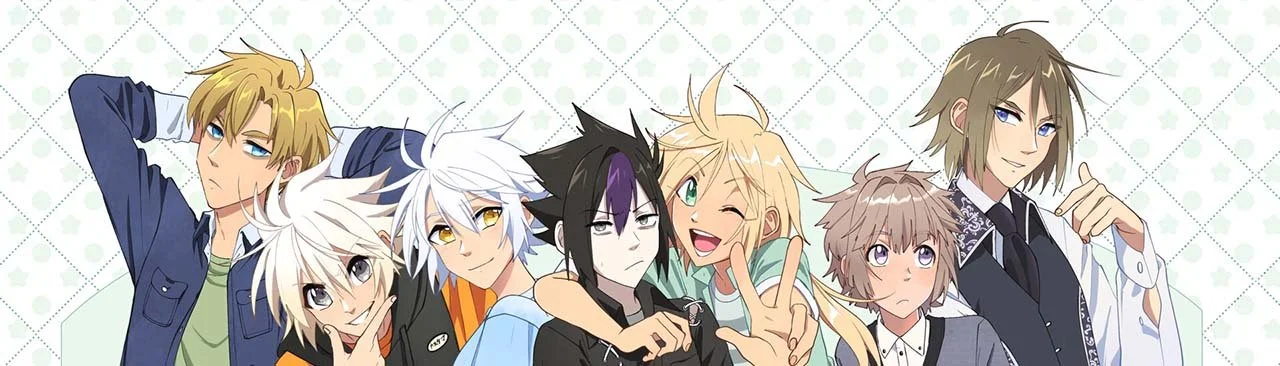
Left to right: Lawrence O’Donnell, Zai & Inoru Tamashiine, Mono Kurone, Merlow Armone, Hazuki Kaneda, and Forte Armone.
Love Melodies isn’t the first webtoon I read – that’d be BJ Alex – but it’s the fastest I pick up one. I ran across it when someone I follow on Bluesky reposted this lovely illustration of the artist’s original characters, Hazuki and Forte, drawn in the style of a sequence in the opening of season 2 of The Apothecary Diaries anime. I’m happy to see more illustrations in my skyline, so I checked their profile for other work they did. I learned about the webcomic, that these two characters are a couple – well, eventually become one, and that they’re not the only OCs they have. However, what sold me on the webcomic was the Gay Stuff: not-safe-for-work illustrations of Hazuki and Forte, in which I simply needed to know how they came together.
Summarizing any slice-of-life work is challenging, but I’ll try. Love Melodies, the brainchild of writer/artist duo Lolina and KasuTama, tells three character stories during their formative school years, running in parallel until their inevitable intertwining. With themes such as family, friendships, and love, the cast navigates their turbulent lives as feelings grow ever stronger, showcasing their efforts to make a place for themselves in the world. As of writing, the series is shy of its fourth anniversary, with its introduction first published on their German Patreon page in the spring of 2021, followed by an English release on WEBTOON in the summer. The first four chapters introduce the main cast and setting, starting with the Tamashiine twins: Zai and Inoru. Their story begins when they leave the orphanage they’ve lived in for years, having been adopted by the O’Donnell family. They can’t come to pick them up, as they’re abroad for work, but get a key to their house. What welcomes them is an unkempt place: dust everywhere, books outside their shelves, and dishes that haven’t been washed in days – does anyone even live here? Noru, the cleanliest of the twins, takes issue as Zai looks for pictures of their adoptive parents. Shortly after, they meet their foster brother Lawrence, who goes by Rory. Chapter two introduces the school the twins attend: Takaon Junior High. Other characters in the main cast also attend this school, setting the scene for the upcoming intertwining of stories.
Chapter three introduces Mono Kurone, an Osaka native who’s huge into gaming but not into socializing after one too many heartbreaks, and Merlow Armone, a genderfluid person who considers Mono his first friend at school. Chapter four moves to Kouon High where Rory and our next characters attend. Firstly, Hazuki Kaneda is a meek and unremarkable student. However, in private, he’s a seamster hobbyist with aspirations of getting into the fashion world, and a nurturer of a crush for our last main character, Forte Armone. Son of two successful business owners, good at school, sports, music, and even a model – he seems to have won the life lottery, but why does someone like him speak to Hazuki? There may be more than what meets the eye; Forte feels similarly, but perhaps neither is willing to make the first move out of fear of rejection. I won’t dwell on how Forte developed feelings for Hazuki, as I’m sure that’ll be answered eventually. Still, I wonder how much of a role Akio Kaneda, his assistant and Hazuki’s older brother, had in it – whether through casual remarks, nostalgic stories, or the kind of warmth that made Hazuki seem all the more special in Forte’s eyes.
One important aspect of works in the slice-of-life genre is the dynamic between the characters. I want to start with Hazuki and Forte, which is why I began reading Love Melodies. Initially, I was looking forward to Explicit Gay Stuff happening but was disappointed to learn that they were not a couple yet. However, how people come together is often more compelling than what may happen after the chase. While exceptions exist, I have yet to encounter an in-relationship story engaging enough to stick with it. I’m concerned about the slow progress of Hazuki and Forte’s relationship, potentially overstaying its welcome. Long, drawn-out confessions are frustrating to watch – a clear example of this is Kimi ni Todoke: From Me to You. I’m hoping the writer handles the transition naturally and effectively. That said, I grew to love how Forte lifts Hazuki from his self-doubt. This is particularly evident in chapter 12 when the honor student visits Hazuki’s house to assist with summer homework; what starts as a study session ends with a pep talk from Forte about being open about what he wants. There’s something almost too fitting about a model encouraging a business student, who’s only in it out of obligation, to follow his real dream of fashion design.
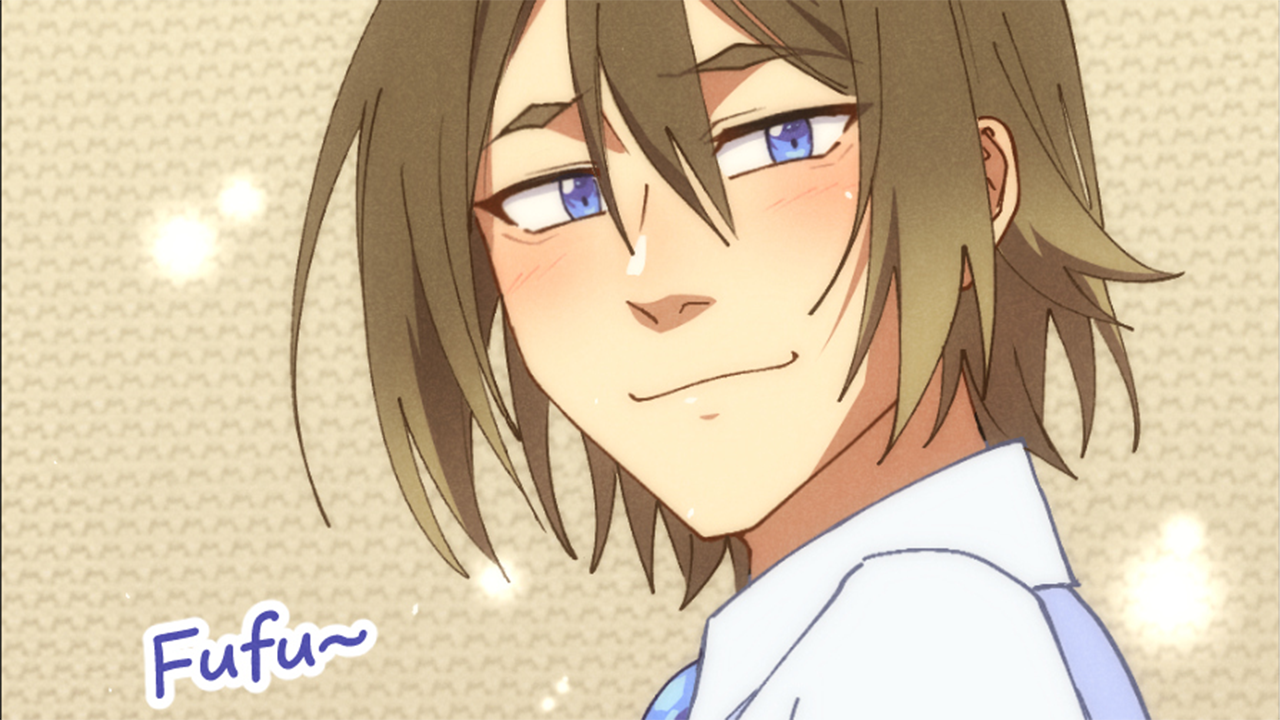
Next, we have Mono and Mero. I thought this pair would annoy me, but I’m pleasantly surprised they didn’t! If Mono is a chaotic gremlin, Mero matches that energy, resulting in entertaining interactions between them. Their mutual support is worth noting: Mero, noticing that Mono only eats snacks instead of a proper meal at school, has his assistant prepare a bento for him, helps him during a panic attack after his phone breaks, and even encourages him to rejoin the football team. In return, Mono indulges Mero’s every whim, teaches him how to swim, and in chapter 11, shares a bed with him. They’ve come to enjoy each other’s company, which I’m happy to see. I don’t ship them as hard as I do Hazuki & Forte, but I wouldn’t mind if they became a couple as they’re perfect for each other.
The weakest of the main characters are the three the story introduces first. I find neither the Tamashiine twins nor Rory exciting, and not even the brotherly banters between them make it, at most, tolerable. The worst offender is Zai: I thought the karaoke outing might be the moment he finally wins me over, and he shines, alright – just like a gaudy neon sign: loud, overbearing, and impossible to ignore. It’s perhaps fortunate how much of his appearances are accessories to something else happening, with the aforementioned outing chapter being the exception. His likely being the only heterosexual among a cast of queer people means that when his dating arc comes around, I won’t care much for it.
Moving on to Rory. What do I know about him? I know that he’s struggling with depression, with the unkempt house in chapter one being a sign. At first, I could’ve chucked it up to laziness, but looking closer, it felt like something else. Depression can make even basic upkeep feel overwhelming or pointless – I know, because I’ve been there. He seems to suffer from stress-induced migraines, which keep him from attending school. When he does attend, Forte’s nagging and the bullies’ harassment make these migraines worse. He gets along with Hazuki, with the way he teases him depicting a degree of comfort, similar to how he interacts with the twins back home. I’ve nothing else in my recollection, and there’s not much for me to latch on. There’s a chance Rory’s character gains a newfound appreciation once the truth about the O’Donnells comes to light. So far, I don’t connect with his big brother role and, while I enjoy his banter with Hazuki, I find Hazuki’s relationship with Forte more compelling.
When it comes to Inoru, I deeply relate to him. I know all too well what it’s like to stay in the closet out of fear – fear of a society that can be ignorant at best and outright cruel at worst to queer people. He hasn’t even told his twin brother, the only family he has, which hits close to home not only for me but for others in the LGBTQ+ community. I’m sure Zai picked up on the same signs readers have, and when Inoru comes out to him, it’ll be a turning point – I need nothing less than unwavering support from him, or he’s as good as gone to me. With that out of the way, it’s a shame that I view Inoru as a weak character because of his association with Zai and Rory, especially given how much we share. If only he had the chance to stand on his own, without Zai around. Twins are often said to be inseparable, always together, but for Inoru to truly understand how he feels – and possibly come to terms with his identity – I feel this moment without Zai is necessary. To end on a positive note, I enjoy it whenever Inoru and Momo are together. As the former is a senior to the latter, the chaotic gremlin shows a meeker side. The senpai-kohai dynamic between them is a lot of fun, especially since Momo can’t fully turn off his chaotic gremlin side – likely due to Mero’s presence and Zai’s dislike of him, creating a perfect blend of humor, almost like a sitcom. I look forward to reading more!
Love Melodies is available in English via WEBTOON and Tapas. In German, it’s available on Animexx.
Low Tide in Twilight
Content warning: Mention & discussion of sexual assault.
I must’ve run across this manhwa while looking for Free! Iwatobi Swim Club doujinshis, according to my browsing history. Or did I see a recommendation in some random comment section and curiosity got the better of me? I genuinely can’t remember. I’ve heard numerous bad things from people I trust about the Omegaverse genre, and I’ve done my best to steer away from works that purport to be from that genre. It’s clear I didn’t read the list of genres on the landing page for the series – I began seeing the signs of this work being omegaverse as soon as the second chapter. You’d think that, even if I didn’t read the genre list carefully, I’d know it’s an omegaverse by a conversation of the mobsters at the beginning of the first chapter, but that’d require me to be familiar with the genre, which I’m not. I could’ve bowed out early but as I was already there, might as well give it a go. What could possibly go wrong?
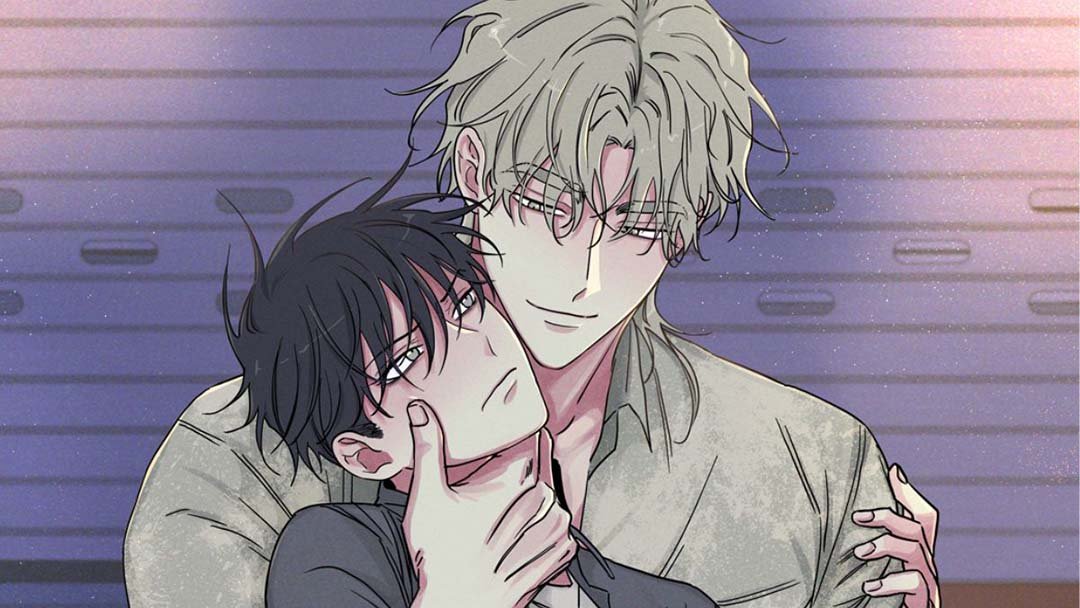
Kim Euihyun lost the will to live. Carrying his little half-brother Kim Euiyoung, Euihyun chooses to end it all by walking into the ocean. As both of them already had a rough life, he couldn’t live with himself if something were to happen to his kid brother in his absence. Just before the water goes above his hips and is swept by the current, Yeo Taeju pulls him out. The man is a mobster from whom Euihyun’s father, Kim Sahyeok, borrowed at least 180,000 won. Unfortunately for him, he was named the guarantor, likely without his consent given his protests. Not like it makes any difference to the mafia – his father ran away, and someone needs to pay that debt. Observing how he was willing to commit suicide with his kid brother in hand, Taeju suggested that Euihyun become a sex worker to pay back the debt. There were mentions among the mobsters as to how Euihyun is an omega, and Taeju happens to be an alpha. And it appears Taeju wanted a piece of Euihyun ever since they first came into contact, as he sexually assaulted him. Shortly after, Taeju secures accommodation for Euihyun and his brother, along with a choice of jobs – strangely charitable for a mobster. But does Taeju genuinely want to help Euihyun, or is there something more to his so-called generosity?
To first address the elephant in the room, the sexual assault chapters were tough reads. For three-quarters of the story, every sexual encounter between Taeju and Euihyun is either coercive or met with resignation by the latter, which I’m not a fan of. If chapter 2 was tough, 53 is even worse – I was on the verge of quitting after being exposed to a deeply disturbing alpha rut, all while cursing the desire that led me here. Taeju, realizing what he’s done, chooses to stay away from Euihyun despite having fallen in love with him. I’m generally apathetic toward redemption stories because they often feel like an easy way to force character development. Too many of them seem desperate to make me understand a character’s perspective when I’ve already made up my mind – and I rarely feel compelled to change it. As it relates to this story, even if the alpha doing this kind of introspection is rare in omegaverses, he is and will continue to be a red flag, even if Euihyun is the one who chases him in the end.
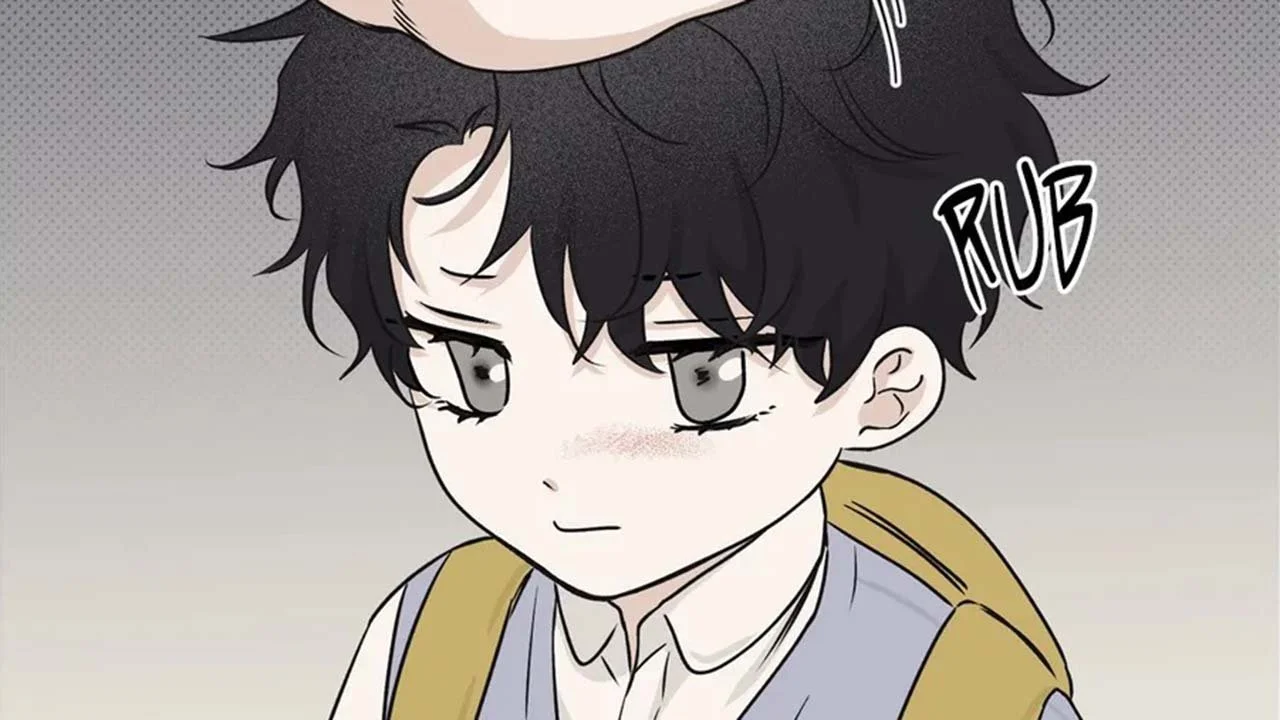
And so, the one who saved this story for me is Kim Euiyoung. Even amidst the messed-up situation they’re both in, he finds a way to lighten up this otherwise dark story. Where most of Low Tide in Twilight’s comedy comes is from the six-year-old’s crying over kid stuff – he’s a crybaby, but an adorable one. But also, a family angle comes through in how he keeps Euihyun grounded – his reason to live – and the bond they share after everything they’ve been through, especially with their dad, Sahyeok, falling short as a role model. He even gets his shot at moving the story forward: when his omega birth father comes to take Euiyoung back, he decides he doesn’t want to live with him and seizes a chance at school to run away, returning to his brother. A supporting character graduating into a main one, albeit temporarily, seldom works. Fortunately, this was the only time it was attempted – and it worked here, but repeating it could have easily backfired.
Kirby’s Dream Land
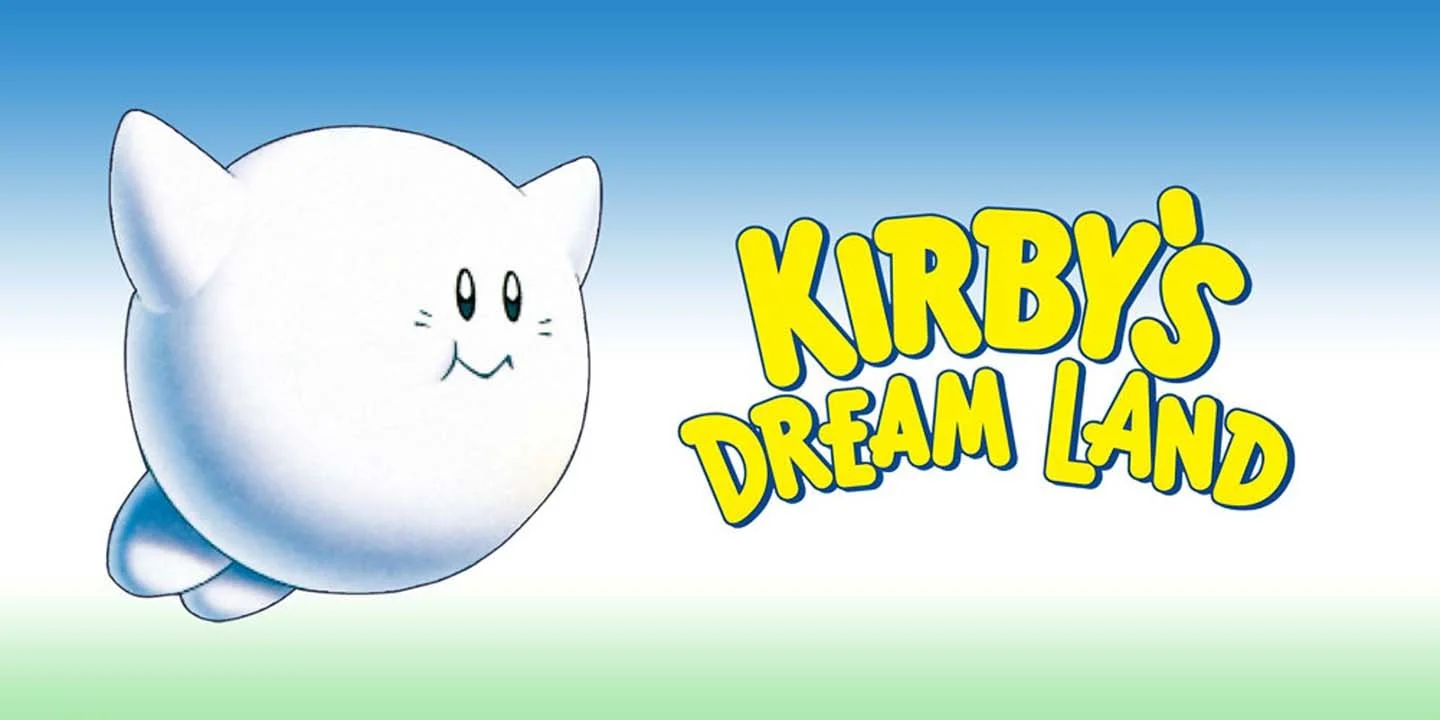
I’ve been playing Kirby games since I was a child, and it’s no exaggeration to say they’re an important part of my growing up as a video game player – hell, he’s about as old as I am! I remember Adventure more fondly, with much of my spare time spent on it, but Dream Land still drained countless batteries off my Game Boy. At first, I doubted whether I played this entry before and it turns out I did. Even now, I struggle to recall what games six-year-old me owned for the handheld. As the North American release of the Game Boy came bundled with Tetris, I likely owned that, too? Tetris didn’t see much play since I didn’t know how to play it until a cousin taught me around 1998.
In a 1993 interview with the Dream Land team, Masahiro Sakurai, best known for his work on the Super Smash Bros. series, mentions that he came up with Kirby when he was first hired at HAL Laboratory in 1989. The game would target the newly released Game Boy, a platform that had less than 10 games, and it needed to be something “that anyone could enjoy.” Kirby’s design, then, is just a series of circles: simple enough for anyone to draw, although there are conflicting accounts as to whether this design was originally intended as a placeholder that Sakurai later embraced, or if it was always meant to look this way. Key to Kirby’s traversal and offensive ability is being able to inflate himself like a balloon, leading to flying and inhaling enemies to either spit or gulp them. The copying mechanic wasn’t introduced until Adventure, a response to player feedback that the previous game was too short and easy. Agree on the latter, but on the former, we should be aware of the limitations. Nintendo’s “Game Pak” cartridges of the time were designed to hold between 64 and 128 kilobytes of storage, the latter via ROM bank switching. Even with the formidable programming skills of Iwata and Suga, the game’s design still had to work within these storage limitations – despite the final product using a 256kb Game Pak. And, in software development, it’s generally good practice to leave some buffer space.
As with most games in this period, the story wasn’t communicated within the game – you’d have to read the booklet. King Dedede and his minions steal all of Dream Land’s food and the Sparkling Stars, which are said to help the citizens gather it. Kirby volunteers to take on the gluttonous king and bring the food back. There are five levels, each ending in a boss fight: Whispy Woods, Lololo & Lalala (a reference to HAL’s early work Eggerland Mystery, which never released in the West), Kaboola, Kracko, and finally, Dedede. Even at a leisurely pace, my time was a little over half an hour, with no game over screens. I have no doubts it can be beaten faster – for instance, a speedrun leaderboard site lists 9:46 as the fastest Dream Land run as of writing.
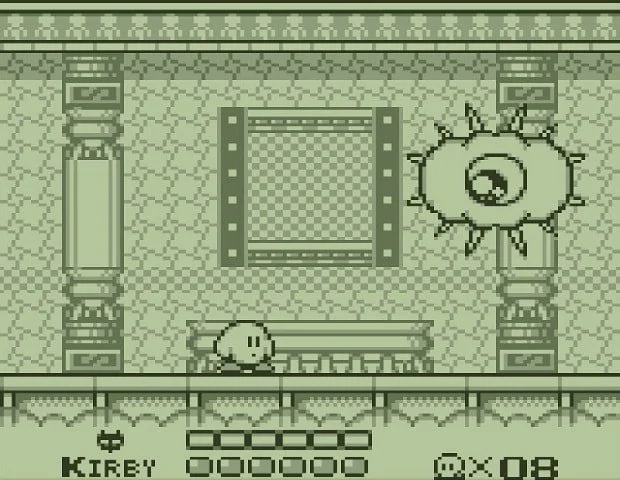
I knew about the more difficult Extra Mode, with its devious tricks designed to whittle away at the player’s health, but I wasn’t too eager to play it – until I saw the timer. That was enough to talk myself into it. You don’t even need to have beaten the game: press up, A, and Select on the title screen and you’ll be greeted with the “Extra Mode” bar. It certainly delivered on the difficulty, with some even saying it made Dream Land as tough as your average NES game. I got about six game-overs from it myself. Then, I noticed a pattern – Extra Mode required observation and dexterity to come out largely unscathed against both regular minions and bosses. But Kaboola breaks that pattern entirely: it’s unforgiving, and even with careful play, I still racked up three game-overs between its normal appearance and the rematch in Dedede’s castle. Best to go into that battle with full health and all of your lives! At the end, the timer added another hour to the total playtime.
Overall, I understand the potential the higher-ups at HAL and Nintendo saw in Kirby. Sakurai understood the basics of platforming well enough to implement them robustly in his game. True, they’re not unique ideas, but they carry Kirby through and through, making the game more than just a cute character – I’d say it was a job well done. Even though Kirby is a Nintendo IP, Sakurai still doodles him alongside his signature, which speaks to how important the character is to him. Who knows – there might not have been a Super Smash Bros. without Kirby.
SPY x FAMILY, Season 2
Looking through my e-mails, there was one from Viz Media in 2019 announcing the inclusion of SPY x FAMILY on the Shonen Jump app. It aligns with when it came to the West after gaining popularity in Japan. It’s been on my radar since, but it wasn’t until 3 years later that I found out how it could be up my alley. I started with the first anime season, and sometime after, I bought volumes one through seven of the manga. Bulk buying like this I only do for series I know I’ll like, as spending $60+ on something lesser is far too risky. I was getting into the hobby of buying manga, perhaps too much of it – I don’t consider myself a bookworm, although some of my friends would say the signs are there.
SPY x FAMILY is a spy comedy set against a serious backdrop. Westalis agent Twilight is sent to Ostania to spy on Donovan Desmond, leader of the National Unity Party, who is suspected of potentially destabilizing the region and reigniting war. Political divisions like this have existed before – most notably in Cold War-era Germany, where the nation was split between the Allied-controlled West and the Soviet-controlled East, leading to decades of tension. Given Ostania’s general paranoia and Donovan’s high position in society, he isn’t a man you’ll see walking down the street. Desmond’s son, Damian, studies at a private school, and Twilight identifies it as an opportunity to get close to him – posing as a fellow parent. Thus, ‘Loid Forger’ is born. He adopts Anya from a sketchy orphanage and hastily marries Yor Briar, a civil servant who doubles as an assassin, after accidentally upgrading his role from fake boyfriend to fake husband at a gathering. Later, the Forgers adopt Bond after Anya asks for a pet as a reward for her good deed at school.
Season one, within two cours, adapted books 1 through mid-7. Season two adapts the latter part of 7 through mid-9, with the Luxury Cruise Ship Arc being the major story covered here. Posing as a bodyguard, Yor is hired to protect a mother-son duo – the last surviving members of the Gretcher crime family – from hitmen while seeking asylum in a foreign country. Their getaway is set to take place aboard the Princess Lorelei, an Ostanian luxury cruise ship, under the cover of a fireworks show. Loid and Anya, while out shopping, ran across a table in which a raffle was being held. Anya took an interest in its top prize and won it: two tickets to board the Lorelei. This development was unexpected, as Yor didn’t count on her family being on board. On the other hand, the father/daughter duo didn’t hear about the job – that she’d be “entertaining guests” looking to do business in Ostania – until after they won the tickets.

One of many aerial shots of the Lorelei. Note the land in the background for some wonky perspective work.
The Lorelei was gorgeously rendered on CGI, but some of the shots used to showcase it are weird. Too many instances in which aerial shots are used – reveals, panning, and dollies, among others – and they add nothing to the story. I think it’s done to fill up time, although I don’t put it past the episode and/or series director thinking it looks cool. There’s nothing inherently wrong with aerial shots, but what bothered me is how the shots have no concept of proper object placement against the 2D background. Look at the Lorelei reveal shot above: the plot of land in the background appears to pan right as soon as it’s introduced in the aerial shot, but as the camera goes to the lower third and behind Anya, it takes a slight zig-zag to accommodate. But the land continues panning right instead of accounting for the last-minute movement – it’s jarring. I’m supposed to marvel at how big this cruise ship is, as Anya is doing, but instead, I’m complaining about the camera shots. The above is bad, but the shot of Loid returning to the ship carrying an asleep Yor and Anya is awful. It could’ve been salvaged if Loid moved away from the viewer and my gripe would be as strong as the one above. Their implementation of dolly zoom just doesn’t work and it gives weight to the critique that the dynamic shots were chosen for flare instead of serving a purpose to the narrative, I feel.

Suffer with me…
I’ve had this nagging feeling about episode progression since season 1. Something felt off – the episodes didn’t appear to follow a logical order. Also, the way the anime switched between serious and ridiculous moments gave me whiplash. Not that either tone was a problem on its own – and both work well in the manga – but the way the adaptation handled the transitions made them feel more jarring like it wasn’t always sure how to bridge the gap between extremes. I’m not about to pin this on Endo, the series author, as balancing those extremes is tricky. But I do think the anime director might’ve taken an approach like, ‘Okay, part A was super serious, so let’s go full comedy for part B.’ Not every episode had this issue, but when it happened, it was noticeable. Since season 2 followed the same structure, I decided to check which chapters were adapted, and – sure enough – I think I found the culprit: the episodes were out of order. To explain what I mean, I’ve made a bullet list which should make it easier to read:
Episode 1 adapts Extra Mission 2 in Book 3.
Episode 2 adapts chapters 39 & 40 in Book 7 with a twist – part A is 40, part B is 39.
Episode 3 adapts chapter 41 of Book 7 for part A, Extra Mission 7 of Book 10 for part B, and Confidential Files in Books 2 & 7 for part C.
Hope I didn’t lose you – I certainly was trying to make sense of this. It isn’t until episode four that the series gets back to a natural progression, which is necessary to begin the Luxury Cruise Ship Arc. But after that’s done, it goes back to adapting episodes out of order – episode 11 (Berlint in Love) happens after 12 (Bond rescues a pug from a building in flames) in the manga, not before. Why finish this season’s run with a Bond episode? Why are these Extra Missions and Confidential Files adaptations not extras in a home video release or even an ONA, or original net animation? The series composition is a mess, and it’s yet another example of an anime adaptation stumbling at the finish line due to the constraints of a 12-episode run.
To end on a positive note, the SPY WARS! episode is superb. And not just because it parodies James Bond – I love those films, RIP Eon Productions – but because it’s a love letter to ’70s and ’80s anime. I’d love to explore that further, but I’ve already gone on for too long.
That’s it from me. See you next month!