
25 min read
Prior Entry | All Media Log Posts | Next Entry
Please be advised these posts aren’t spoiler-free.
“I’m tired.”
Recently, I’ve been hit by a wave of lethargy unlike anything I’ve felt in a while. The draft for this log sat untouched for nearly a week, and putting off a time-sensitive post doesn’t help matters. What made things worse was how I went about taking notes for one of the entries covered here – it wore me out. There wasn’t a proper wiki entry I could find, and because I wanted my thoughts to be informed by what was actually happening in the story, I decided to read and take notes simultaneously. That’s not usually a problem for me. But when it started to feel like a chore, with no end in sight, I wanted to stop.
During one of my cardio workouts, I watched a video by Dr. Alok Kanojia of HealthyGamerGG on the feeling of tiredness. It felt like he was speaking directly to me – not just about falling behind on my writing, but about other things I’m not comfortable sharing here. A key takeaway from the video was a question Dr. Kanojia posed to the audience: “How would you feel if you did the thing that makes you feel tired? How would you feel at the end of it?”
Framed that way, the question puts things into perspective. It sounds obvious, maybe, but when you struggle with mental health, the obvious can be hard to remember or feel like it’s not worth the energy. I started thinking: all those hours spent in a word processor, all the times I chose this over playing games – what do I get out of it?
I remembered why I started blogging in the first place. Originally, it was to dive deeper into the things I used to make videos about, like the one on the FAMAS. But I don’t make videos anymore, or have a podcast, and the idea got shelved. Years passed without anything that challenged me creatively. I missed reviewing – but I missed researching even more. Shifting to this format felt natural. And hey, it also justifies the money I pay to Squarespace every year. I’d forgotten how rewarding it is to see a finished post, despite all the frustration along the way, and to be able to say, “I made this.” I can express myself here in ways that I can’t on social media.
Tyson Matsuki isn’t just some person on the internet, but someone with thoughts and feelings who tries his best to put them into words.
Whenever I forget why I do this, let these words be the answer. I chose this. I’ve grown to enjoy writing and reading – something that would’ve been unheard of a few years ago. And that feeling of achievement? It’s real.
Let there be no doubt: words are powerful.
Everything or Nothing: The Untold Story of 007
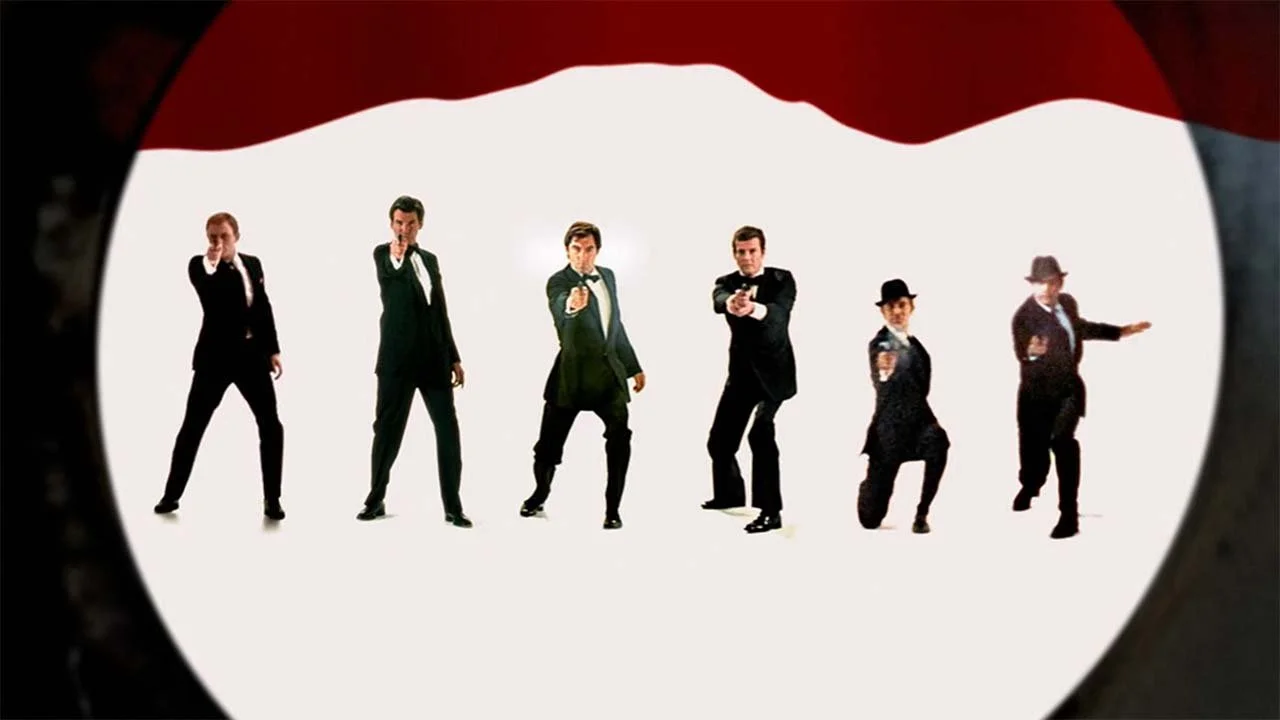
With IO Interactive unveiling 007: First Light, their take on a Bond game, and the franchise’s first major return to video games in years, I’ve been in a Bond mood ever since I wrote about it shortly after the news dropped. I wasn’t ready for a full rewatch of the films, but I did revisit the documentary released for the franchise’s fiftieth anniversary.
One might assume the target audience for such a retrospective would be die-hard Bond fans, but by the end, I got the sense it was aimed more at the casually familiar: the kind who know Bond, but wouldn’t call themselves followers. As a result, much of the material covered won’t surprise anyone already in the fandom. Still, collecting key moments and production history in one video has its value. I don’t think I saw it back when it premiered in 2012, nor have I watched most of the behind-the-scenes content included on the films’ home video releases.
As with any good story, we begin at the beginning. James Bond starts with Ian Fleming – who he was, what he did during and after World War II, and, most crucially, how Bond came to be. The film devotes a good portion of its opening to these questions, interviewing people who knew him. Their commentary is intercut with archival interviews, giving Fleming a voice I hadn’t heard until now. Despite considering myself a fan, I’ve never gone out of my way to look into everything Bond. I’d even argue my way into the franchise, while unorthodox, isn’t all that rare for people from my generation.
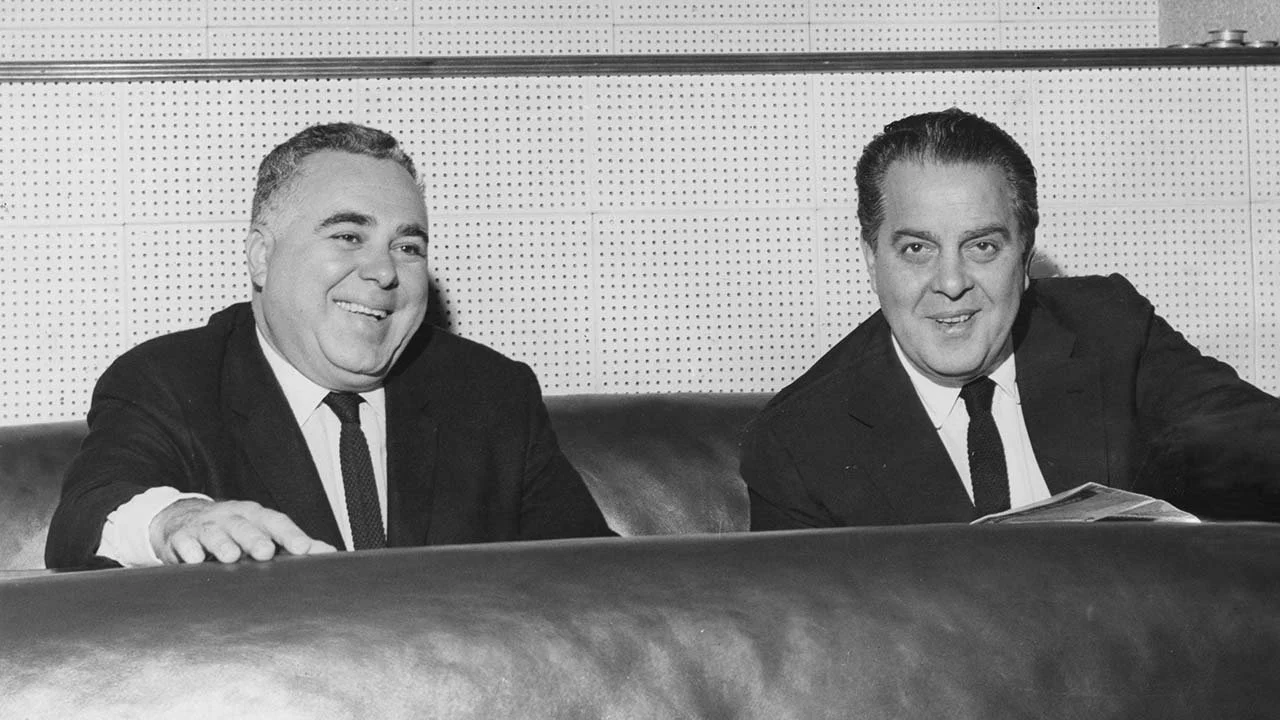
Once Fleming set out to write the spy thriller to end all spy thrillers, he already envisioned Bond as a movie character. He tried to pitch the series to studios and was met with almost universal indifference. Rejection after rejection left him discouraged enough to sell the rights to Casino Royale for a TV adaptation – for peanuts. That 1954 version is now mostly known for being a punchline. Convinced he’d never see Bond on the big screen, Fleming’s legacy seemed destined to be “just” an entertaining author – until two men decided to pick up where he couldn’t: Albert “Cubby” Broccoli and Harry Saltzman.
Both loved what Fleming had written, and both wanted to bring Bond to theaters. Broccoli was already a notable producer and director, while Saltzman had a background in theater and film production. When Broccoli tried to meet with Fleming about acquiring the rights, personal commitments kept him from attending, so he sent his business partner instead. Not only did the meeting go poorly, but the partner’s dismissive behavior left such a bad impression that Fleming refused to deal with Broccoli afterward. That may have been what ended the partnership. This opened the door for Saltzman, who successfully secured the rights. But producing the films was another story; studios weren’t interested, and he couldn’t raise the capital. Still eager, Broccoli was introduced to Saltzman by a mutual acquaintance. They shared the same vision, and so Eon Productions was born. (Eon, fittingly, stands for “Everything or Nothing.”)
Broccoli couldn’t convince Columbia Pictures – his home studio – to back them, so Eon shopped the rights around. United Artists was one of the studios approached. Despite balking at the production cost, UA ultimately gave the green light. David Picker, a producer at UA and widely credited with getting Bond onto screens, later expressed disbelief that Columbia had passed. Hindsight is 20/20, of course – the million-dollar price tag per movie ended up being a drop in the bucket compared to what Bond would bring in over the years.
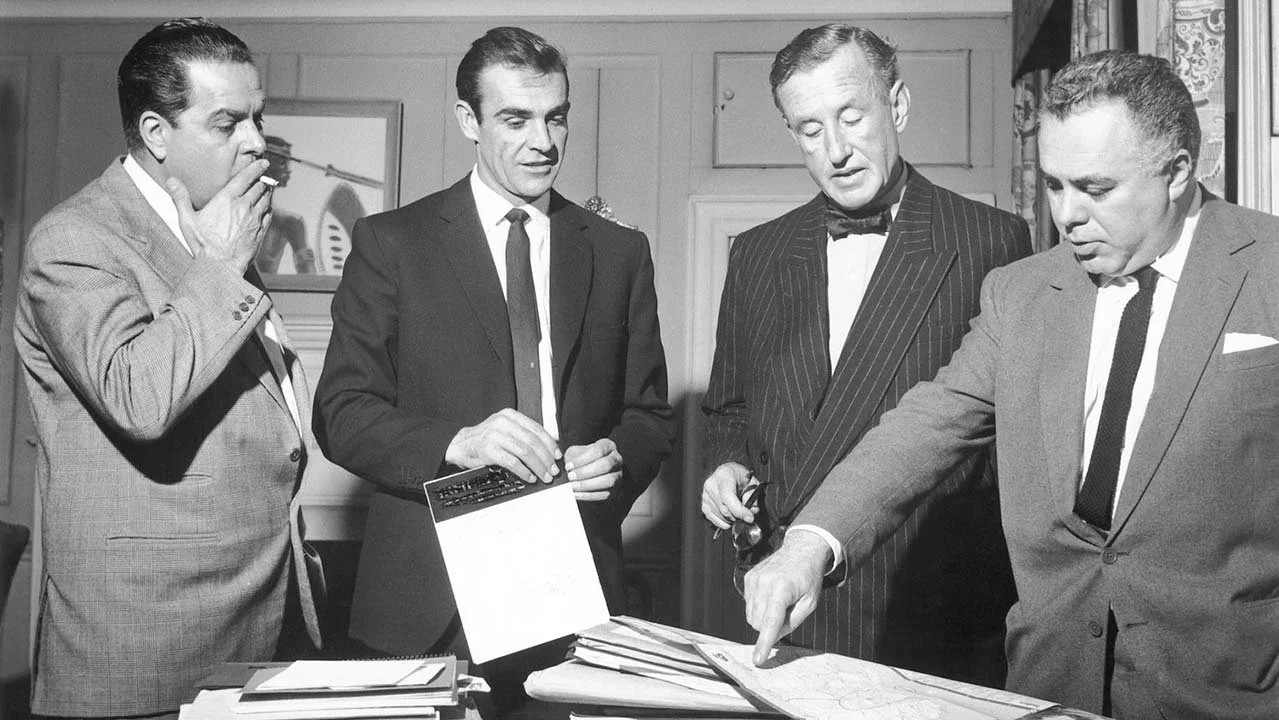
Who would play Bond? Cary Grant? James Mason? Eon surprised both UA and Fleming with an unknown, a diamond in the rough: Sean Connery. Fleming didn’t want him. UA didn’t want him. But Saltzman and Broccoli knew Connery was right for the role they envisioned – an anti-hero the audience could still root for. Convincing both the studio and the author took serious effort.
The Connery segments in the documentary are notable for one reason: Connery himself is absent. All the other Bond actors appear, yet the pioneer is seen only through archival clips and interviews. The film later acknowledges how toxic the fallout between Connery and Eon was, and I think they had no choice but to address it, as glossing over that rift would’ve opened them up to charges of revisionism. Even if Barbara Broccoli says Connery and her father made amends decades later, this is still an officially sanctioned version of events. One can never be too uncritical – history is written by the victors, after all.
By the time Thunderball enters the picture, the documentary breaks from its chronological flow to spotlight the film’s complicated development. It introduces a name many viewers won’t know: Kevin McClory, a key figure from Fleming’s early attempts to get Bond on the screen. McClory pitched an underwater Bond adventure and wanted to co-write it with Fleming. Sound familiar? At one fateful meeting, alcohol flowed, ideas were exchanged, and no one kept track of who said what. Fleming later published Thunderball based on that core idea without crediting McClory. Understandably, McClory sued for plagiarism. The courts ruled that future reprints had to credit him, and – more importantly – granted him the film rights. He declared his intent to make the film himself, which created a legal and financial headache for Eon just as the series was gaining momentum. In the end, they brought him in as a producer – a move that feels less like collaboration and more like damage control. Nobody gets a producing credit that easily unless there’s no other choice.
Then came You Only Live Twice, and Connery’s highly public fallout with Eon. Would the franchise survive without him? In an interview, Broccoli insisted that James Bond was bigger than the actor who played him. Just as Eon was narrowing down replacements, they were approached by an Australian man named George Lazenby, who declared he was the man for the job. There was just one issue: he wasn’t an actor. He was a Connery fanboy, to put it a bit reductively. Still, it took serious nerve to do what he did. His story is framed almost like a fable about fleeting fame: how he wanted to be Bond, how he bluffed his way into the role, and how, once he had it, he let it slip through his fingers.
UA, meanwhile, still wanted Connery. They even went around Eon to negotiate with him directly. The rift that had formed during You Only Live Twice lingered, but the documentary doesn’t dwell on what’s already been said. Only the relevant gaps – the ones that explain Connery’s brief return for Diamonds Are Forever – get addressed.
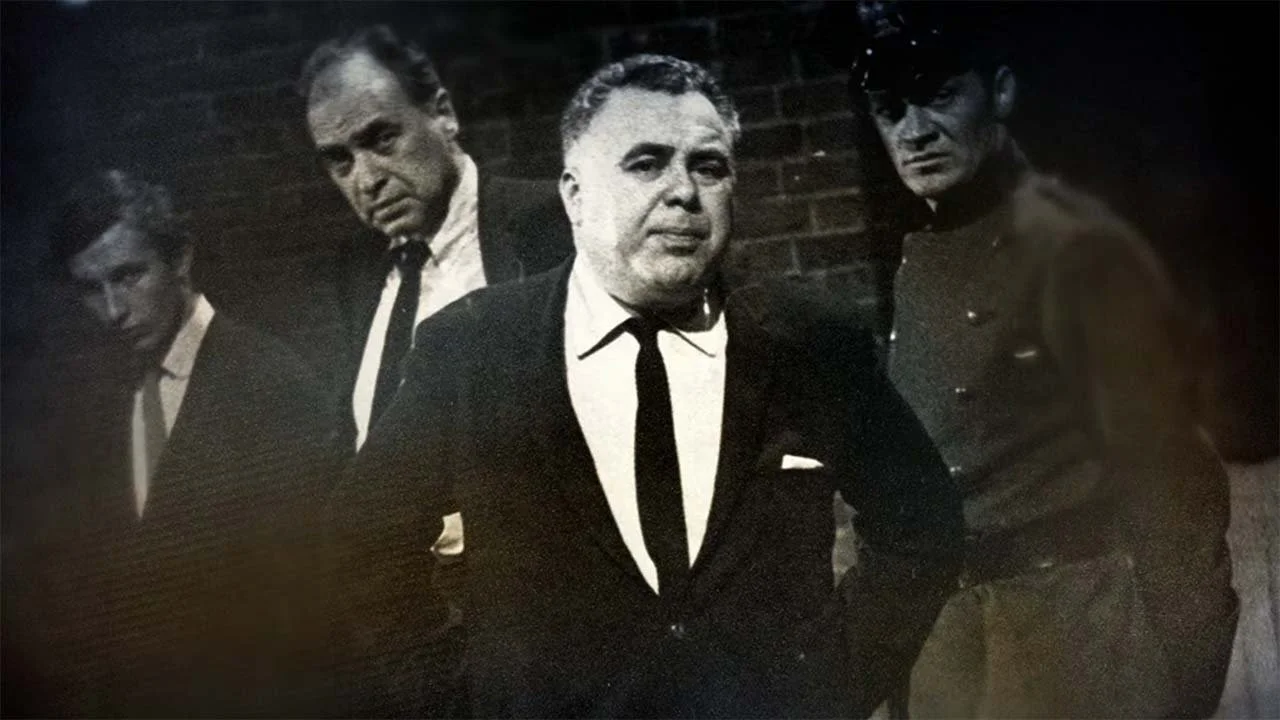
Saltzman had a chip on his shoulder. It wasn’t enough that Bond had made him a very rich man – he wanted to be seen as superior to Broccoli. He began investing in businesses he didn’t understand, and after a string of bad decisions, he racked up massive debt. His increasingly divergent ideas and frequent absences were felt during the early years of Roger Moore’s tenure as Bond. This is further reflected in the performance of those films: both critically and commercially. There was too much variance to chalk it up solely to audiences adjusting to a new Bond.
Broccoli began to feel that Saltzman was no longer giving the franchise the attention it needed – and that he could no longer work with him.
By 1975, Eon was shaken, not stirred. Saltzman saw an opportunity to climb out of debt by selling his half of the Bond franchise. And given the creative differences, it was also his way out – but he refused to sell his shares to Broccoli. After a lengthy litigation, UA stepped in and bought Saltzman out, leaving Broccoli free to chart the course ahead. But could he keep Bond going solo? The Spy Who Loved Me became the proving ground. After the poor box office showing of The Man with the Golden Gun, the franchise couldn’t afford another flop. Thankfully, it wasn’t. The film was a hit – Moore’s Goldfinger, so to speak. Once it became clear that imitating Connery wasn’t in his DNA, Moore made the role his own.
For a while, it was smooth sailing for Broccoli and the Bond franchise – until Kevin McClory returned. With the film rights to Thunderball once again in his hands, McClory was ready to make good on his old promise: to launch a rival Bond film. Danjaq, Eon’s parent company, could only delay things for so long. By the time Octopussy was in production, Eon decided to settle the matter where it mattered most: the box office.
McClory lured Connery back to play Bond – his Bond – one last time. Eon had every reason to worry. It was, quite literally, a battle of the Bonds. Kill or be killed. He got his fight and lost it. Octopussy handily outperformed Never Say Never Again. After a defeat like that, surely this would be the last we’d hear of Kevin McClory…
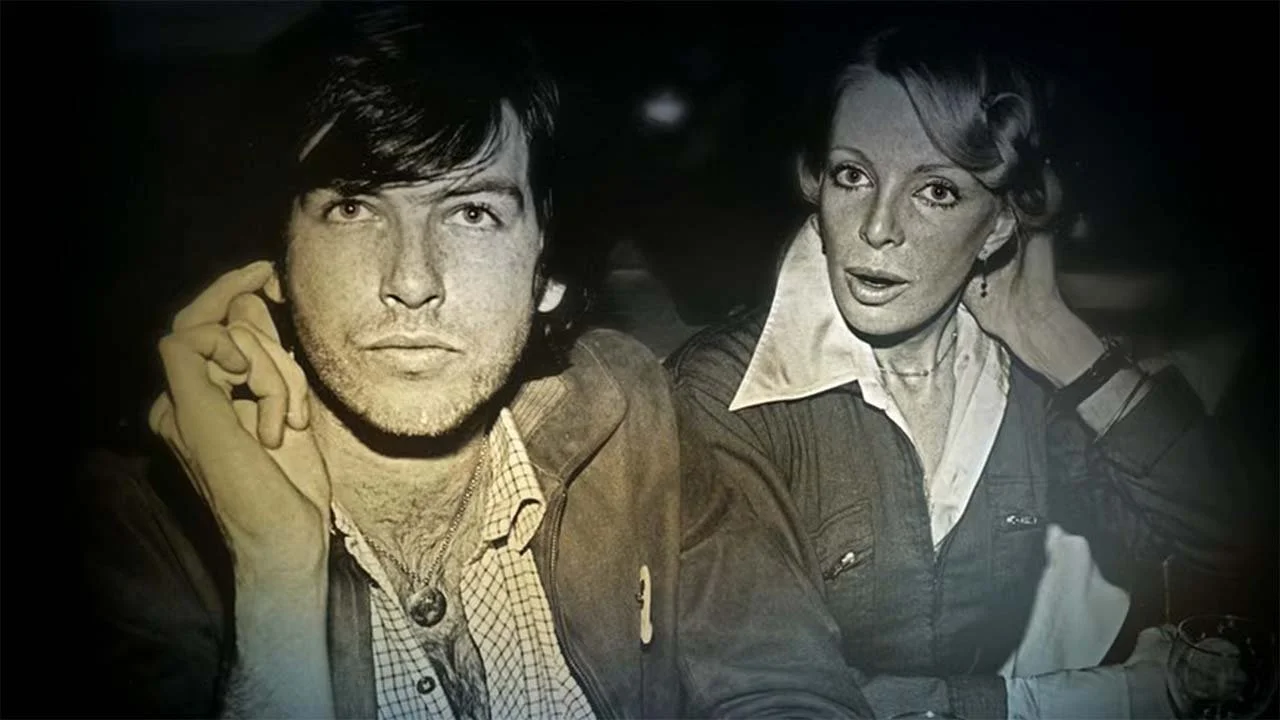
Broccoli first knew Pierce Brosnan as the husband of Cassandra Harris, an actress who had a role in For Your Eyes Only. Years later, Brosnan’s rise to fame in the TV series Remington Steele made him a household name. When the show was canceled in 1986, Broccoli saw his chance to cast Brosnan as Moore’s successor. Once news broke that Brosnan might become the next Bond, Remington Steele was revived, riding on the wave of renewed interest in its leading man. Unfortunately for Brosnan, his contract included a clause requiring a two-month waiting period after cancellation before he was officially released. The show’s revival landed within that window, and he had no choice but to return.
Eon had to look elsewhere. They turned to Timothy Dalton, a Shakespearean-trained actor, to step into the role.
Dalton disliked the direction the films took under Moore, calling them “pastiche,” and pushed for a portrayal closer to Fleming’s Bond – a “hero who murdered in cold blood.” His take was notably darker, especially in Licence to Kill, and while the producers were satisfied with his performance, the audience wasn’t as receptive. The tonal shift was a jarring contrast to Moore’s lighter, playboy persona.
The distribution lawsuits between MGM, UA, and Eon are glossed over in the documentary, but their impact was significant. They kept Bond off screens for years and ultimately prevented Dalton from returning for a third film. The documentary doesn’t delve into the details of his departure, but it seems Dalton himself was ready to walk away. Meanwhile, Broccoli was so overwhelmed by the legal battles that he seriously considered selling the rights altogether. Thankfully, it never came to that. Once the dust settled, the aging producer returned to what he loved: making movies.
After years of being left at the altar, it was finally Brosnan’s time.
With the Cold War over, critics questioned Bond’s relevance – but GoldenEye silenced them. It not only confirmed that Brosnan was a superb choice, but also that Bond could thrive in a post-Cold War world.
Following Brosnan’s debut, Broccoli fully stepped down, passing the torch to his children: Barbara and Michael G. Wilson, his stepson. He passed away about a year after the handoff.
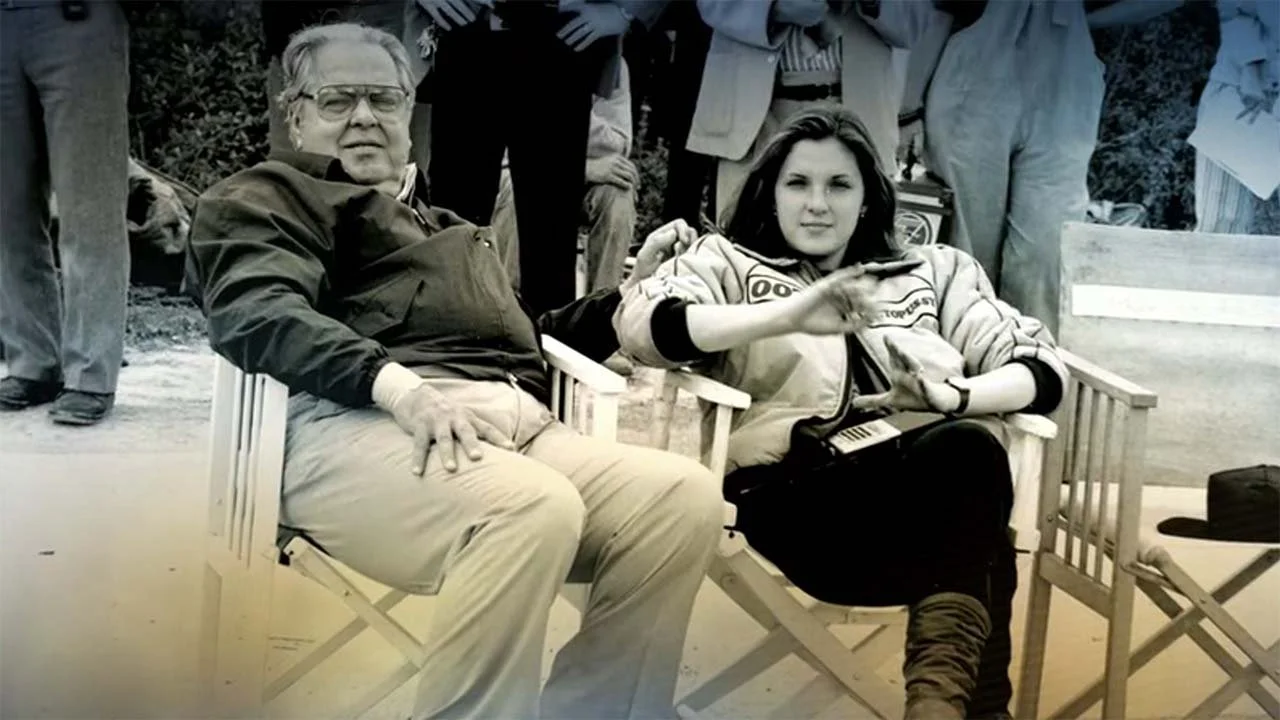
There’s always been an unspoken rule: Bond has to feel relevant to the times.
Brosnan’s fourth film, Die Another Day, veered into the kind of fantastical territory that wouldn’t have felt out of place in a Moore-era outing. Maybe it was okay to get silly again. But midway through production, the September 11 terrorist attacks happened. It was too late to change course, and rough waters lay ahead for Wilson and Barbara Broccoli after the film’s release. With Brosnan stepping away from the role once the film was completed, Eon now had two tasks: reorient the series and cast a new Bond.
Then, like clockwork, Kevin McClory returned. Despite being soundly defeated at the box office two decades earlier, he hadn’t given up on his dream of launching a rival Bond series. One had to wonder: what drove him? After forty years, he was still stirring trouble for Eon. Allegedly, McClory believed Bond was his creation – a claim most would find absurd. This time, he was preparing to partner with Columbia Pictures. They held the rights to Casino Royale thanks to the 1954 TV adaptation, and McClory still held the rights to Thunderball. Eon couldn’t let that alliance happen.
Fearing another protracted legal battle, Eon attempted to settle out of court. McClory refused, against the advice of those closest to him. The result? The long-standing question of who truly owned the film rights to Bond was finally and decisively answered in Eon’s favor. McClory was stripped of Thunderball, and Columbia handed over Casino Royale. After years of drifting, Eon suddenly had the solution handed to them on a silver platter. Albert Broccoli had always wanted to adapt Casino Royale properly, but couldn’t. Now, Barbara Broccoli could fulfill that wish.
All eyes turned to who would be the next Bond.
Daniel Craig’s casting echoed Connery’s in several ways – an unconventional pick, a rougher presence – but with one crucial difference: public backlash. After decades of being told what Bond should look and act like, audiences overwhelmingly felt Craig wasn’t it. One of his critics was Sam Mendes, who remarked that taking the role would be a mistake for Craig’s career. But Barbara Broccoli pressed forward, convinced he was the guy.
As Craig’s tenure hadn’t ended by then, the documentary understandably avoids a deep dive into his era. It briefly covers his debut in Casino Royale and Quantum of Solace – the first direct sequel in the franchise.
The documentary closes by reflecting on Bond’s enduring relevance. Through cultural changes, legal battles, and generational turnover, the series not only survived but also flourished. In doing so, it repaid its debt to Ian Fleming, delivering on his vision of the spy thriller to end all spy thrillers.
Instead of repeating the commentary I’ve made throughout, I want to wrap things up by talking about how Bond entered my life.
In the late '90s, my dad gave me a Nintendo 64 for Christmas. One of the games that came with it was Rareware’s GoldenEye 007. At the time, I didn’t know who James Bond was – I’m guessing my dad picked the game up because a salesperson recommended it. A less likely, but amusing theory: I was just about to turn thirteen, old enough to play Teen-rated games. I spent countless hours with GoldenEye, whether alone or in couch multiplayer with friends. God, I miss couch multiplayer so much…
I didn’t watch the movie the game was based on right away. Instead, my first Bond film was The World Is Not Enough, which I saw when it came out on home video. One memory from that time stuck with me, though it’s not exactly one that I’m proud of. It involves the World Is Not Enough video game, made by Eurocom. I remember sneaking into my uncle’s room, digging through his drawers, and taking a $100 bill from a roll he had stashed away. How did I explain having that kind of money to my dad? I told him I “found it while walking around.” A blatant lie – but with no proof that I stole it, he let it slide and took me to the mall to buy the game.
I’m convinced my uncle said something to my dad, and that he put two and two together. I don’t remember getting grounded, so either my dad settled it quietly or my uncle didn’t care that one bill went missing. I don’t think I ever confessed. I’ve thought about coming clean, but it’s been over twenty years. Surely, he let it go – and I suppose I should, too.
After The World Is Not Enough, I started seeking out Brosnan’s other films. I watched GoldenEye and Tomorrow Never Dies, then went back further to Dr. No and Goldfinger, which my dad owned on DVD. I think I still have those copies somewhere. I saw Die Another Day in theaters after begging my mom to take me. She did – and I was thrilled. She wasn’t. Action movies weren’t her thing then, and they still aren’t.
Over time, I caught the occasional Bond film on cable – TNT ran marathons pretty regularly. I saw most of Moore’s run, bits and pieces of Connery’s, and Licence to Kill from Dalton, though it was heavily censored for TV. Whatever gaps remained, I’d fill in over the years.
Maybe I shouldn’t downplay how much of a Bond fan I am. While I’m no expert, I did travel over four thousand miles to attend a Bond-themed event – a trip I never would’ve taken without a good friend encouraging me, promising he’d go too if I made it over.
Maybe someday I’ll tell that story…
Cuffed!
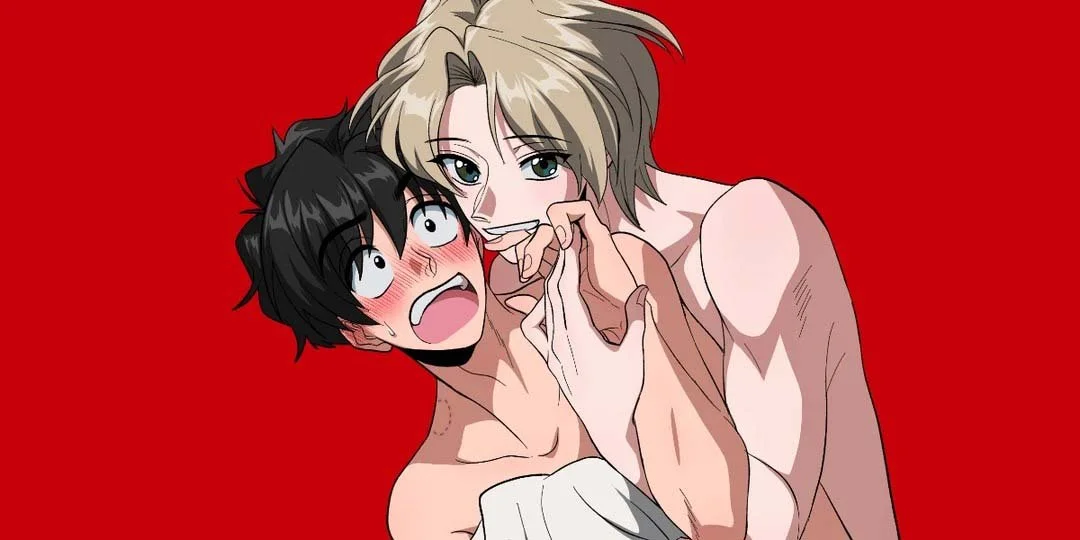
When I first came across this webtoon, I had just dropped Jinx. I’d liked Mingwa’s earlier work, BJ Alex, so I thought this one would be a safe bet. I was wrong.
My issue boiled down to how the sex between the protagonists often degraded into assault, and how graphically and frequently those scenes were depicted. Coming from old-school boys’ love, I’ve built up some tolerance for non-consensual elements. But in Jinx, despite the deuteragonist being very easy on the eyes, the fact that the protagonist never once seems to want sex with him – that it’s always transactional, and that he has to be available at all times – repulsed me. What made my reaction even funnier, in hindsight, is that Jinx isn’t even an omegaverse story, where that kind of dynamic is expected, almost.
So, when I went looking for my next explicit BL, one title caught my eye: The Two Voices of Homosexuality. That name – on a platform full of BL webtoons – felt almost too on the nose. But the banner’s art style was appealing, and I’ll admit it: after reading the summary, I was morbidly curious. I wanted to know how that backdrop could possibly work in a BL.
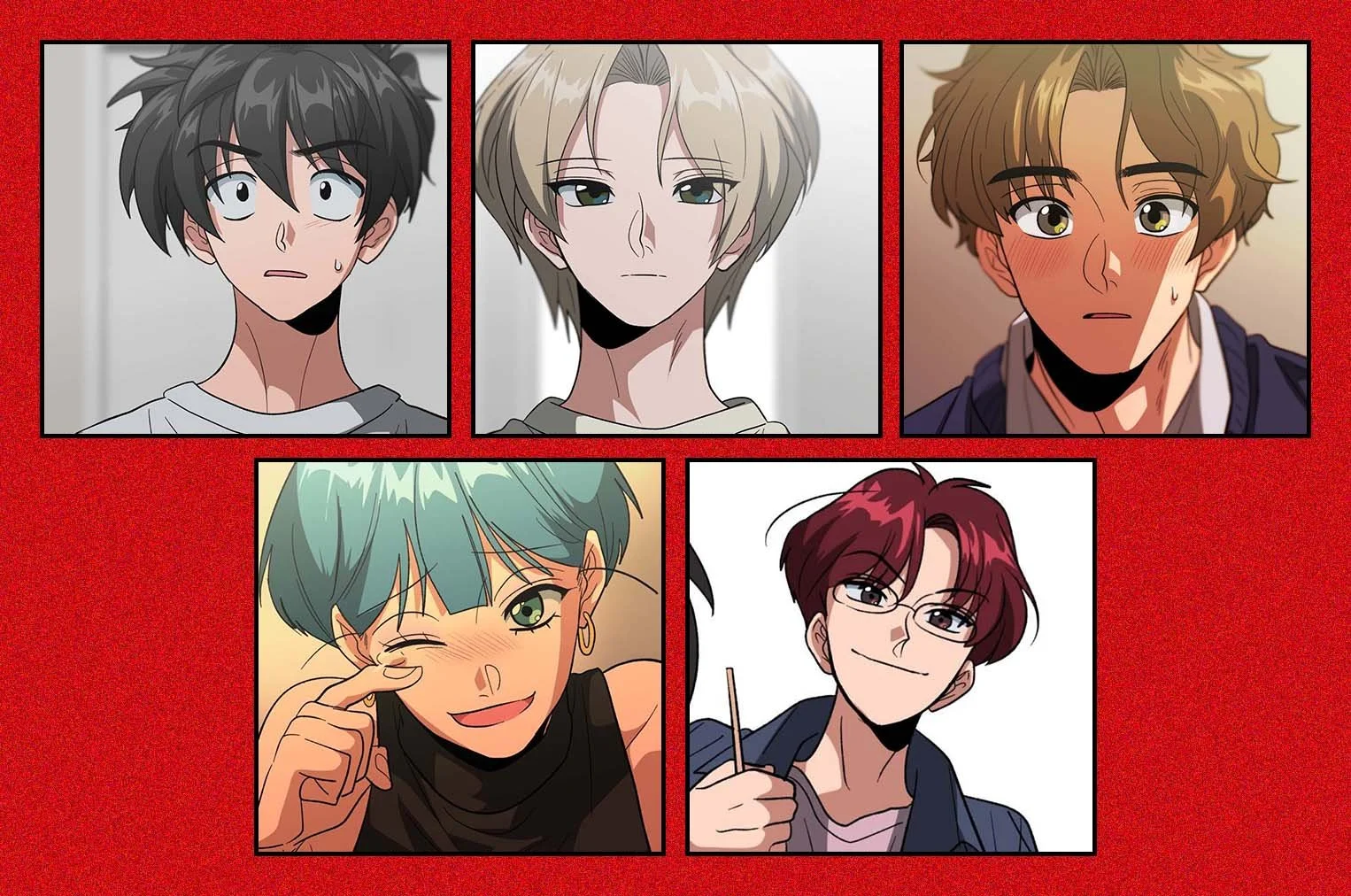
Top to bottom, left to right: Kim Youngsoo, Kang Eunsung, Kim Jiho, Park Doyoon, Shin Seoungjae
The Two Voices of Homosexuality, localized as Cuffed! in the West, takes place in an alternate version of South Korea where homosexuality has been criminalized with full public support. The state doesn’t just ignore or ridicule queerness – it openly targets and prosecutes it. People can be arrested for “practicing homosexuality” if credibly reported, and the legal system backs it.
We’re introduced to Kim Youngsoo, a university student who’s just had what looks like a one-night stand with Kang Eunsung, a childhood friend he hasn’t spoken to in four years. A week earlier, Youngsoo had finally moved out of his parents’ home to escape their homophobia and start living as himself. He mentioned the new apartment to his college senior, Kim Jiho – a fellow gay man who quietly harbors feelings for him – and invited him over. Jiho initially misunderstood the invitation, but once Youngsoo started inviting other classmates too, he realized it wasn’t a hookup.
That night, while relaxing at home, Youngsoo hears someone unlocking his front door. Not picking it – unlocking it. He panics. No one else should have a key. When the door opens, a hooded figure steps in. After the lights come on, it's revealed to be Eunsung. Both had signed leases thinking they’d live alone, only to discover the landlord had double-rented the unit for a quick buck. A lawyer rules both contracts valid. They’re stuck living together.
Youngsoo remembers Eunsung as a prankster and a bully, and their sudden reunion brings back discomfort more than nostalgia. Still, Eunsung manages to get Youngsoo to pity him enough to accept the cohabitation, likely through manipulation. Youngsoo doesn’t know much about his new roommate’s job, but the bruises on his body and a narrow escape from the police during a grocery run suggest it’s something dangerous.
Later, Youngsoo and Jiho meet at a gay bar to talk. But the club gets word of a police raid, and patrons scramble. Among them are Jiho and Youngsoo, only to be stopped in an alley by one of the officers. It’s Eunsung. He’s part of the newly formed anti-gay unit. He lets them go, but while removing the cuffs, he casually asks where they’d been. Youngsoo lies, now fully aware of the risk.
So, how does this pair go from uneasy cohabitants to sleeping together? During a school reunion, the two have drinks – Eunsung is a lightweight, drunk after two beers. They stop by a convenience store for snacks, and something about the way Youngsoo eats ice cream caught Eunsung’s eye. Back at the apartment, they start making out at the door and wind up in bed, with Eunsung taking the lead.
The next morning, Youngsoo couldn’t process what had happened. Sleeping with a childhood friend – this childhood friend, no less – feels like a cruel twist of fate. He tells himself it must be another one of Eunsung’s games. But when Eunsung notices the hickies across Youngsoo’s body and smirks, it raises a new question: was this really just a joke, or something Eunsung wanted all along?
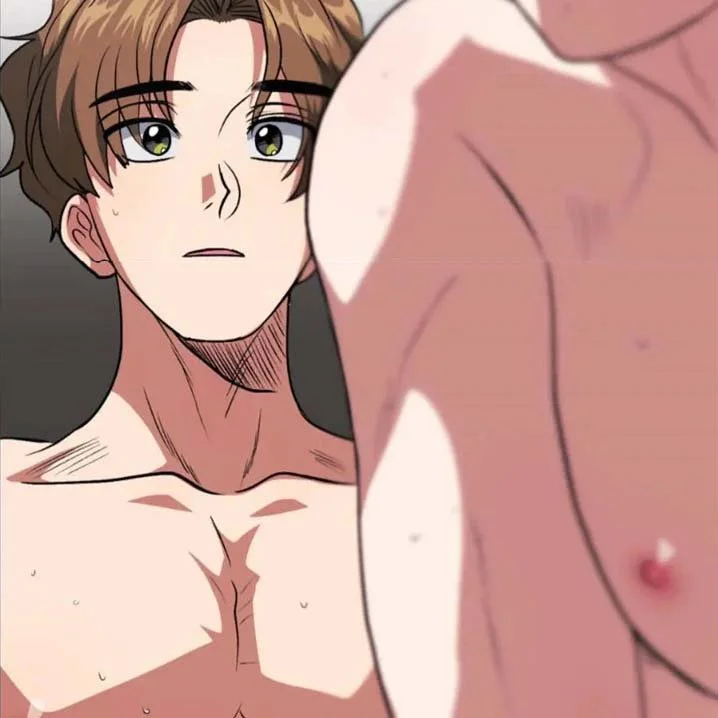
It’s a challenge to try and dissect Cuffed! in hopes of finding something beyond the smut to talk about. I run the risk of downplaying what makes the series click – which clashes with a belief I hold about art. With a few obvious exceptions, I think works made solely to titillate deserve just as much space to exist as those that don’t. In an increasingly puritanical world – or at least, in the United States – what art needs is more things that make people uncomfortable.
I know it’s a double-edged sword. The last thing we fudanshi need is for someone’s well-intentioned work to be used against all of us. That said, I’ll try to navigate these murky waters as best I can.
I like Cuffed! for the smut. I don’t see it as much different from watching porn to get off. But is it worth reading for the lore?
Going off the comment sections I’ve read, a lot of people dropped the webtoon before it got to the meat and bones – and honestly, I don’t blame them. A BL set in a world where homosexuality is criminalized is bound to be upsetting for some, and that reaction is completely valid. What kept me going was morbid curiosity. I wanted to see how the story would actually use that backdrop. The writer could’ve done something genuinely compelling by leaning into the darkness of people’s prejudice, as messed up as that sounds. But it’s mostly a missed opportunity. The story quickly shifts focus to the love triangle between Youngsoo, Eunsung, and Jiho, which becomes the overarching drama.
At best, the threat of prosecution lingers in the background, used as motivation for some plot beats, but those moments are few and far between. You could’ve swapped out the entire "anti-gay law" concept for practically anything else, and it wouldn’t change much. That doesn’t bode well for what’s supposed to be a foundational piece of your world-building.
And if the storytelling didn’t already render it irrelevant, the tone sure does. When the story isn’t dealing with sex or serious moments, Cuffed! reads almost like a gag comic. Eunsung’s slyness, paired with Youngsoo’s frequent overreactions, drives most of the comedy. When Eunsung’s not around, Park Doyoon – Jiho’s best friend and manager of the gay bars – fills that slot.
Even the writer’s own genre description tells you everything: a “human documentary romantic suspense comedy mystery drama.” Assuming that wasn’t a gag in itself, it makes no sense. Sure, the series has elements of those genres, but drama and comedy just don’t mix; they never have. It’s all over the place.
To further kick this already dead horse – Eunsung, a cop in an anti-gay unit, having sexual escapades with Youngsoo. Most people would catch this contradiction immediately, and like me, find it hard to suspend disbelief.
If there weren’t enough examples already, take chapter seven’s king’s game. Shin Seungjae, Eunsung’s ever-competitive partner on the force, dares him to kiss the person next to him, fully aware it’s illegal. That person? Youngsoo. Eunsung doesn’t kiss him – at least not then. Instead, he asks Youngsoo to switch seats… and kisses Seungjae instead. His plan: foiled again.
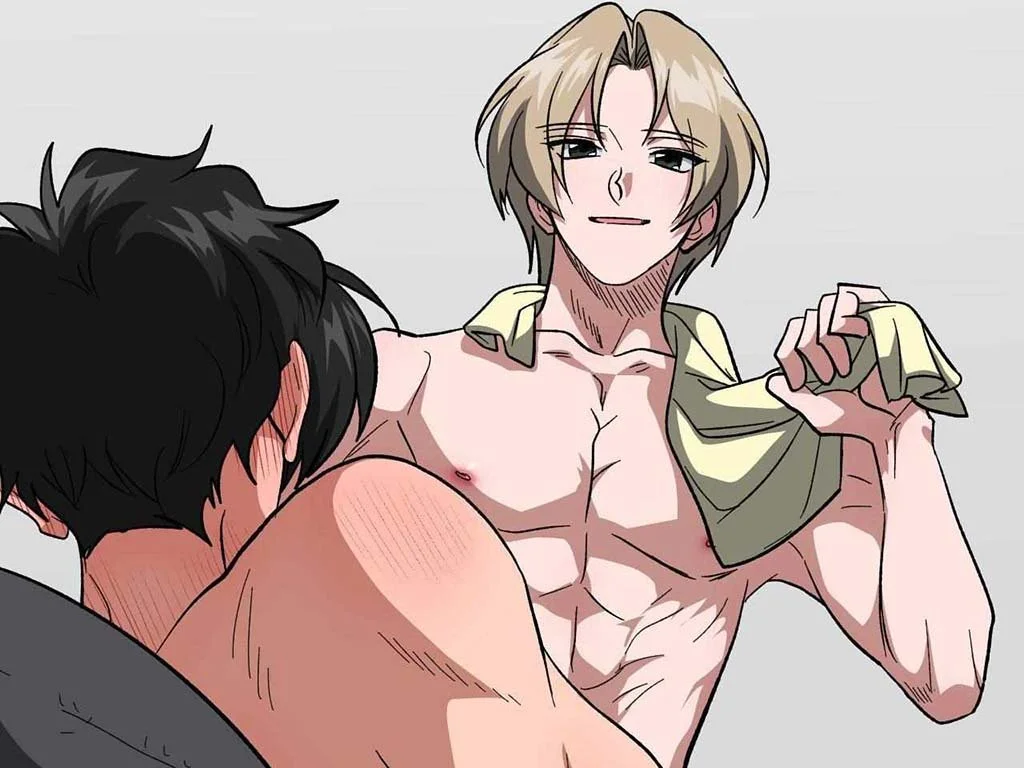
One of my frustrations with modern BL fandom is how rigidly people cling to seme and uke archetypes – and how quickly they expect emotional gratification. It’s just one way to build a character, and frankly, one of the least interesting. So, let’s talk about Eunsung.
I’ve seen him written off as a “toxic top,” but that label flattens him. Yes, some of his behavior is absolutely eyebrow-raising: he torments Youngsoo in petty, sometimes cruel ways; he blackmails him into “seducing” him to protect Doyoon’s bar; and his lust borders on compulsive, insisting on sex even when Youngsoo isn’t interested.
At a glance, he reads like that aggravating friend many of us have known – the one who pushes boundaries because it’s easier than being emotionally honest. But readers who didn’t stick around missed what the comic slowly reveals: this is a coping mechanism. Eunsung knows he’s selfish and jealous, but that tendency was magnified by grief – specifically, by the suicide of his brother, Euyha, who was bullied for being gay. Youngsoo was the only one who pulled him out of the spiral of self-loathing – a spiral many queer people know intimately.
We live in a world that teaches the masses to hate what’s different – and teaches queer people to hate themselves. Some of us are still carrying that shame years after coming out. That’s how I explain how Eunsung, a closeted gay man, ends up in an anti-gay police unit.
None of this excuses Eunsung’s actions. The blackmailing, especially, is indefensible. But when framed as the desperate, insecure flailing of someone terrified to lose the one person he likes from his past, his story lands with more emotional weight. It’s not tidy. It’s not easy. But it is human.
And the fact that the comic took its time, building this puzzle piece by piece until the full picture emerged, speaks to the writer’s ability to craft complexity. Eunsung’s tragedy isn’t just that he hurt others. It’s that he believed hurting them was the only way to keep from being hurt again.
So, to return to where this began: demanding purity in our characters – or in ourselves – is a losing game. We’re messy, contradictory beings. We lash out. We stumble. But we can learn. We can grow. And if we’re lucky, we get another day to do better than the one before.
That’s it from me. See you next month!