
16 min read
I’ve been playing video games for as long as I can recall. Ranking my all-time favorites shouldn’t be too challenging, yet it fills me with dread. I feel like I’m letting down a medium that has brought me immense joy over the years. While I’ve become more jaded towards the medium, there’s still a part of me that loves it.
Over at a Discord server where I hang out, someone suggested reframing the conversation. I’m not ranking the games, but I’m pointing out that they were memorable. It’s as if that’s the nudge my brain needed to stop feeling so reluctant to make a list of this nature.
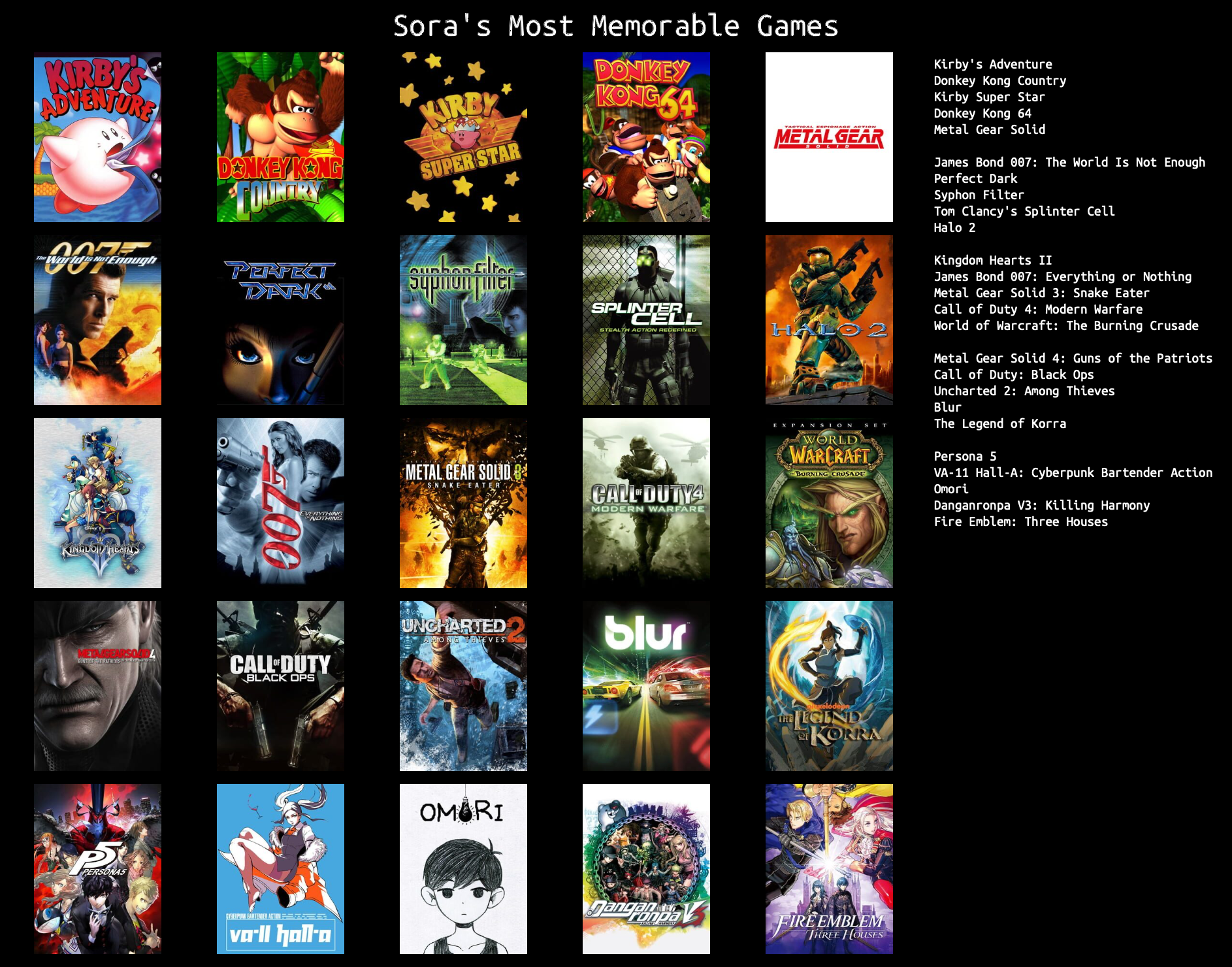
I made the graphic above for social media and I hope to explore why those choices in this blog post. There are some entries I’d swap out with others - hence the presence of an honorable mention category. However, we must stick to one list.
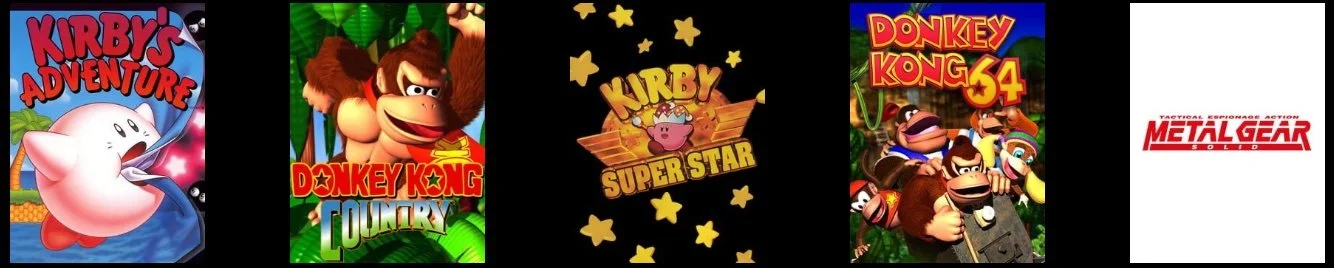
Kirby’s Adventure (NES, 1993): I have a soft spot for Kirby, and it’s because of this one title. This is the game I played on the NES the most, possibly the first title my parents bought for me. I believe I may still be able to complete it 100% even today.
Donkey Kong Country (SNES, 1994): I can only speak as to why this title was memorable to me by looking at it from my experience with Super Mario World. I didn't own it but my cousin did - that’s how I played it. Its difficulty spikes annoyed me. While very much a platformer in the same vein as the prior, I found it less frustrating, and as a result, more enjoyable. Of particular note are the graphics: the pseudo-3D models in a 2D game astounded me. It wasn’t until much later that I discovered Rare utilized N64 technology, which was being developed at the time, for a SNES game. I can only marvel at the remarkable result.
Kirby Super Star (SNES, 1996): Nintendo advertised this game as having 8 games in one. My parents bought me this game because they thought it offered a great value proposition. And, as previously established, I have an affinity for Kirby games. It introduced two of my favorite characters: Dyna Blade and Marx. Latter may have given me nightmares in his True Form as a child…
Donkey Kong 64 (N64, 1999) stands out as a memorable platformer of the console. While Banjo Kazooie is frequently regarded as the superior platformer, I believe DK64 surpasses it. In fact, you can even observe some influences in Banjo-Tooie that were first introduced here. The DK Rap song instantly gets stuck in your head, and the multiplayer mode was surprisingly solid. I thoroughly enjoyed tag teaming the Kongs to defeat King K. Rool.
Metal Gear Solid (PSone, 1998): The game that I prompted my parents to buy me a PlayStation. A neighbor of a relative was an avid fan of this game and raved about it. Partly because we were teenagers and felt entitled to more mature experiences, as teenagers often do. I certainly didn’t anticipate the profound impact its political intrigue would have on me.
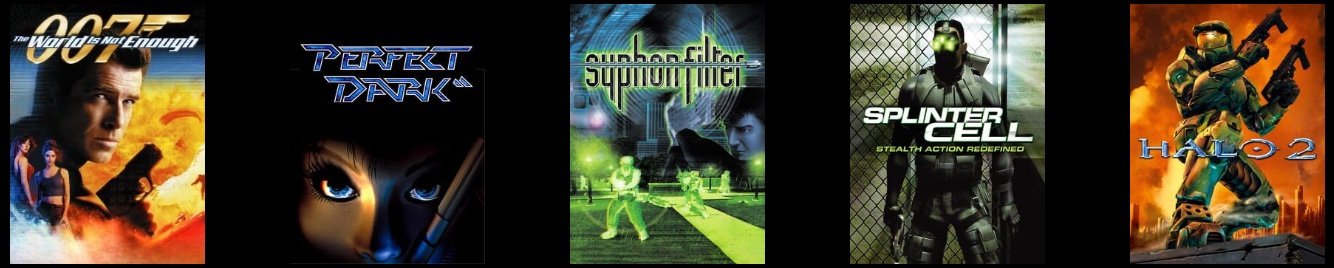
007 The World is Not Enough (N64 / PSone, 2000): The first Bond title that truly resonated with me. While Rare’s GoldenEye 007 is undoubtedly memorable, TWINE completed the job that GoldenEye should’ve done in introducing me to the world of Bond films. I also played Black Ops’s PSone version, but Eurocom’s N64 rendition was far superior. The multiplayer mode, in particular, was a time-sucking delight. I spent countless hours battling bots, executing intricate strafing maneuvers to avoid being an easy target, and then using those skills against my friends. Those memories are still vivid in my mind.
Perfect Dark (N64, 2000): A spiritual successor to Goldeneye 007, it built upon its foundation in every way. While it hasn’t aged well, as evidenced by the XBLA remake, it still holds a special place in my heart. Back then, I was passionate about drawing. When I couldn’t play video games, I’d spend time in my mom’s dining room, armed with a clipboard, pencil, eraser, and a stack of paper. I must’ve drawn countless scenes inspired by Perfect Dark, honing my perspective, learning how to draw hands accurately, and even conceptualizing a scenario for a potential sequel that I was genuinely eager to pitch to Nintendo. Although it’s unfortunate that I didn’t pursue a career in art, perhaps it was for the best that I didn’t pursue game design as a profession. Needless to say, I eagerly anticipate the reboot, whenever it may come.
(UPDATE, July 2025: As part of a broader restructuring ahead of fiscal year ’26, Xbox cut roles across its studios. Among the casualties: both the Perfect Dark reboot and its studio, The Initiative, were shut down.)
Syphon Filter (PSone, 1999): How quickly can you beat a game? During my primary school vacation, I woke up early and dedicated myself solely to playing this game, determined to complete it before noon. Since I didn’t have a memory card, it was crucial that I achieve this goal - and I often succeeded. If I were to play it today, I can probably recall every detail, including the enemy spawn points, and beat it just as swiftly, perhaps? Well, forget that - back then, I slept on a sleeper sofa. How did my mom managed to not wake me up while she was preparing for her commute to work?
Tom Clancy’s Splinter Cell (Xbox, 2002): Metal Gear Solid is my favorite stealth game. However, the “stealth” aspect felt too easy to exploit. The series was stagnant and needed competition, which Sam Fisher perfectly filled. Ubi Montreal’s handling of Unreal Engine 2 was awe-inspiring, but more importantly, the “hide-in-the-shadows” game mechanic, coupled with advancements in lightning technology, created a believable stealth game. Trust me, you won’t survive if you alert the guards, even on lower difficulties. KCEJ had to take notice for their next title.
Halo 2 (Xbox, 2004): Gaming was, and remains, a hobby driven primarily by hype culture. Halo 2’s release marks the first time I’ve engaged in such. From magazine features to forum boards, I was completely engrossed in the pre-release buzz. I saved up my allowance and managed to get my hands on it on the very first day. I never had the opportunity to play it online, and I yearned for that experience. The Master Chief Collection, released a decade later, provided a glimpse, but fell short of capturing the magic of the original, as advised by players who got to experience it. On a different note, I had the privilege of playing this game in LAN with my friends. It was an exhilarating experience, and was mind-blowing to realize that I could do so on a console.
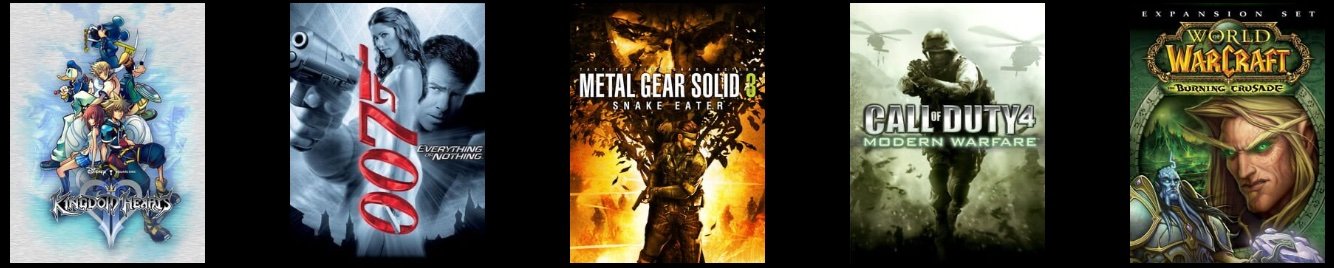
Kingdom Hearts 2 (PS2, 2006): Quick side note: the “Sora” in “chemicalsora” is indeed a reference to Kingdom Hearts’ main character. Ironically, he’s not even my favorite character in the series! That title goes to Riku. Even funnier is how I used to be such a critic of the KH concept. Disney characters fighting alongside Square Enix ones? Are they crazy? Little did I know that it would become as meaningful as it would when I asked my stepbrother to lend me the first game. I prefer KH2 over the previous game simply due to the sheer excitement I had for its release, similar to or even more than the excitement I had Halo 2 launched. I believe my dad bought it for me through my stepbrother, considering my allowance at the time only allowed me to buy lunch outside school. When I finally got my hands on it a couple of days later, I was completely obsessed.
007 Everything or Nothing (Xbox, 2004): The best of the EA-made Bond titles, in my opinion. Some may argue that the Bond games peaked with 007 Nightfire, and it was indeed a good game! But in my book, EON’s work stands out even higher. I believe I never owned this game during its peak popularity. Instead, I rented it from a store multiple times because I couldn’t finish it before I had to return it. The concept of “Bond movie but playable” was truly realized when they brought both the on-screen and off-screen staff to life. Pierce Brosnan not only lent his likeness but also his voice, which was a significant achievement. Almost two decades later, in No Time To Die, it seems that the writer of the film is a big fan of this game, as a part of the plot is directly inspired by it.
Metal Gear Solid 3: Snake Eater (PS2, 2004): While I’m highlighting Snake Eater, I didn’t play it until Subsistence, the expanded version of MGS3, that came out 2 years after the original. It never came to Xbox, and it wasn’t until I traded my Xbox for my cousin’s PS2 that I could finally play it. Ironically, he became a diehard Xbox fan, and would even play Halo 2 online—the one feat I could never accomplish. Anyway, let’s talk about Snake Eater. This game would make me a sucker for parent stories, with The Boss serving as a maternal figure to the man who would become Big Boss. Gameplay-wise, since it was released during the era of Splinter Cell, the stealth elements underwent significant rework. The enemies’ cone of vision and radar were removed, intensifying the stealth experience. Moreover, on higher difficulty levels, you had to move prone for an extended period or risk detection. This change was refreshing for Metal Gear Solid and, whenever I consider my favorite Metal Gear title of all time, this is the one.
Call of Duty 4: Modern Warfare (PS3, 2007): I purchased a PS3 for MGS4. However, I needed another game since I was aware that it was a single-player game, and we were in the midst of the online console revolution. A salesperson suggested that I buy Call of Duty 4. Although it wasn’t even the latest entry at the time - that would have been World at War - I was assured that it was an enjoyable game. And it was. Little did I realize that I was witnessing a pivotal moment in the Call of Duty series. I belong to the second wave of new players. The first wave consisted of those who appreciated the work of the previous 2015 developers on Medal of Honor: Allied Assault and were excited about the new studio’s proposal for a multi-perspective portrayal of World War 2. Alternatively, you could argue that the second wave was the release of the second Call of Duty game for Gen 7 consoles. I see it as a combination of old players returning in large numbers and new ones joining the community which COD4 achieved without question. While I was familiar with the franchise, I had never played any of its games. This was the first one I tried. Although I don’t have many memories of the multiplayer mode, the campaign is filled with them. “All Ghilled Up” still sends shivers down my spine when I think about it.
World of Warcraft: The Burning Crusade (PC, 2007): The first MMO I played was one I would later come to regret. Not only do I no longer play MMORPGs and refuse to get close to them, but it also planted the seed that perhaps I was a solitary player destined to remain that way. I vividly recall bugging my friend, the same person who introduced me to this game, to assist me in clearing dungeons and acquiring gear. His repeated annoyance at my frequent requests led me to a conclusion: “If I’m not playing with him, then why am I even paying for this?” In retrospect, the worst part of it all was that I sold my Nintendo DS for this game.
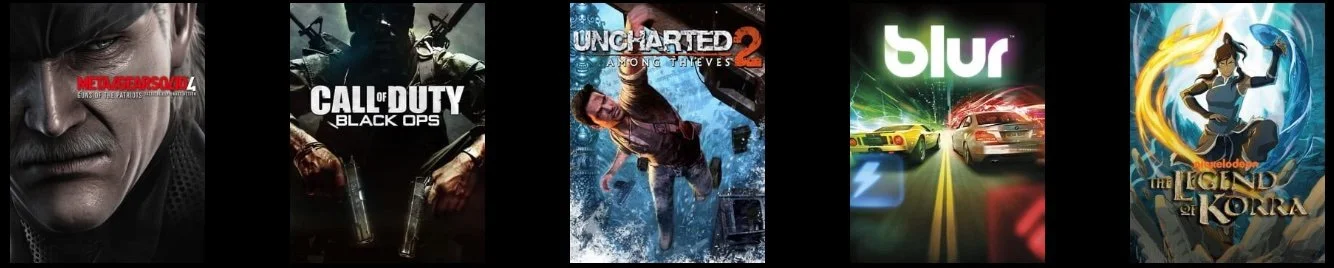
Metal Gear Solid 4: Guns Of The Patriots (PS3, 2008): While not my favorite Metal Gear Solid game, the release of this game was a significant event. It concluded Solid Snake’s story and, as reported back then, likely marked the end of the entire Metal Gear Solid saga. It was the first game to support PlayStation 3’s DUALSHOCK 3 out of the box - as a reminder, the SIXAXIS lacked rumble support. This game was expected to be a massive hit and a console seller, priced at $500 at the time. It also introduced many of Kojima Productions’ cutscene techniques, which were later featured in both Metal Gear Solid V and Death Stranding. As of this post’s writing, it remains the only main entry in the MGS series that has not been released on a platform other than the PS3. Reports suggest the game’s engine was specifically designed for its architecture, making it challenging to port to other consoles. MGS fans eagerly await confirmation whether this one will finally be released on a modern platform or if it will remain confined to the PS3, which is becoming increasingly difficult to find or emulate on high-end PCs.
Call of Duty: Black Ops (PS3 / 360, 2010): Perhaps the one Call of Duty game I truly fell in love with, even if COD4 existed. The campaign spawned its own running joke after an overzealous sergeant and reviews of fruit-killing skills. However, the multiplayer mode took up the majority of my time. I wouldn’t be surprised if I spent more than a thousand hours there, playing with pick-up groups and eventually met some individuals with whom I played with until Advanced Warfare came out. Nevertheless, I made many happy memories there. Even to this day, I still believe that Treyarch is better at balancing their games than Infinity Ward.
Uncharted 2: Among Thieves (PS3, 2009): I believe it’s fair to acknowledge that the initial Uncharted game had its flaws, despite its potential. Naughty Dog had a stronger belief in Drake’s character than the gaming community as a whole. When the sequel was first announced, the sequence they chose to showcase was incredibly exhilarating. While it never fully addressed the allegation that Drake was a male Lara Croft, Crystal Dynamics was undoubtedly taking notes for the 2013 reboot. Regardless, the single-player campaign was exceptional, and the multiplayer mode was highly addictive. In fact, I preferred it over Modern Warfare 2 — and I got quite good at it! I still vividly recall hip-firing enemies until I got close enough to pistol whip them, then taunting them. Oh, they got really mad…
Blur (360, 2010): Dan Amrich introduced me to this game. He played it frequently on his community game nights when he was Activision’s community manager. Since I enjoy racing games, I was curious about how the Mario Kart concept with real cars worked. I expected it to be terrible, but it turned out to be a lot of fun! Maybe it was because I was feeling COD fatigue when I first played it? I’d need to replay it to see if I still felt that way. In any case, it led me down a rabbit hole of other similarly themed racing games, like Split-Second, Need for Speed, and Forza.
The Legend Of Korra (360 / XB1, 2014): I can’t recall whether the game piqued my interest in the series or vice versa, but it’s worth mentioning if only as a potential catalyst for breaking my Call of Duty addiction. It’s a beat ‘em up game centered around acquiring the four elements to vanquish a formidable evil. A solid title by PlatinumGames yet it faced criticism from the gaming press of the time for its perceived simplicity. Ironically, that’s precisely what I found appealing about it! Regrettably, it has become lost media as ATVI lost the rights to sell this game. If you don’t already own it, you’re out of luck.
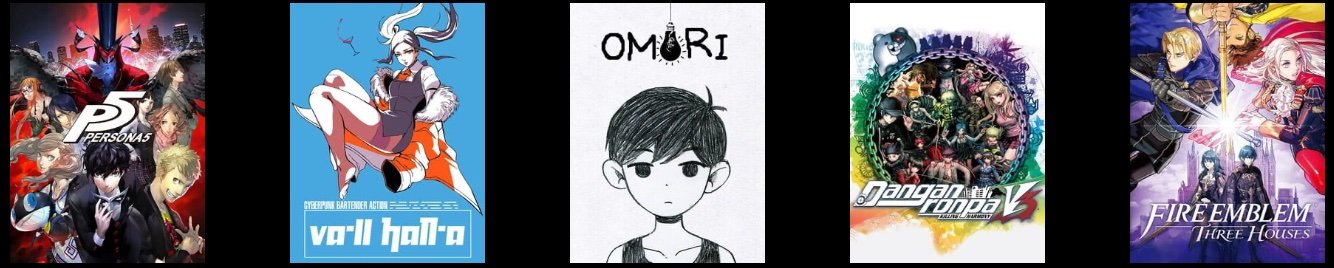
Persona 5 (PS4, 2017): “You Are Slave. Want Emancipation?” With that Engrish tagline, the announcement trailer for Persona 5 in 2013 ignited an excitement in me that no other video game in recent memory has matched. It was the game that prompted me to purchase a PS4, and I dedicated every free moment of my life to playing it. I even have a shrine dedicated to Persona 5 memorabilia in my office, featuring mostly figures, the collector’s edition, and the soundtrack. When Royal was released, my collection expanded even further. It’s safe to say that Persona 5 holds a profound place in my heart and has become a significant part of my life.
VA-11 Hall-A: Cyberpunk Bartender Action (PC / Switch / PS4, 2016): A friend highly recommended this game, which piqued my interest and, after I played it, it became one of my all-time favorites. It’s a visual novel set in a cyberpunk future, where a bartender serves multiple clients. While I’m not the best person to critique the cyberpunk elements, I can confidently say that the writing is exceptional. Each character effectively conveys their intended message. Years ago, I read Damas’s dev blog detailing the game’s behind-the-scenes development, and everything made perfect sense.
OMORI (PC, 2020): I picked up this game during the first anniversary sale OMOCAT did. I’ve been a fan of their work ever since YABAI-CHAN - I still have that shirt in my wardrobe! So, when I discovered they had made a game, I was intrigued. I don’t usually enjoy horror games, and I must admit that the horror elements in this game didn’t particularly resonate with me. Maybe it was the underlying technology? It’s an RPG Maker game, after all. However, I did enjoy the rest of the game. Even the story’s gut punch in the climax was well-executed.
Danganronpa V3: Killing Harmony (PS4, 2017): Danganronpa is a series that I’ve heard positive things about but never really connected with. I remember playing Trigger Happy Havoc around 2013, but I quit because I wasn’t particularly fond of visual novels at the time. So, when I gave the series another chance after having played several visual novels, namely the Ace Attorney series, I became a fan. I chose the third main entry because I found the themes and characters more resonant. Like many members of the Danganronpa fanbase, I was initially taken aback by the ending, but it’s a thought-provoking exploration of how media influences our lives.
Fire Emblem: Three Houses (Switch, 2019): The first Fire Emblem game I played was recommended to me by word of mouth and a friend’s high opinion of one of the protagonists, Edelgard von Hresvelg. I ended up becoming a fan of her as well. Playing a tactical game that required me to think strategically, even more so than any turn-based RPG I had played before, while battling a health condition, was perhaps the most memorable experience of this game. Replaying the other routes while I felt better made me realize that I could become a fan of the series if more games were like this. After playing 2023’s Engage, I’m thrilled to report that I might see a newer title dethrone Three Houses!
20 titles, fully explained as to why their memorability! Unfortunately, I couldn’t include everything I wanted to detail here, or I’d have to replace some titles with others. Here are the honorable mentions:
Mass Effect 3
Catherine
Crash Bandicoot 2: Cortex Strikes Back
Grand Theft Auto: San Andreas
Persona 4: Dancing All Night
Mirror’s Edge
I’ll save any future thoughts on these games for a future post.