

25 min read
Prior Entry | All Media Log Posts | Next Entry
Please be advised these posts aren’t spoiler-free.
Did you know? The masked swordsman who acts as the boss of Orange Ocean in Kirby’s Adventure wasn’t originally called Meta Knight – not even in the Japanese materials. Allegedly, during development, he was referred to as メタアーマー, or “Meta Armor.” That name didn’t make it into the final game; instead, he was retroactively named Meta Knight after HAL settled on that identity for him.
Also left on the cutting-room floor were two more Meta Armor variants: スラッシュメタアーマー (Slash Meta Armor) and メタモルメタアーマー (Metamorphose Meta Armor). If I interpreted the source correctly, these weren’t separate “Meta Knights,” but transformations of the same masked swordsman. I suspect one of them might’ve made an appearance during the Halberd escape sequence in Revenge of Meta Knight from Kirby Super Star, though I don’t have solid evidence – just a gut feeling.
Passing this factoid along in the prologue, since I couldn’t find a place to fit it into the Adventure or Nightmare entries. Without further ado, here’s the April log!
Kirby’s Adventure
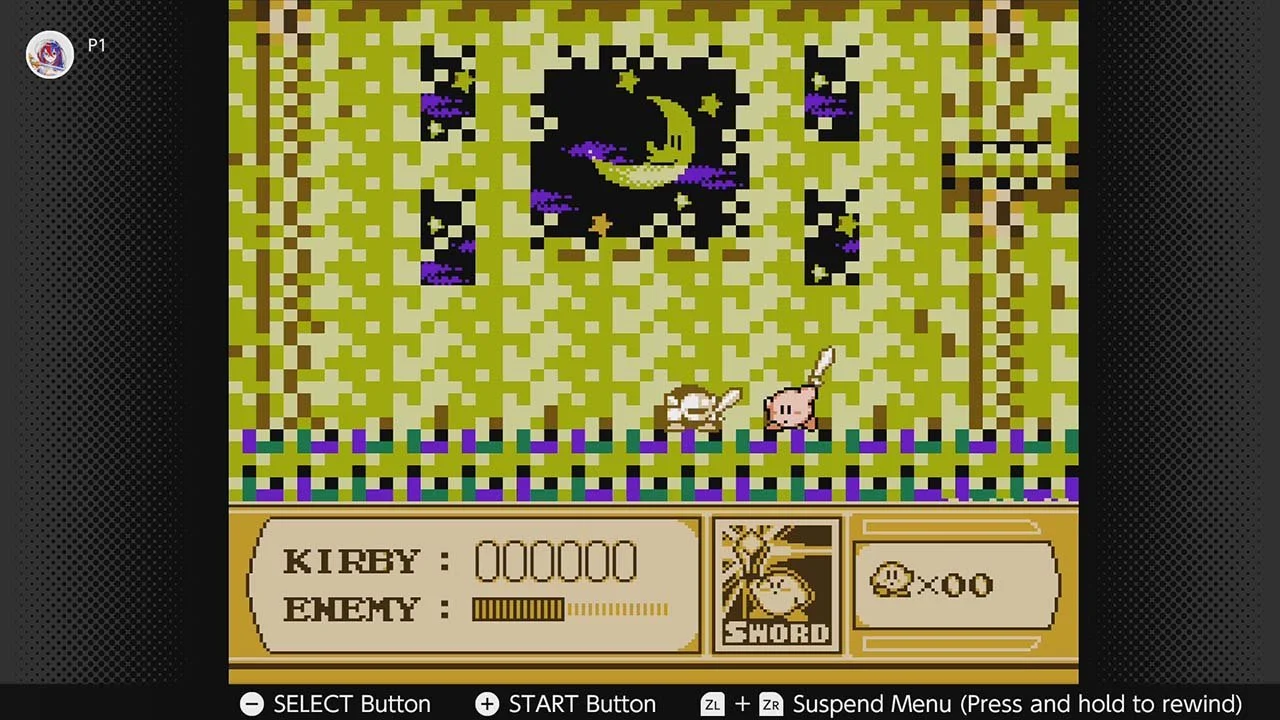
Okay… I finally get to talk about the game that shaped me. Deep breaths…
It’s been ages since I last played Kirby’s Adventure. I know for sure when I first did – about thirty years ago – but I’ve lost count of how many times I’ve returned to it since. I wish I could pin down the last replay, but those early years blur together. These days, I log what I play over on Backloggd, so it’s easier to keep track now. If I’d gone deep on Adventure back when I wrote that post about the games that stuck with me, it could’ve taken up half the entry. That’s how much I have to say about it – and I just hope I can say it well enough to reflect how much this game means to me.
So, what’s this game about? Unlike Dream Land, which leaves the story buried in the instruction manual, Adventure opens with an in-game explanation – right after introducing a new mechanic that would go on to define the series: the copy ability. The people of Dream Land have stopped dreaming, leaving everyone cranky and on edge. Kirby checks in with his friends, only to learn they’re stuck in the same sleepless slump. “Something must’ve happened to the Dream Spring!” they say. The Dream Spring, powered by the magical Star Rod, acts like a dream reservoir for the whole country: it collects dreams and then returns them to the people each night. Curious and concerned, Kirby heads to the spring – only to find King Dedede lounging in it like it’s his private pool. It’s not hard to figure out who’s behind the problem. Dedede, caught red-handed, tries to explain himself, but Kirby’s not buying it – and for good reason. When questioned about the missing Star Rod, Dedede admits he shattered it into seven pieces and handed them off to his buddies. And just like that, Kirby sets off on a journey to put it back together.
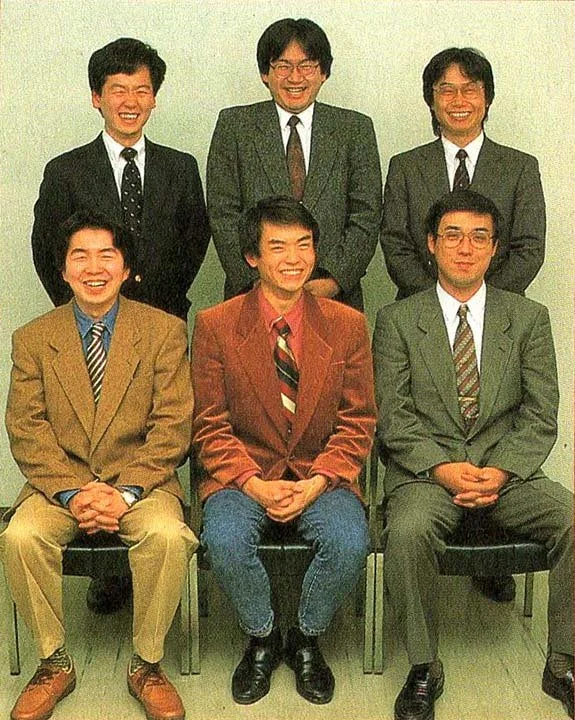
Key staff behind Kirby’s Adventure. Top to bottom, left to right: Takao Shimizu, Satoru Iwata, Shigeru Miyamoto, Takashi Saitou, Masahiro Sakurai, Hiroaki Suga.
Credit: Kirby of the Stars: The Story of the Fountain of Dreams Official Nintendo Guide Book via shmuplations
HAL Laboratory was in a precarious position. Several titles hadn’t performed up to expectations – chief among them Metal Slader Glory in 1991 – and their costly move to Yamanashi, made in response to the company’s rapid growth, only added to the strain. The timing couldn’t have been worse: the relocation came just before Japan’s asset price bubble burst. It may well have been the straw that broke the camel’s back. HAL became functionally insolvent and was forced to file for bankruptcy.
Hiroshi Yamauchi, then-president of Nintendo, had long respected HAL’s contributions to the Famicom and was keenly aware of their technical prowess. He stepped in with an offer to help pull them out of bankruptcy – but reportedly with a condition: Satoru Iwata must become HAL’s new president as part of the reorganization. Iwata had no experience running a business. Did Yamauchi see a natural leader in him, someone with both the smarts and vision to steady the ship? In any case, Iwata didn’t have much of a choice. It was either take the helm or shut down HAL for good. The gifted programmer took on the role, and with Nintendo’s backing, HAL became a first-party developer. Their top priority? Climb out of the financial pit, fast. Iwata boldly declared what would become HAL’s north star: “From here on out, every game we create is going to sell a million copies!” A year before Iwata’s appointment, Kirby’s Dream Land had been released – a game completed before HAL’s financial woes had fully come to a head. It went on to sell five million copies. The right game at the right time, Kirby became a symbol of hope for the disillusioned employees.
HAL couldn’t afford any more grand bets, and so they bet on Kirby. Development on a new title started immediately after Dream Land wrapped. It was originally conceived as a straightforward home console port, but Masahiro Sakurai pushed back, armed with feedback from the first game and determined to expand on what made it work. What eventually became Kirby’s Adventure was equal parts exploration of the character, a playground for ideas that hadn’t made it into Dream Land (chief among them: the copy ability), and a showcase of HAL’s deep hardware expertise. Choosing to develop for the aging Famicom instead of the newer Super Famicom wasn’t just a safe bet – it gave HAL’s programmers a familiar canvas where they could do their absolute best work.
What they delivered in 1993, with the Famicom on its way out, was a visual and audio marvel. That Adventure exists at all, let alone in the form it does, feels like nothing short of a miracle.
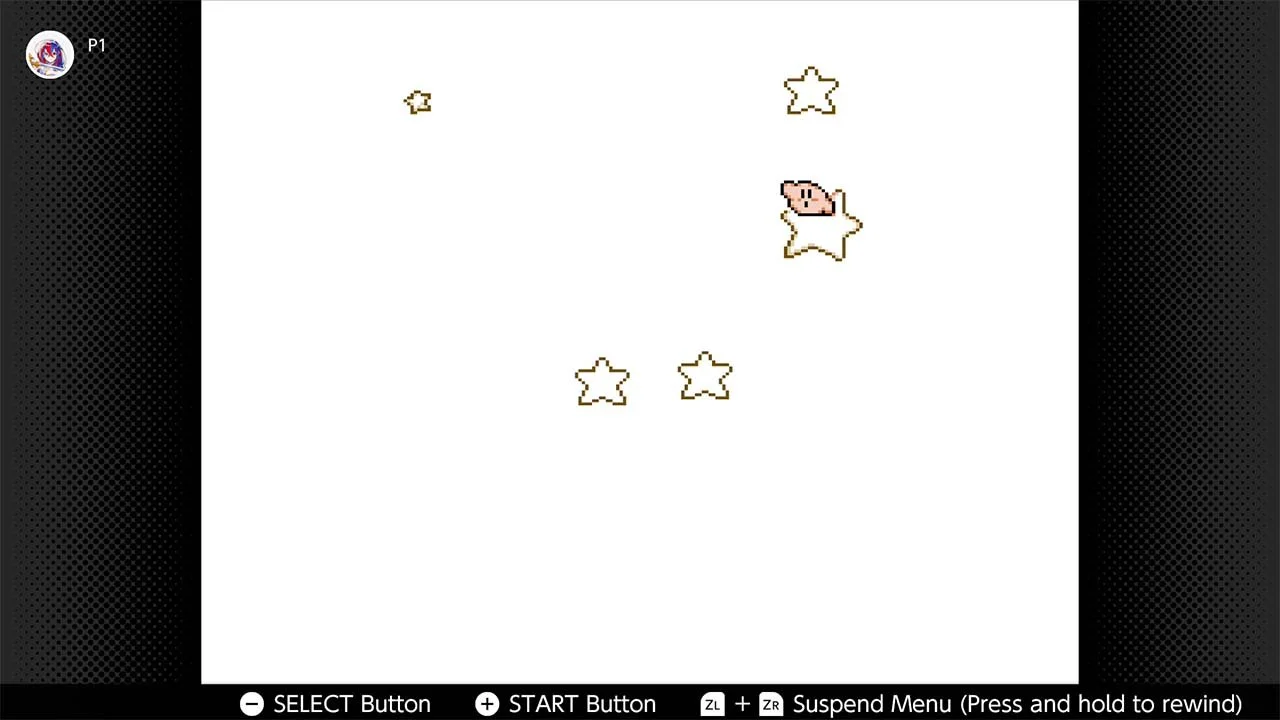
Does it hold up? Now that I know more about the technical feats behind the game, I’ve come to appreciate it even more. For example, take the outdoor sections in Butter Building, where the tower appears to rotate as Kirby walks in either direction. It’s a clever workaround that mimics parallax scrolling – a trick where multiple 2D planes move at different speeds to create depth. The Famicom didn’t have the horsepower for true parallax scrolling, so what you’re seeing is HAL pulling off a smart trick to approximate it.
It’s a beautiful game – maybe the most beautiful game on the Famicom. Sure, there’s Metal Slader Glory, but this isn’t the Obama-awards-Obama-a-medal meme. If the world map didn’t convince you, level 1-1 will.
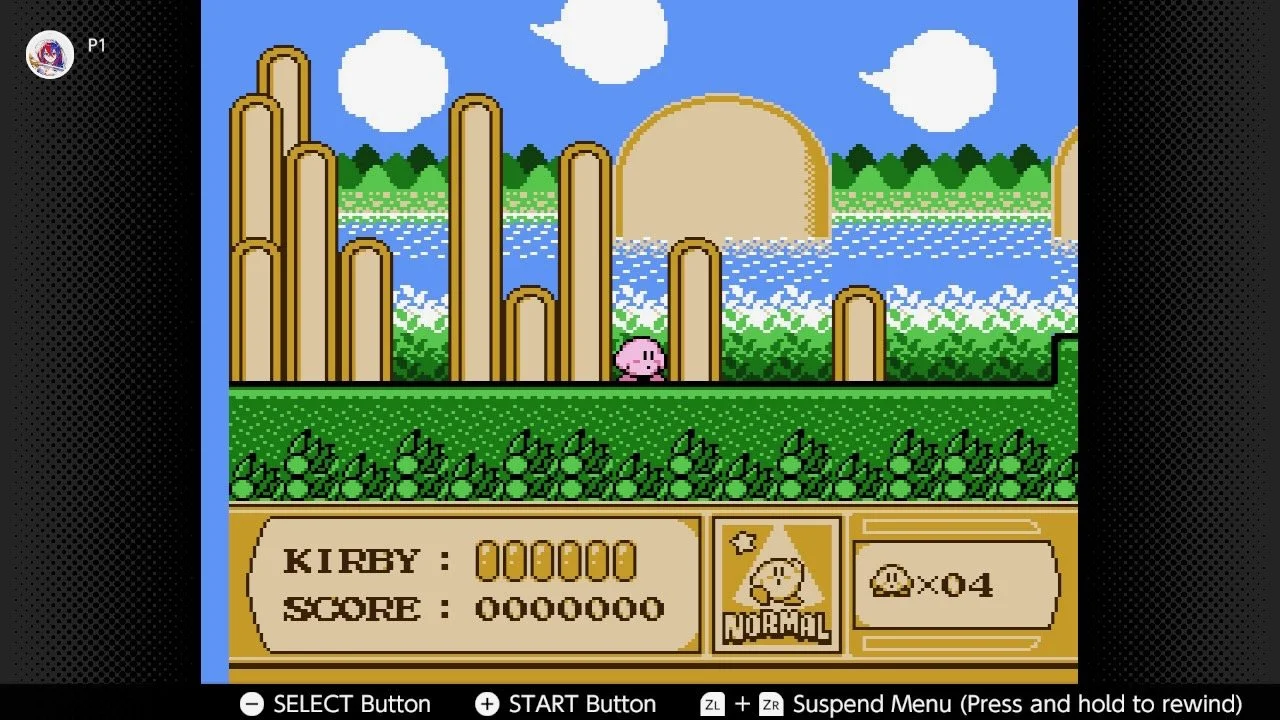
Look at it! Look how pretty it is! The world looks alive! This background work was rarely seen in the Famicom, and some developers would scoff at this level of detail, deeming the extra work not worth it. Not HAL. They went for it. Most impressively, it was all done using the Famicom’s single background plane. Maybe the background moving with Kirby is another hardware trick – I’m not sure. But it’s impressive all the same. It wasn’t the last first-party Famicom title, but given how lackluster the final ones were, it might as well have been.
I’d like to shout out the mini-games in Adventure. In an interview, Sakurai mentioned how he wanted “one-button games” to complement the main story. The results were a game of who could press the button first (Quick Draw), when to press the button (Egg Catcher), and how long to press it for (Crane Fever). I took to Egg Catcher quite a bit, although I recall being fond of Crane Fever when I was a kid. Not that I’m into crane games - I actually suck at them. But if I managed to grab the big Kirby? That was two extra lives!?
Is it as good as I remember? I don’t know if that question even makes sense anymore. I’ve played so many games since 1993, watched the medium stretch and shift in ways I never imagined. What once felt vast now seems small. Some of the games I’ve loved since may have been shaped by Adventure, their lineage hidden in mechanics or mood, but I wouldn’t always notice.
And yet, Adventure lingers. There’s a quiet rhythm to it – not too easy, not too punishing – that still feels right. But more than anything, it takes me back. Back to a time when life was smaller, too. My parents were carrying burdens I couldn’t see. But me? I just went to school, came home, ate dinner, played games, and went to bed. That was my world: safe, predictable, untouched by the kind of stress I now carry every day.
I can’t separate Adventure from that feeling. The game and that moment in my life are tangled together, impossible to pull apart. And maybe that’s part of its magic. Even if I return to it only for the comfort it brings, for the flicker of a time when things felt simple and full of wonder – that’s still something. That’s still worth holding on to.
Kirby: Nightmare in Dream Land
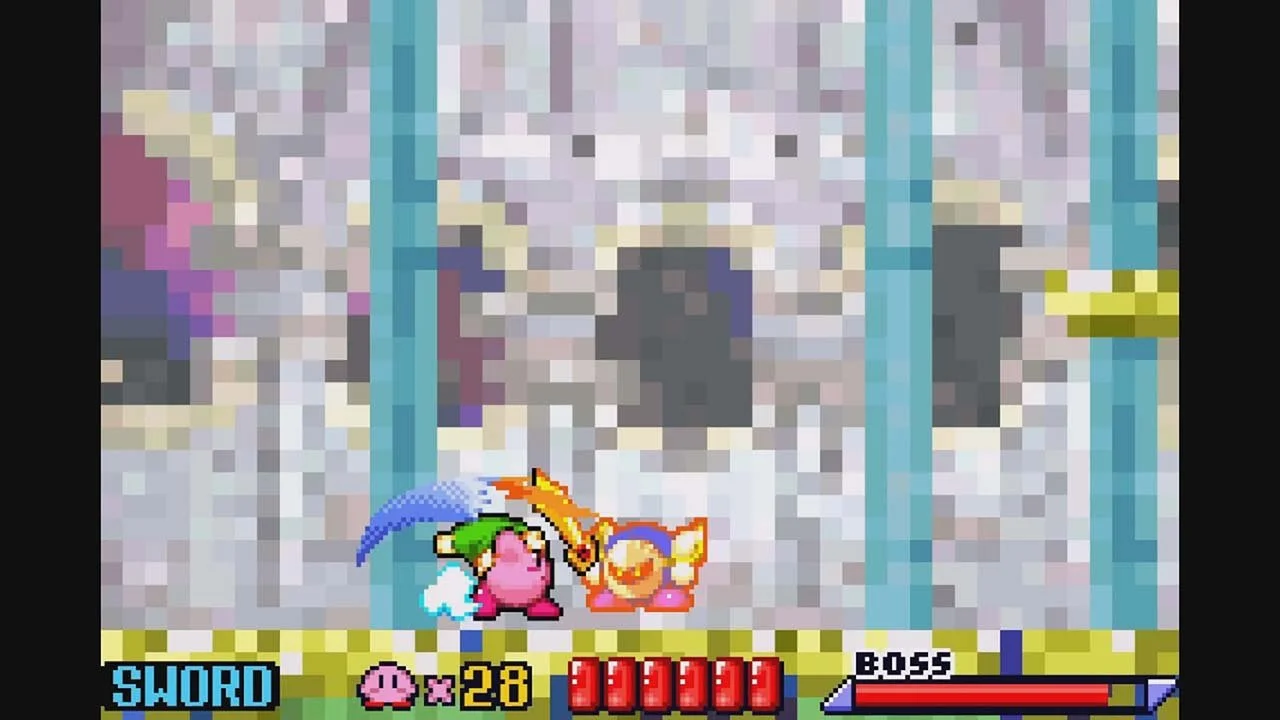
I adore Adventure, but asking newer players to go through it is futile. Fortunately, HAL remade it for the Game Boy Advance nine years after the original. Surprisingly, putting it on a handheld shifts expectations compared to a home console, making it more palatable. I never owned a GBA, which means this run-in with Nightmare is my first ever playthrough. While some points of the main game are interchangeable with its remake, I thought it best to tackle it separately. Having this separation also ensures you, dear reader, won’t get confused about which title I’m referring to.
Nightmare’s development began in summer 2001, a time when no Kirby games were in production, even as the Kirby: Right Back at Ya! anime began airing. HAL wanted to get something out quickly and initially considered porting one of the Super Famicom games to the GBA. But Sakurai reflected that seeking momentary relief at the expense of long-term impact wasn’t a good idea. So then came the question: how quickly could a new game be produced? The team floated a concept similar to the cancelled Kirby Bowl – perhaps now was finally the chance for such a project to shine.
Then someone suggested what would eventually become Nightmare: “Why don’t we remake Adventure?” Sakurai initially resisted the idea but later suggested in an interview that it was the right path to take. He lamented how, as technology enabled greater scope, games weren’t doing much to lower the difficulty barrier. The design decisions behind Adventure spoke volumes about his philosophy: making games approachable, drawing in as wide an audience as possible, and striking a balance between ease and challenge. What helped Adventure was that it was already a complete game – no need to draft mechanics from scratch or experiment with structure – which made it perfect for a quick turnaround. Any reservations Sakurai had, in light of all this, quickly faded.
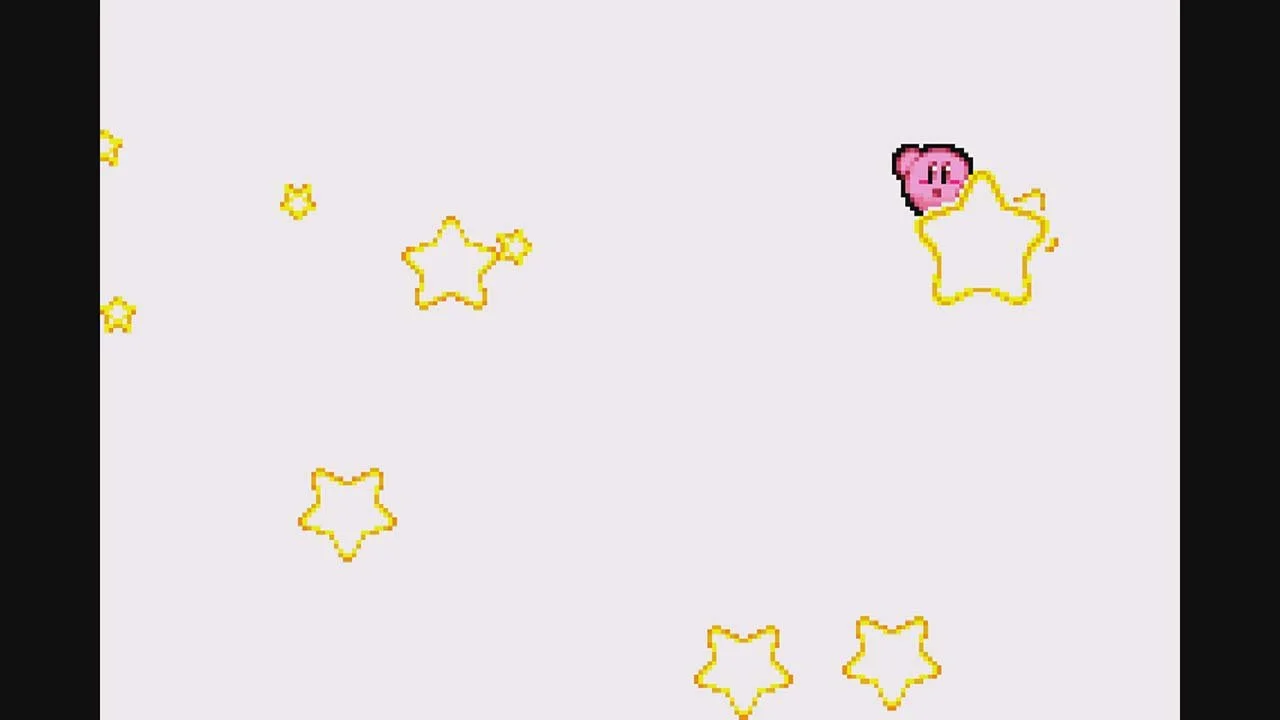
What’s different in Nightmare versus Adventure? For starters, the visuals got a major overhaul. Sprites were redrawn based on the ones from Kirby Super Star, and thanks to the GBA’s ability to handle more on-screen sprites, HAL was able to push smoother animations throughout. How many sprites? The developers said that the opening scene in Nightmare – with all the Kirbys rushing in for a wipe transition – used every Kirby sprite in the game. One of the programmers guessed the total was about 120.
Technically speaking, Nightmare holds a stable framerate compared to Adventure, which often dipped into the high teens. The GBA is roughly on par with the Super Famicom, which meant true parallax scrolling was now possible. In Adventure, only a few stages faked the effect; in Nightmare, it’s standard across all side-scrolling levels. That said, one of Adventure’s flashiest effects – the rotating tower in Butter Building – is gone. Instead, you get a layer of fog that gradually lifts. I don’t think it was a hardware limitation; more likely, it was a cut made to save time during development.
Minigames also saw a shake-up. Crane Fever was swapped out for Bomb Rally, a tennis-like game where you try to volley a bomb back and forth without letting it explode in your hands. Egg Catcher became Kirby’s Air Grind – a one-button racing game that doubled as a testbed for Kirby Air Ride, which would come out the following year. Quick Draw got a makeover to resemble Samurai Kirby from Super Star, but it plays the same as the original: first to press the button wins. And then there’s Meta Knightmare, the series’ first time letting players control Meta Knight. Unlocked after clearing both normal and extra modes, it’s a time attack challenge – beat the game using Meta Knight’s souped-up sword moves, but with only half the usual health meter and no saving.
I haven’t touched on Nightmare’s co-op mode since I never played it myself. Still, it deserves a mention. At the time, it was groundbreaking – maybe even the first co-op platformer in Nintendo’s history, predating New Super Mario Bros. Wii by several years.
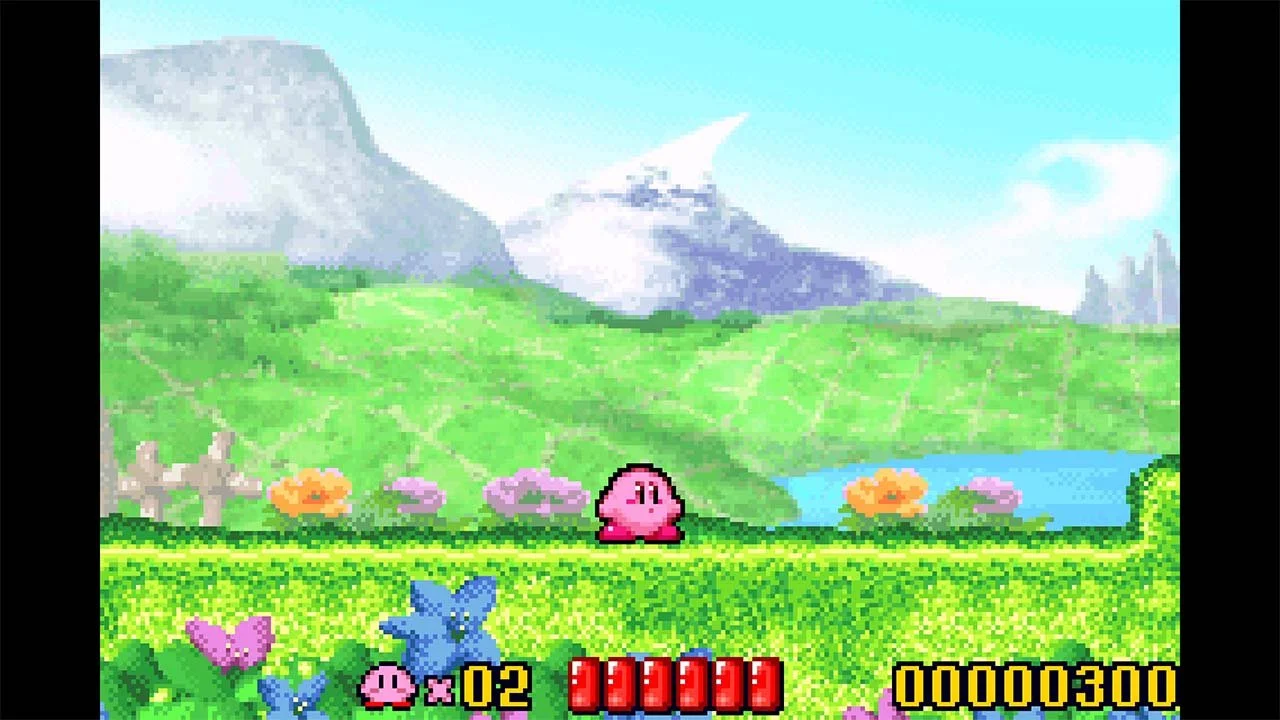
How faithful should a remake be? I think they should be free to innovate within the bounds of what the project is trying to reconstruct – but given how much Adventure means to me, I can’t answer that without falling into the trap of wanting a 1:1 remake. It’d give me momentary happiness, but if I want more people to check out my formative game, that simply won’t do.
Some things I would’ve loved to see after seven hours with it: the old mini-games, with a fresh coat of paint. Even so, I admit I got addicted to Bomb Rally, perfecting my button presses to volley as fast as possible to my opponent. I would’ve loved a Super Star-style take on Fire and Ice: two abilities rolled together. The former – fire breath and the “Burning” fireball. The latter – ice breath and the “Freezing” blizzard shield, which freezes any enemy who gets close to Kirby. Reportedly, Sakurai wanted it this way, but one of the designers pushed back. I think that was a mistake.
Honestly, none of the above are deal-breakers. I appreciate and love – adore, even – how a modern take on my favorite classic exists for newer players to experience. And maybe Nightmare will become – or already is – someone’s first gaming obsession, just like Adventure was mine. When I think about it that way, it feels like I’m passing the torch.
I won’t feel as strongly about this version as I do for the original, but HAL did their best to recapture the magic. The fact that an Adventure remake was deemed worthwhile enough to get the green light and make it to store shelves is humbling. That, in and of itself, is enough for me.
Thanks, HAL, for making it happen. And thanks, Sakurai, for putting your reservations aside.
Signed, someone you’ll never meet – but whose life you changed.
I Cannot Reach You
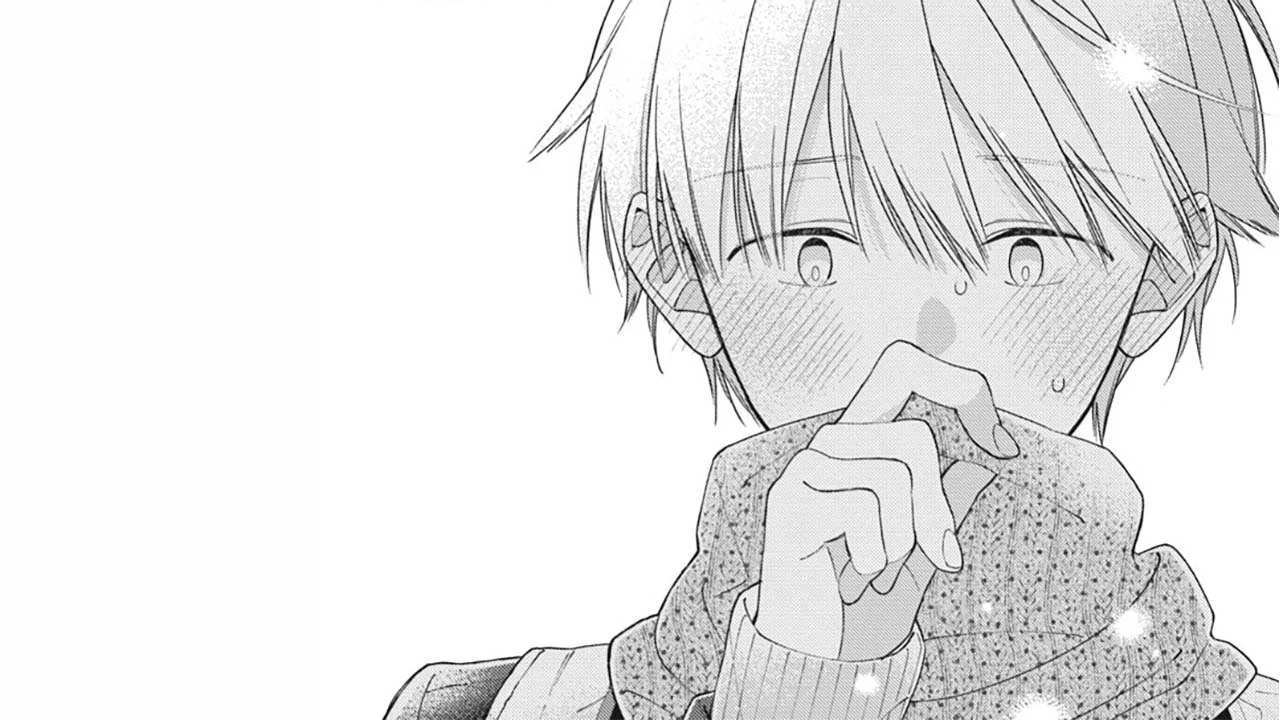
I first heard of this series from a friend and an acquaintance, both of whom can read Japanese, enthusiastically discussing each new chapter as it comes out. It being a boys’ love manga, it was bound to catch my attention – alas, I can’t read Japanese. Thankfully, American publisher Yen Press picked up the rights in 2020, giving me an English version to read! Still, I put it off for the longest time – as I tend to do with most media, it seems. I tried to correct this in an unorthodox way: in 2023, I dared that same acquaintance to buy me the first volume in print, since they kept egging me on to start it. They didn’t – surprising absolutely no one.
Then, what I thought was a joke escalated. It started when I mentioned how I tend to take more recommendations from my friend, since our tastes align more than theirs — a comment they took personally. We ended up bickering for no real reason. Reading back on that exchange with the benefit of hindsight, it stung. I suppose I wasn’t able to rein in the worst of my impulses in that conversation.
If I wasn’t going to get volume one for free, then when did I buy it? Where did I buy it? I often share thoughts on books and book hauls with my friend, and I found a post with some thoughts on the first volume from around the holidays – and a separate haul that included volumes two through six. But where was the elusive volume one? Did I forget to share it with my friend? Maybe I posted it elsewhere? Did I use the wrong keywords when searching my emails? It bothered me so much, I went down a rabbit hole.
It wasn’t on an order from my go-to store, RightStuf (RIP), before that holiday haul. It wasn’t from Amazon, and Books-A-Million – the “once in a blue moon” bookstore – was a dud. Still convinced I wasn’t searching my emails correctly (and locked out of RightStuf’s order page for some reason), I even emailed Crunchyroll Store support to see if they could dig anything up. They came up empty. Just when I was about to give up – just when I was ready to joke that the book must’ve magically appeared in my hands – I checked my local bookstore and… there it was.
Odd. Local bookstores generally don’t carry BL titles. I must’ve bought it there and completely forgotten I did.
The beginnings of I Cannot Reach You (Kimi ni wa Todokanai, or Kiminai for short) struck me as peculiar. It started on Pixiv’s comics platform, Gene Pixiv, back in 2018. I’ve known Pixiv to be home not only to Japanese and Japanese-influenced illustrators but also to doujinshi artists; I just wasn’t aware of any illustrator whose work had started there and then exploded in popularity the way Kiminai did. What’s humbling, then, is that this wasn’t even supposed to be a series at first, as shared by its author, Mika, in one of their notes. It shows – chapter one reads like a one-shot, and everything after that expands on the story of two childhood friends: Ashiya Kakeru and Oohara Yamato.
Yamato is everything Kakeru isn’t – cool, smart, and good-looking. They’ve spent so much time together that they can’t imagine life without each other: two halves of a whole. But as they’ve grown into their teenage years, insecurity looms over Kakeru. He often questions how he’s still friends with someone like Yamato, especially when public outings draw comments from others that make him more aware of his shortcomings. All he wants is to be able to stand beside him as an equal, though he’d never admit that aloud.
But Yamato has romantic feelings for Kakeru. While watching over a sleepy Kakeru, he ponders in a narrator-like capacity: “I’m sure it can’t reach him. This feeling that’s not admiration or nostalgia… this ache.” If the subtext wasn’t obvious, when Kakeru later tries to distract himself from after-school work, he casually asks, “Is there anybody you like?” Yamato answers, “Kakeru.” Kakeru, assuming Yamato is just calling his name again, brushes it off. Yamato leaves, and though Kakeru might have an idea of what he meant, he talks himself out of it.
Yamato will never admit these feelings to Kakeru… or will he?
In volume seven, Kakeru and Yamato officially start dating after much soul-searching on Kakeru’s part, the moment sealed by Yamato’s passionate kisses in the school infirmary. Volume eight shifts to how they navigate the relationship itself – a major focus as Kakeru, completely ignorant about romance, finds the title of “boyfriend” somewhat embarrassing, though not enough to hide it. He confides in Kosuke Fujino, trying to figure out if he can see Yamato as more than a friend, though he never mentions him by name. Kosuke assumes Kakeru is trying to woo a girl – until he realizes Kakeru never actually specified a gender. He gives him two aquarium tickets (his girlfriend isn’t a fan of aquariums) and offers his support for whatever Kakeru needs. Since there are no afternoon classes, Kakeru takes Yamato there. It’s their first date after agreeing to go out!
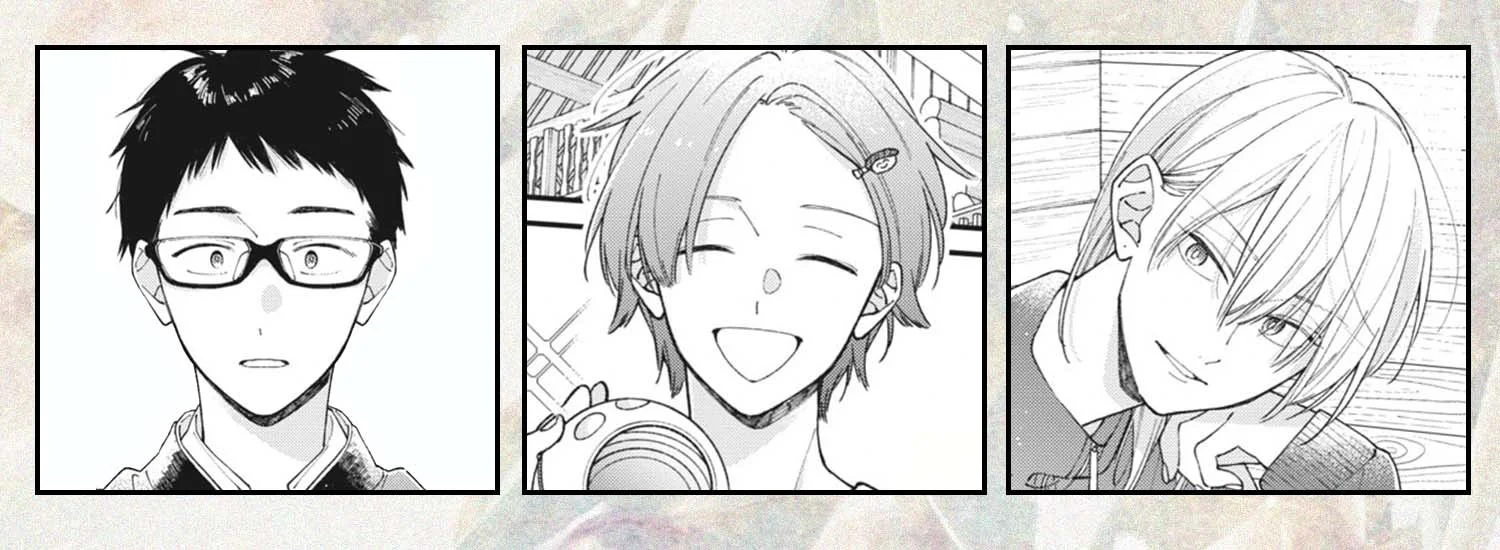
From left to right: Kosuke Fujino, Soichiro Amamiya, and Yui Hosaka.
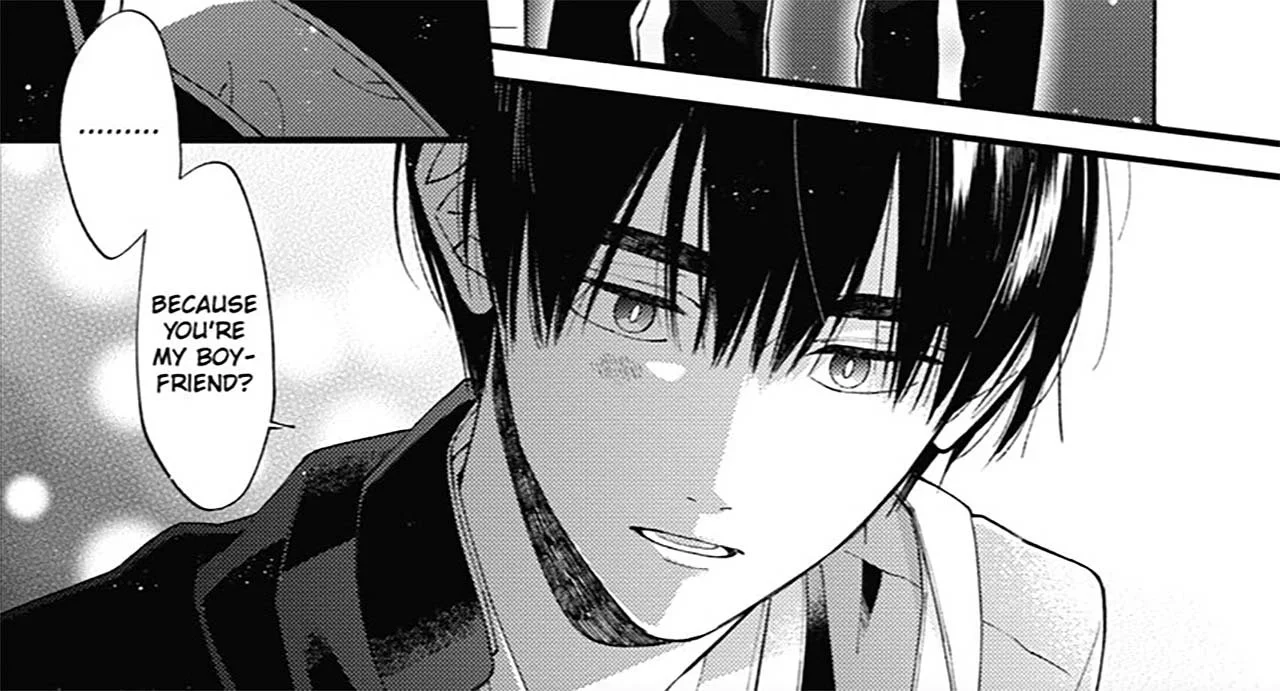
Yui Hosaka and Soichiro Amamiya, classmates of the new couple, run into Kosuke after a karaoke party and invite him out to eat. They also text Kakeru and Yamato, but ever the aloof guy, Kakeru seems to miss the message. Not that it mattered – the pair were already on their way back and would bump into them regardless. On the train, Kakeru noticed Yamato seemed down and tried to get him talking, playing it cool with a callback: “Maybe it’s ‘cos you’re my boyfriend?” After getting off, Yamato, ever the assertive romantic, pulls him into a quieter section of the station and hugs him, determined this would be the last time he showed affection in public.
But it’s too late – Kosuke saw them and was in shock. Yui and Soichiro tried to give them an out, and Yamato picked up on the cue, playing along. Kakeru, however, couldn’t stand hiding the relationship any longer and declared they were dating. Kosuke excused himself, but the couple joined the others for lunch anyway. Kakeru felt awful about Kosuke shutting him out, but it was only after Yui, Soichiro, and Yamato cornered him for a proper heart-to-heart that things finally started to mend. Kosuke eventually admitted the shock wasn’t about them being together, but about not being trusted enough to know that Yamato was the “special someone.” Letting bygones be bygones, Kakeru handed out the keychains he bought at the aquarium so they could all have matching ones.
The latter part of volume eight depicts an overnight stay at a cabin deep in the woods. This happens during the spring break at school, and everyone comes – Kakeru, Yamato, Yui, Soichiro, and Kosuke. They haven’t spent quality time together since the school trip to Kyoto during the Fall (y’know, the place where Yamato confessed his feelings properly), and Kakeru wanted to correct this. Not many noteworthy events happen – this is as slice-of-life as it gets. On the relationship front, though, the couple seems to grow even closer. I found myself thinking about how the title relates to where they are now: maybe it once reflected how Kakeru saw Yamato as out of reach – his equal, but distant – and how Yamato worked to get Kakeru to see him as more than a friend, but in this new phase, Kakeru appears to have the same goal as before, but Yamato took baby steps towards the future he wants for both. And he wants even more.
Out in the woods, Kakeru had found a spot where cherry blossoms bloom – a spectacle he discovered on his own, then enhanced with floodlights he’d prepared in advance. He brought Yamato there as a belated birthday surprise. Back at the cabin, Yui noted how Yamato must be feeling frustrated not getting time alone with Kakeru – they sleep in separate rooms, and Kosuke keeps summoning him. He pleads with Yamato not to ‘explode’ – maybe alluding to what happened in Kyoto – his teasing tone clearly getting on Yamato’s nerves. The cherry blossom viewing becomes one instance in which they get time alone. The other one happens later that day, when neither Kakeru nor Yamato could sleep, and they step out. Soichiro brought with him a planetarium projector, and Kakeru was telling Yamato all about how cool it was. “Want to see the real thing?” Yamato proposes before going outside the cabin. It’s a beautiful clear sky, no light contamination typical of cities, and the stars are in full display. Sitting at a bench after admiring the sky, Kakeru admits he wants to touch Yamato, reaching for his hand before quickly pulling back. He thinks he’s being selfish – offering Yamato something he actually wants.
He pounces on him. “Yamato? Aren’t we stargazing?” “I’d prefer gazing at you.” Yamato passionately kisses Kakeru. “How far can I go? How much am I allowed to touch you?” Suddenly, showers stop their passionate display dead in its tracks. Was Yamato willing to go further in that moment had rain not fallen? I don’t know. What I do know is that, had they been sharing a room, kissing wouldn’t have been the end of it.
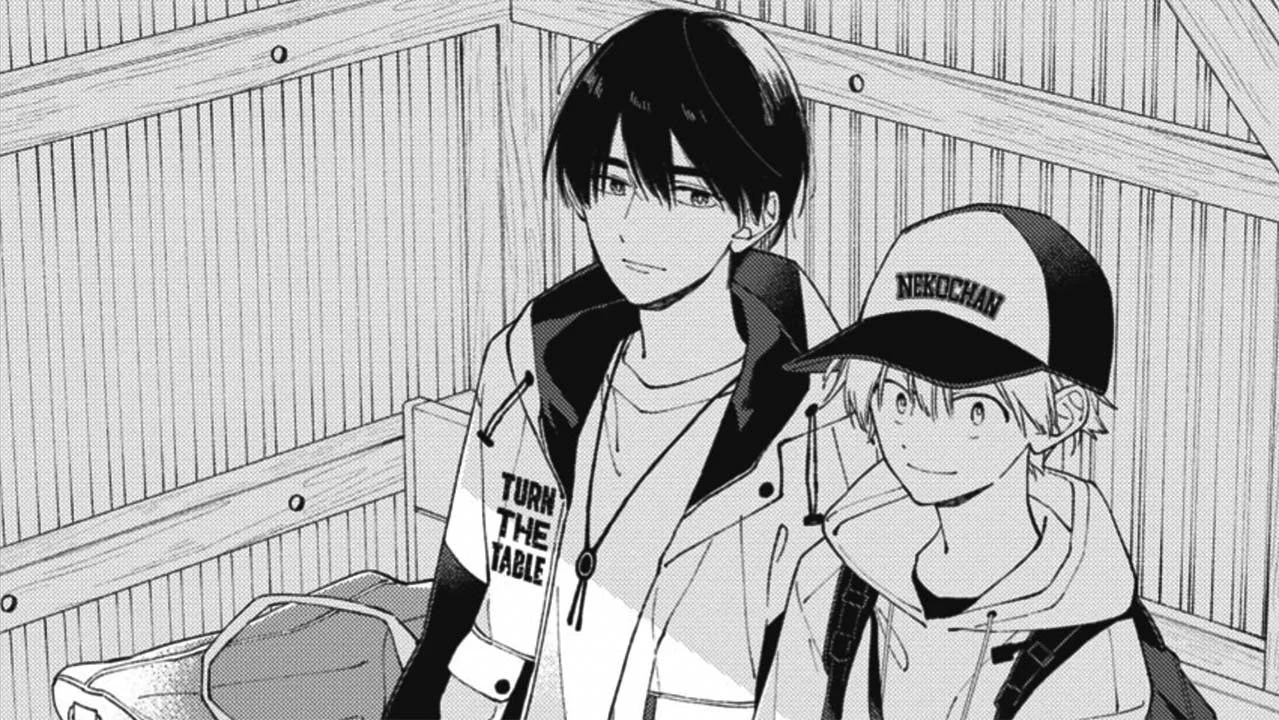
The childhood friend trope gets me every time. In Japanese media, it’s rare for the childhood friend to “win,” which makes me want to root for them all the more – if nothing else, it keeps me engaged. That said, I… didn’t feel the need to root for Yamato. Even when Akane Toyama, a girl Kakeru met at a mixer and instantly clicked with, seemed to pose a threat to Yamato’s plans, she was quickly brushed aside. In her own words, “I never had a chance.” Maybe the author simply wanted to explore the intricacies of the “my childhood friend is my boyfriend” dynamic – that premise alone can carry a story. But I can’t help wondering: what if Akane had played a more central role? Kakeru confronting his identity through her could’ve been compelling, even if we already know where it would lead – it’s all about execution. The less charitable read is that the author just isn’t built for worldbuilding or structure. Unfortunately, that seems plausible, given that most of their work consists of one-shots. Kiminai is only their second attempt at a longer-form story.
Moving to Yamato – how long he nurtured his feelings for Kakeru, how he carries himself in society – I saw myself in him. Hell, I’d say I’m in a similar scenario. My “Kakeru” is a guy I’ve known since elementary school. Funnily enough, we still don’t see eye to eye on when exactly we met – he says it was a year earlier than I remember, but who’s counting? I thought he was out of reach: the popular guy in class, always surrounded by his clique. I didn’t get along with everyone in it, if only because I couldn’t get time alone with him. I don’t know how much he picked up on my intentions or demeanor back then, and maybe I never will. It wasn’t until adulthood that I came clean about how I felt. I was even bracing myself for the end of our friendship – it’s different, after all, spending time with someone who’s admitted to having feelings for you.
But it worked. Maybe I’ve been without a partner for so long that I don’t see a future for us as a couple. He doesn’t consider himself bisexual, even if the label applies, but I keep reminding him that labels are for boxes. Still, I’m okay with our friends-with-benefits arrangement – it’s more than I ever hoped for, if I’m honest. And I can appreciate that my “ending” was a somewhat happy one, especially compared to what many queer people go through.
As for Kakeru, his aloofness crosses this thin line between endearing and annoying. It’s almost like these two traits are playing table tennis, and I’m being knocked around between them. While this back-and-forth can be exhausting, I don’t hate him. If I did, I probably wouldn’t still be reading – and yet, here I am, eight volumes in. Could he do something that diminishes him in my eyes? Maybe. Indecisiveness can only serve as a plot device for so long before it becomes tiring. I admit I was worried when his soul-searching after Yamato’s confession stretched on. I’m on record saying I can’t stand dragged-out confessions, and I’m starting to think it’s a concern I’ll always have in romance titles. Fortunately, it only took about three volumes – not counting the one where kid Yamato and Kakeru meet – which is surprisingly fast by genre standards. The author mentioned they mapped out Kakeru’s emotional arc in phases: brooding, hesitation, anxiety, questioning, and determination. It’s a methodical approach, if a bit unrealistic when compared to how relationships play out in real life. But honestly, I didn’t mind.
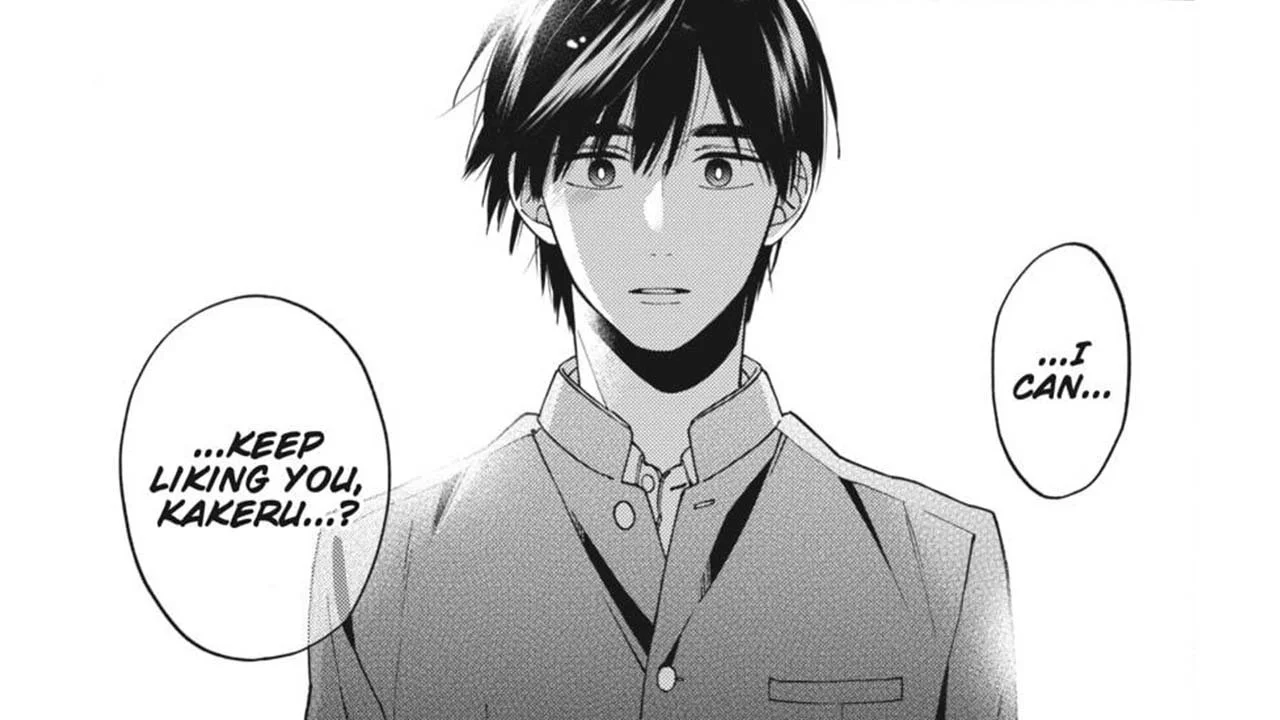
I’m profoundly disappointed in Kosuke. The way he acted – seeing Yamato hugging Kakeru and them coming clean about their relationship – struck a nerve. I’m not convinced this was about trust, even if he later proved he truly had no issue with them dating. The way he reacted, how he became an analogue for a society that recoils at non-heterosexual affection, just made me wince. My dude, have you never seen gay people before? My first thought was that Kakeru needed to end their friendship if this was how Kosuke was going to behave. But he won’t – he’s an anxious mess.
And honestly, I don’t think this callback to reality was needed. The unknown isn’t necessarily scary; people choose to make it so, for reasons that still elude me even now. We just want to be happy. It’s frustrating when society at large still struggles with something so basic – but there are signs of change if you know where to look. Japan’s local wards, for example, have stepped up to do the work that the central government continues to drag its feet on, hiding behind legacy and legalese. It’s a start – and for now, I’ll take it.
In conclusion, I’m endeared by Yamato and Kakeru’s relationship and want to see it through to the story’s end. If you’ll allow me a moment of fudanshi indulgence, I wish to see Yamato mess Kakeru up. The author noted they want to draw spicy scenes, but I’m told that kind of content won’t fly in Gene Pixiv. I wonder if authors are allowed to draw fan fiction of their own characters and put it out as a doujinshi…?
That’s it from me. See you next month!